

When facing a potential drug test, understanding detection windows becomes crucial for anyone who uses kratom. Many users ask, How Long Does Kratom Stay In Your Urine, especially as this Southeast Asian botanical grows in popularity for wellness use. The answer is not simple. Detection depends on metabolism, frequency of use, dosage, and the type of drug test used.
- Kratom typically stays detectable in urine for 2-9 days after last use, depending on various individual factors
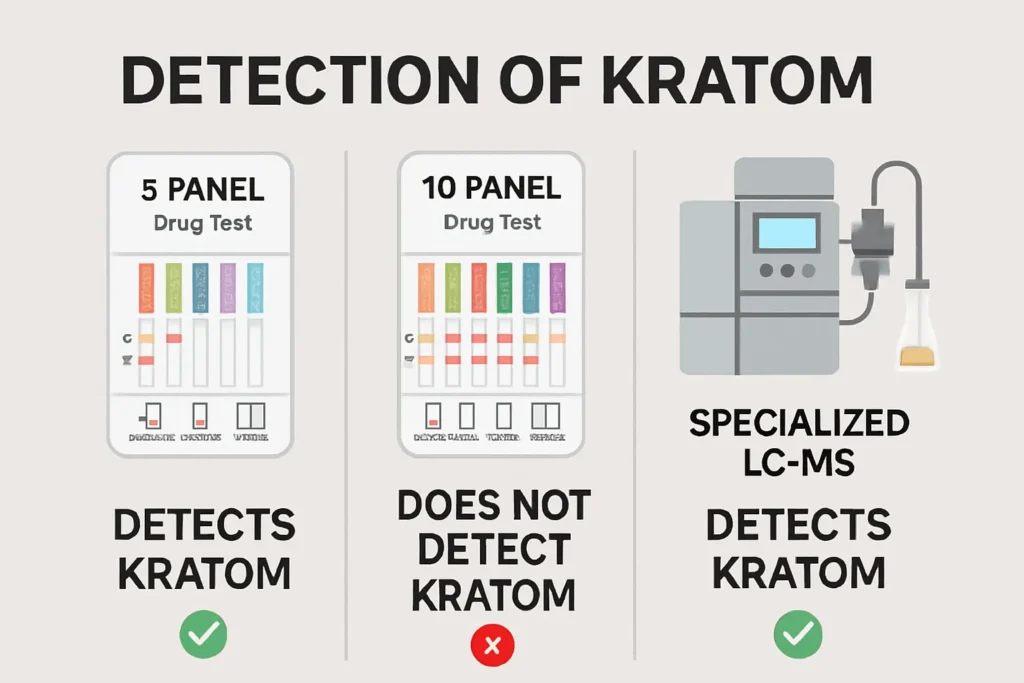
- Standard 5-panel drug tests don’t detect kratom, but specialized tests can identify its alkaloids
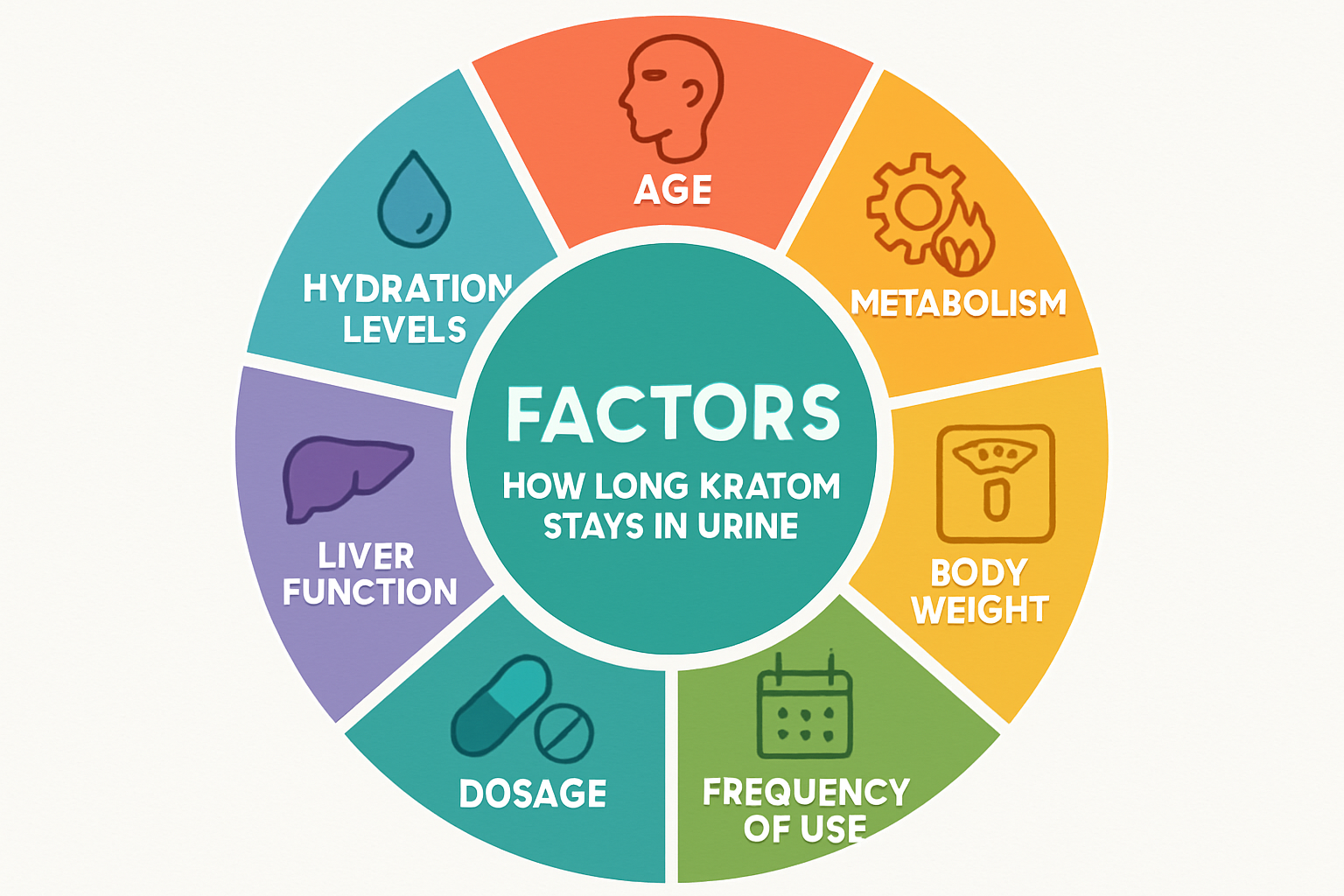
- Frequency of use, dosage, and individual metabolism significantly impact detection windows
- Mitragynine and 7-hydroxymitragynine are the primary compounds tested for in kratom screenings
- Legal status varies by location, making testing policies inconsistent across different regions
Understanding Kratom and Its Active Compounds
Kratom (Mitragyna speciosa) contains over 40 alkaloids, with mitragynine and 7-hydroxymitragynine being the most prominent. These compounds interact with opioid receptors in the brain, producing effects that can range from stimulating to sedating depending on the dose and strain.
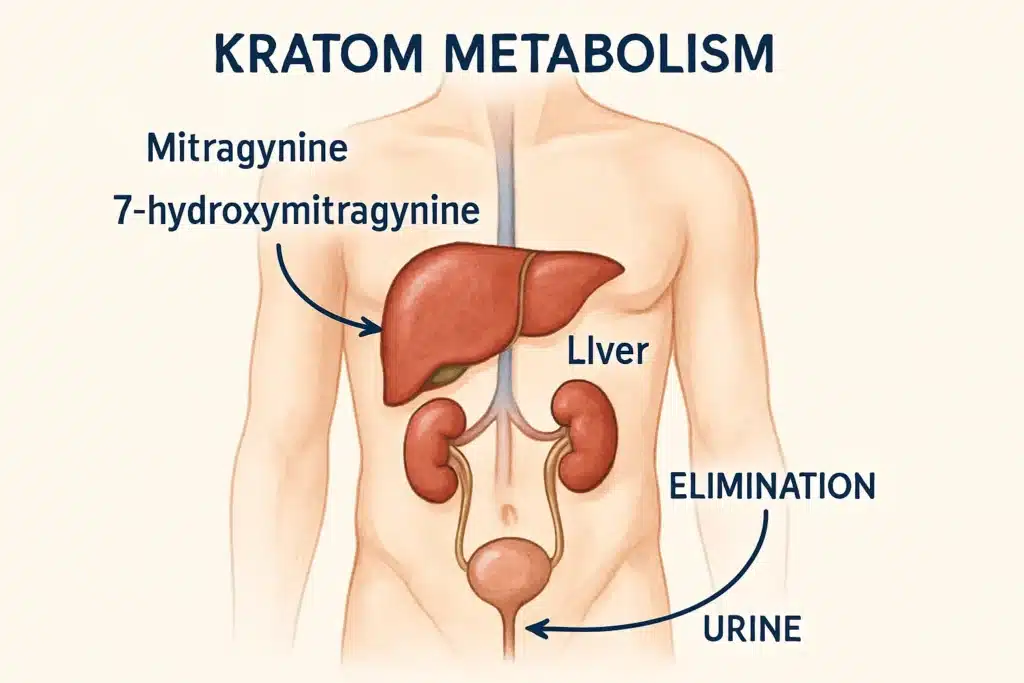
When consumed, these alkaloids undergo metabolism in the liver before being eliminated through various pathways, including urine. The detection of these metabolites forms the basis of kratom drug testing.
Primary Kratom Alkaloids
- Mitragynine: The most abundant alkaloid (up to 66% of total alkaloid content)
- 7-hydroxymitragynine: More potent but less abundant (typically 2% of total content)
- Paynantheine: Secondary alkaloid with muscle relaxant properties
- Speciogynine: Contributes to kratom’s overall effects profile
How Long Does Kratom Stay In Your Urine: Detection Timeline
The detection window for kratom in urine varies significantly based on multiple factors. Research suggests that kratom metabolites can be detected in urine for 2-9 days after last use, with most users falling within the 2-5 day range for occasional use.
Factors Affecting Detection Time
Individual Metabolism 🧬
- Age and overall health
- Liver function efficiency
- Genetic variations in enzyme activity
- Body mass index (BMI)
Usage Patterns 📊
- Frequency of consumption
- Dosage amounts
- Duration of regular use
- How many kratom capsules typically consumed
Product Variables 🌿
- Kratom strain and potency
- Quality and purity of the product
- Method of consumption (powder, capsules, extracts)
- Alkaloid concentration levels
Types of Drug Tests and Kratom Detection
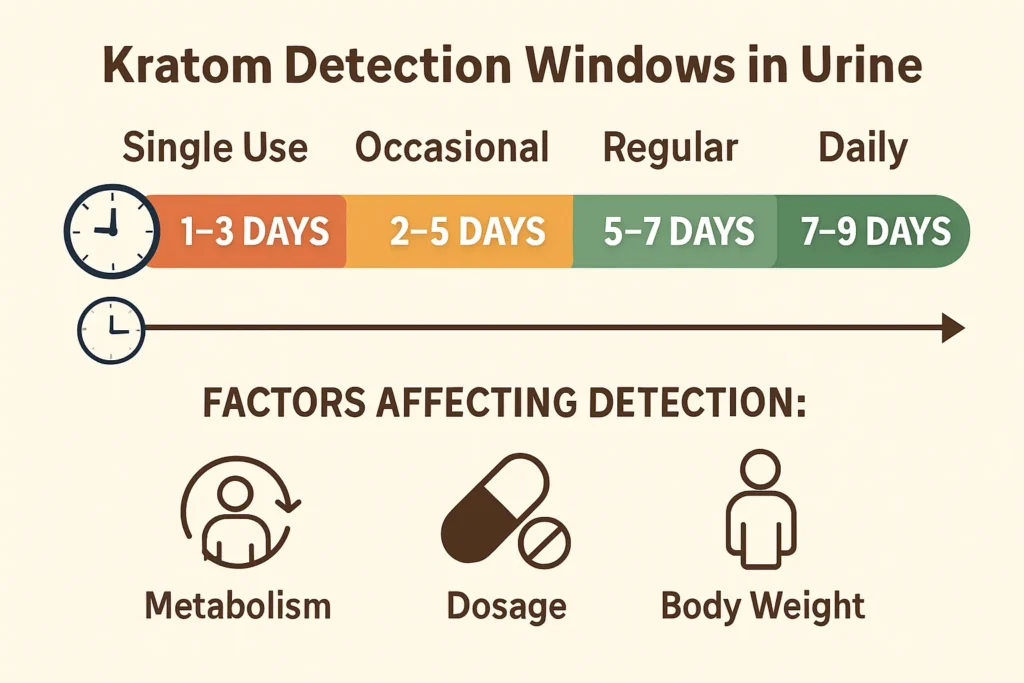
Understanding different testing methods helps clarify when and how kratom might be detected in your system.
Standard Drug Panels
5-Panel Drug Test ❌
- Does NOT test for kratom
- Screens for: marijuana, cocaine, amphetamines, opiates, PCP
- Most common employment screening
10-Panel Drug Test ❌
- Also does NOT include kratom
- Adds: barbiturates, benzodiazepines, methaqualone, methadone, propoxyphene
Specialized Kratom Testing
Liquid Chromatography-Mass Spectrometry (LC-MS) ✅
- Can detect kratom alkaloids
- Highly accurate and specific
- More expensive and time-consuming
- Used when specifically testing for kratom
High-Performance Liquid Chromatography (HPLC) ✅
- Another method for kratom detection
- Requires specialized equipment
- Not commonly used in standard screenings
Detection Windows by Usage Pattern
| Usage Frequency | Detection Window | Notes |
|---|---|---|
| Single Use | 1-3 days | Shortest detection period |
| Occasional Use (1-2x/week) | 2-5 days | Moderate detection window |
| Regular Use (3-4x/week) | 5-7 days | Extended detection period |
| Daily Use | 7-9 days | Longest detection window |
Note: These are general estimates and individual results may vary
Metabolism and Elimination Process
When kratom is consumed, it undergoes several metabolic processes:
Phase 1 Metabolism
- Occurs primarily in the liver
- Cytochrome P450 enzymes break down alkaloids
- Creates initial metabolites
Phase 2 Metabolism
- Conjugation with glucuronic acid
- Makes metabolites water-soluble
- Prepares for elimination
Elimination Pathways
- Urine: Primary elimination route (65-70%)
- Feces: Secondary pathway (25-30%)
- Other: Sweat, breath (minimal amounts)
Factors That May Accelerate Elimination
While there’s no guaranteed way to “flush” kratom from your system faster than your natural metabolism allows, certain practices may support the body’s natural detoxification processes:
Hydration 💧
- Maintains kidney function
- Supports natural elimination
- Avoid excessive water intake (can be dangerous)
Physical Activity 🏃♂️
- May boost metabolism
- Improves circulation
- Supports overall health
Healthy Diet 🥗
- Supports liver function
- Provides necessary nutrients for metabolism
- Avoid crash diets or extreme measures
Legal Considerations and Testing Policies
The legal status of kratom varies significantly across different jurisdictions, which directly impacts testing policies and procedures.
Federal Level
- Not federally scheduled in the United States
- FDA has issued warnings about kratom
- DEA has considered but not implemented scheduling
State and Local Laws
- Legal status varies by state
- Some states have banned kratom entirely
- Others have age restrictions or regulations
- Oklahoma’s kratom laws differ from other states
Employment Testing
- Most employers don’t test for kratom
- Some industries may have specific policies
- Government positions may have stricter requirements
- Always check specific company policies
Kratom Detection Window Estimator
Estimated Detection Window
Common Myths and Misconceptions
Myth: Drinking Lots of Water Will Clear Kratom Faster ❌
Reality: While staying hydrated supports kidney function, excessive water intake won’t significantly speed up elimination and can be dangerous.
Myth: All Drug Tests Detect Kratom ❌
Reality: Standard employment drug tests (5-panel, 10-panel) do not screen for kratom alkaloids.
Myth: Kratom Shows Up as an Opiate ❌
Reality: Kratom has a different chemical structure and won’t trigger positive results for traditional opiates.
Myth: Exercise Can Eliminate Kratom Overnight ❌
Reality: While exercise supports overall health, it cannot dramatically accelerate kratom elimination.
Tips for Kratom Users Facing Drug Tests
Know Your Testing Situation
- Research your employer’s specific drug testing policies
- Understand what type of test will be administered
- Know the legal status in your area
Plan Accordingly
- If facing a potential test, consider timing of last use
- Understand that detection windows are estimates, not guarantees
- Consider where to buy kratom from reputable sources for consistent quality
Stay Informed
- Keep up with changing laws and regulations
- Monitor your employer’s policy updates
- Understand industry-specific requirements
Quality and Testing Considerations
The quality of kratom products can significantly impact both effects and detection. When choosing kratom products, consider:
Vendor Reputation
- Research reputable kratom vendors
- Look for third-party lab testing
- Verify alkaloid content and purity
Product Types
Different kratom products may have varying alkaloid concentrations:
- Powder: Traditional form with natural alkaloid ratios
- Extracts: Concentrated forms with higher potency
- Capsules: Convenient dosing but may affect absorption timing
Strain Variations
Different strains may have varying alkaloid profiles:
- White Hulu Kapuas: Energizing effects
- Yellow Hulu Kapuas: Balanced effects
- Red Hulu Kapuas: More sedating properties
Scientific Research on Kratom Detection
Current research on kratom detection is still evolving. Key studies have provided insights into:
Detection Methods
- LC-MS/MS remains the gold standard for kratom detection
- Urine testing is most common for kratom screening
- Blood and saliva testing have shorter detection windows
Metabolite Identification
- Primary metabolites include mitragynine glucuronide
- 7-hydroxymitragynine metabolites are also detectable
- Multiple metabolic pathways are involved
Individual Variation
Research shows significant individual differences in:
- Metabolism rates
- Elimination patterns
- Detection windows
Workplace and Legal Implications
Employment Considerations
Understanding workplace policies is crucial for kratom users:
Industries with Higher Testing Likelihood:
- Transportation and logistics
- Healthcare and medical facilities
- Government positions
- Safety-sensitive roles
Employee Rights:
- Right to know testing policies
- Understanding of substances being tested
- Appeal processes for disputed results
Legal Protections
- Limited legal protections for kratom users
- Varies significantly by jurisdiction
- Employment-at-will considerations
Best Practices for Responsible Use
For those who choose to use kratom, responsible practices include:
Education and Awareness
- Stay informed about kratom basics
- Understand dosage guidelines
- Know the best places to purchase kratom
Risk Management
- Consider timing relative to potential testing
- Understand your legal and employment situation
- Maintain open communication with healthcare providers
Quality Assurance
- Purchase from reputable vendors
- Verify third-party testing results
- Understand product potency and purity
Supporting Your Body’s Natural Processes
While there’s no way to dramatically speed up kratom elimination, supporting your body’s natural detoxification processes may help:
Liver Health
- Maintain a balanced diet
- Limit alcohol consumption
- Stay hydrated
- Consider milk thistle supplements (consult healthcare provider)
Kidney Function
- Drink adequate water
- Avoid excessive sodium
- Maintain healthy blood pressure
- Regular exercise
Overall Wellness
- Get adequate sleep
- Manage stress levels
- Maintain healthy body weight
- Regular medical check-ups
Frequently Asked Questions – Kratom Stay In Your Urine
How long does kratom stay in your urine?
Kratom alkaloids can usually be detected in urine for about one to three days after last use. In some cases, traces may remain for up to five days. Detection time depends on dose, frequency of use, metabolism, hydration, and overall health.
Can kratom show up on a standard urine drug test?
Standard urine drug tests do not usually screen for kratom or its alkaloids. Most basic panels focus on substances like opioids, amphetamines, and cannabis. Kratom requires a specialized test that is not commonly used in routine workplace or probation screenings.
What factors affect how long kratom stays in your urine?
- Amount and frequency of kratom use
- Individual metabolism speed
- Body fat and overall health
- Hydration level and kidney function
- Type of kratom product used
Does daily kratom use increase urine detection time?
Yes, daily or frequent use can increase how long kratom stays detectable in urine. Repeated use allows alkaloids to build up in the body. This buildup may extend detection beyond the typical one to three day window, especially in users with slower metabolism.
Which kratom compounds are detected in urine tests?
Urine tests that target kratom usually look for mitragynine and 7 hydroxymitragynine. These are the primary active alkaloids. Detection focuses on these compounds or their metabolites rather than the raw plant material itself.
Can hydration flush kratom out of your urine faster?
- Drinking water supports normal kidney function
- Hydration helps dilute urine concentration
- It does not instantly remove alkaloids
- Metabolism still controls elimination speed
Do kratom capsules stay longer in urine than powder?
Kratom capsules and powder generally follow similar detection timelines in urine. The body processes the same alkaloids regardless of form. Capsules may delay absorption slightly, but they do not significantly change how long kratom stays in the system.
Can kratom cause a false positive on urine drug tests?
- False positives are uncommon with kratom
- Standard panels do not target kratom
- Some tests may confuse alkaloids with opioids
- Confirmatory testing usually clarifies results
How long does kratom stay in urine for occasional users?
Occasional users typically clear kratom from urine within one to two days. Lower doses and infrequent use reduce alkaloid buildup. Faster metabolism and good hydration can also shorten the detection window for users who take kratom rarely.
Is urine testing the most common way to detect kratom?
Urine testing is the most practical method when kratom is tested at all. Blood and saliva tests exist but are less common due to cost and shorter detection windows. Urine offers a wider timeframe to identify kratom alkaloid metabolites.
Conclusion
Understanding how long kratom stays in your urine involves multiple complex factors, from individual metabolism to usage patterns and testing methods. While kratom typically remains detectable for 2-9 days in urine, this window can vary significantly based on frequency of use, dosage, body composition, and individual metabolic factors.
The key takeaway is that standard employment drug tests don’t screen for kratom, but specialized testing can detect its alkaloids when specifically looking for them. For kratom users, the most important steps are staying informed about local laws, understanding workplace policies, and making informed decisions about timing and usage.
- Research your specific situation – Know your employer’s policies and local laws
- Plan accordingly – Consider timing if you anticipate testing
- Stay informed – Keep up with changing regulations and research
- Choose quality products – Work with reputable vendors who provide lab testing
- Consult professionals – Speak with healthcare providers about any concerns
Remember that this information is for educational purposes only and should not replace professional medical or legal advice. Individual circumstances vary, and detection windows are estimates based on available research. Always prioritize your health, legal compliance, and employment security when making decisions about kratom use.
Daniel Brooks
Daniel Brooks is a U.S. based botanical writer with over six years of hands on experience in kratom focused content. He studies kratom strains, sourcing standards, dosage patterns, and consumer safety topics. He stays up to date with current news, regulatory changes, and market trends related to kratom and botanical products.
His work includes educational guides, strain breakdowns, and vendor reviews written for everyday users. He avoids promotional language and presents clear facts. Daniel helps readers understand both benefits and risks so they can make informed choices about responsible kratom use.