
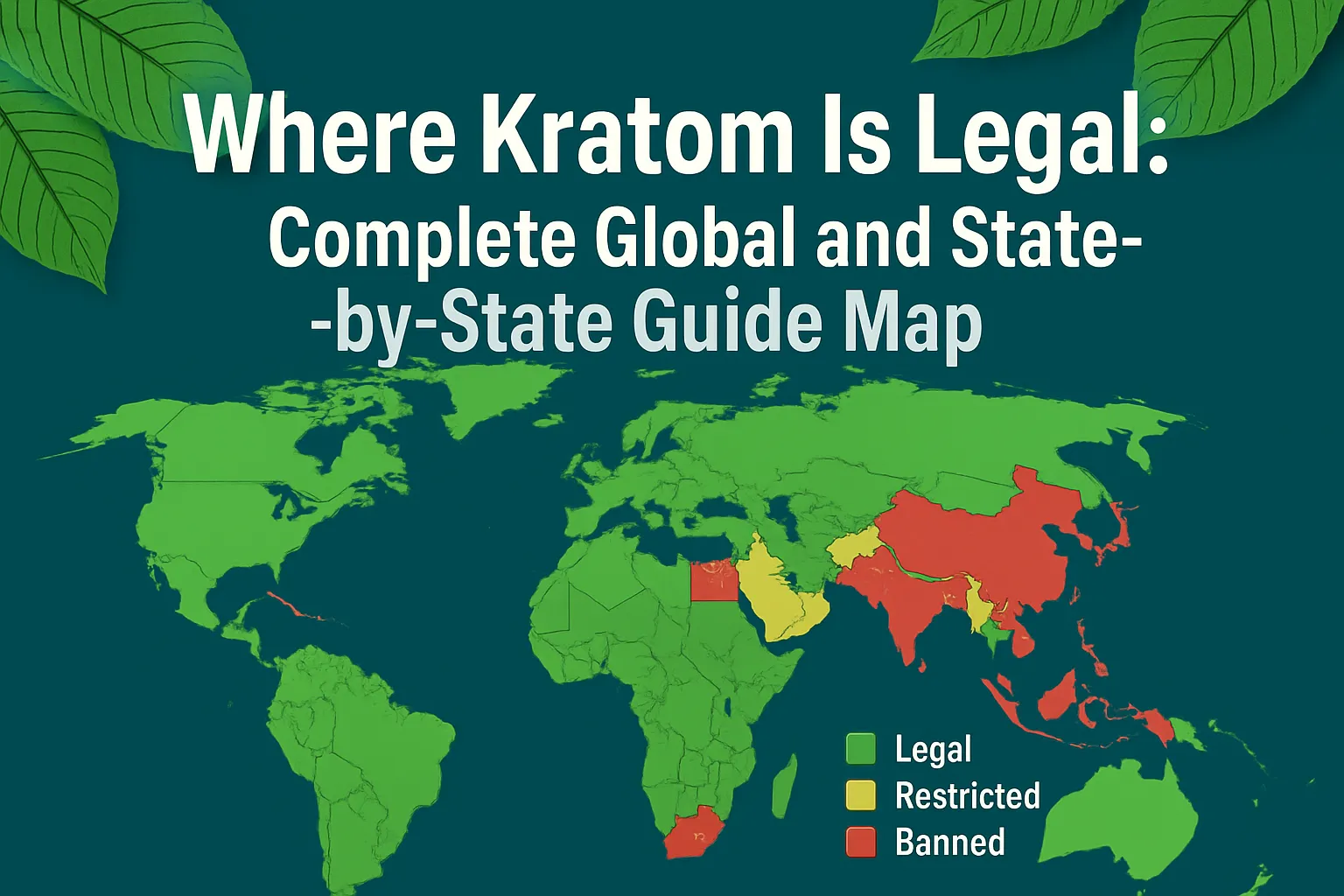
The legal status of kratom (Mitragyna speciosa) varies dramatically across countries, states, and even individual cities, creating a complex web of regulations that requires careful navigation. Understanding where is kratom legal isn’t just about compliance—it’s about making informed decisions that protect your rights and well-being.
- Kratom remains legal at the federal level in the United States, but individual states and municipalities can impose their own restrictions or bans
- Six U.S. states currently ban kratom entirely: Alabama, Arkansas, Indiana, Rhode Island, Vermont, and Wisconsin
- International kratom laws vary significantly, with some countries treating it as a controlled substance while others allow unrestricted use
- Local ordinances can override state laws, making city-level research essential before purchasing or possessing kratom
- Kratom’s legal status continues to evolve, requiring regular monitoring of legislative changes and regulatory updates
Understanding Kratom’s Legal Complexity
The legal landscape surrounding kratom reflects broader challenges in regulating botanical substances that exist in the gray area between traditional herbs and controlled substances. Unlike clearly defined drugs with established regulatory pathways, kratom occupies a unique position that has led to inconsistent legal treatment across jurisdictions.
Federal vs. State vs. Local Authority
In the United States, the regulatory framework operates on multiple levels:
Federal Level: The FDA has not approved kratom for any medical use and has issued warning letters to vendors making health claims. However, kratom remains legal under federal law, though it faces ongoing scrutiny from regulatory agencies.
State Level: Individual states exercise significant authority over kratom regulation within their borders. Some states have enacted comprehensive bans, while others have implemented age restrictions or quality control measures.
Local Level: Cities and counties can impose stricter regulations than their respective states, creating patchwork legal environments where kratom might be legal statewide but banned locally.
Factors Influencing Legal Status
Several factors contribute to the varying legal approaches to kratom:
- Public health concerns raised by medical professionals and regulatory agencies
- Advocacy efforts by kratom users and industry organizations
- Economic considerations including tax revenue and business licensing
- Cultural attitudes toward herbal supplements and alternative wellness products
- International pressure and treaty obligations regarding controlled substances
Where Kratom Is Legal: United States Overview
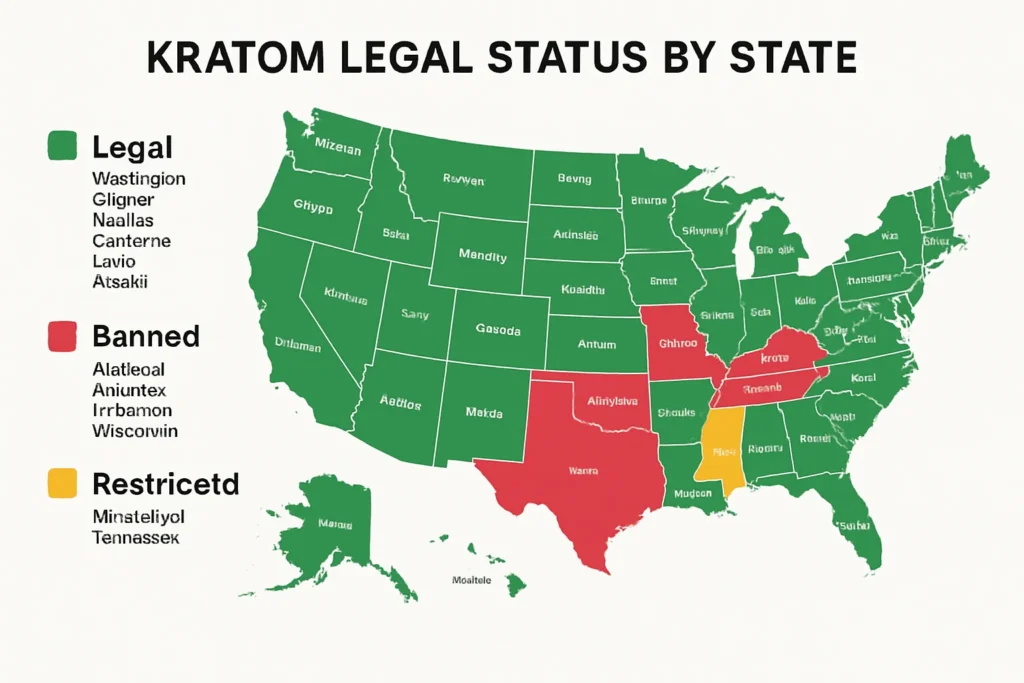
The United States presents one of the most complex kratom legal landscapes globally. While federal law doesn’t prohibit kratom, state-level variations create a checkerboard pattern of legality that requires careful attention.
States Where Kratom Is Fully Legal
The majority of U.S. states allow kratom possession, sale, and use without significant restrictions. These states include:
Unrestricted Legal States (with minimal or no specific kratom legislation):
- Alaska, Arizona, California, Colorado, Connecticut, Delaware, Florida, Georgia, Hawaii, Idaho, Illinois, Iowa, Kansas, Kentucky, Louisiana, Maine, Maryland, Massachusetts, Michigan, Minnesota, Mississippi, Missouri, Montana, Nebraska, Nevada, New Hampshire, New Jersey, New Mexico, New York, North Carolina, North Dakota, Ohio, Oklahoma, Oregon, Pennsylvania, South Carolina, South Dakota, Tennessee, Texas, Utah, Virginia, Washington, West Virginia, and Wyoming.
States with Kratom Bans
Complete Prohibition States:
- Alabama: Kratom is classified as a Schedule I controlled substance
- Arkansas: Learn more about Arkansas kratom laws and the state’s comprehensive ban
- Indiana: Kratom alkaloids are listed as synthetic drugs
- Rhode Island: Complete prohibition with criminal penalties
- Vermont: Classified as a regulated drug
- Wisconsin: Banned under controlled substance laws
States with Partial Restrictions or Age Limits
Some states have implemented compromise approaches that allow kratom use with specific limitations:
Age-Restricted States:
- Nevada: 18+ only
- Utah: 18+ only
- Georgia: 18+ only
States with Pending Legislation
Several states have active or recently proposed legislation that could change kratom’s legal status:
- New York: Various bills have been introduced with different regulatory approaches
- New Jersey: Ongoing discussions about age restrictions and quality control
- Illinois: Proposed legislation for regulation rather than prohibition
Understanding whether you can buy kratom online safely becomes crucial when navigating these varying state laws, as shipping restrictions often align with local legal status.
International Kratom Legal Status
The global perspective on kratom legality reveals even greater variation than U.S. state laws, with some countries embracing traditional use while others impose severe penalties.
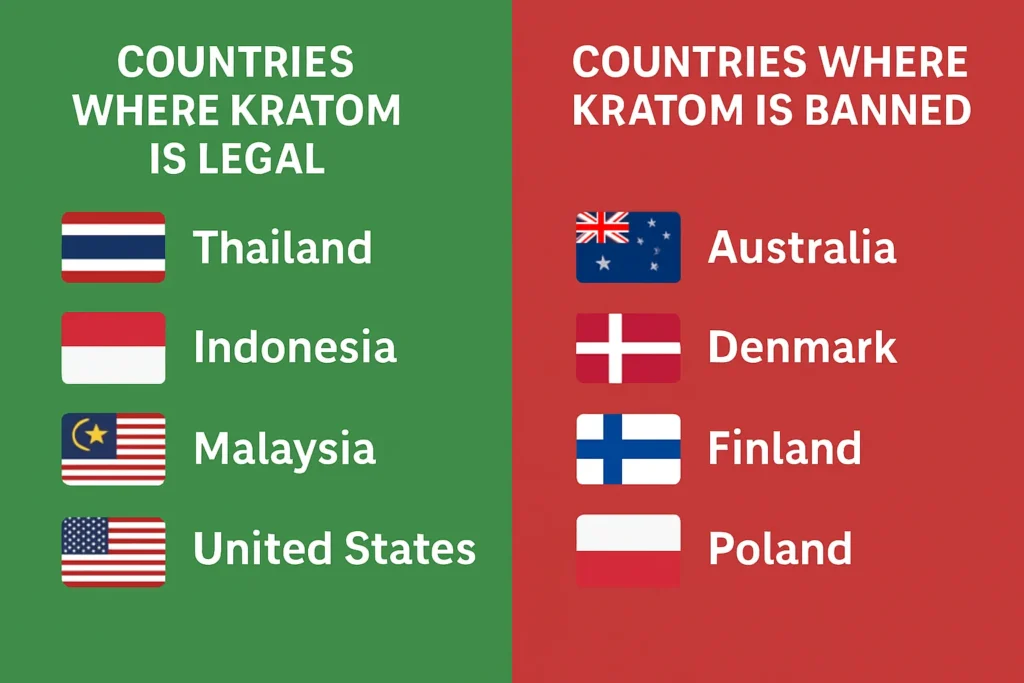
Countries Where Is Kratom Legal
Fully Legal Countries:
- Canada: No federal restrictions, though provinces may have local rules
- Mexico: Legal for personal use and traditional practices
- Netherlands: Legal to possess and consume
- United Kingdom: Legal but cannot be sold for human consumption
- Germany: Legal in small quantities for personal use
- Spain: Legal for personal use
- Portugal: Decriminalized along with other substances
Countries with Kratom Bans
Prohibited Countries:
- Thailand: Ironically banned despite being kratom’s native region (though recent discussions suggest potential policy changes)
- Malaysia: Illegal under the Poisons Act
- Myanmar: Controlled substance with severe penalties
- Australia: Scheduled as a controlled drug
- New Zealand: Prescription-only medicine
- Denmark: Banned for human consumption
- Finland: Controlled substance
- France: Banned as a psychoactive substance
- Lithuania: Controlled substance
- Poland: Banned under drug laws
- Romania: Controlled substance
- Sweden: Banned under narcotic laws
Countries with Restricted or Regulated Status
Some nations have implemented middle-ground approaches:
- Japan: Requires special permits for importation
- South Korea: Restricted but not completely banned
- Israel: Requires medical prescription
- Switzerland: Legal but regulated as a supplement
City and County-Level Kratom Restrictions
Even in states where kratom remains legal, local municipalities can impose their own restrictions. This creates additional complexity for users who must navigate multiple layers of regulation.
Notable City Bans
Major Cities with Kratom Restrictions:
- San Diego, California: Banned in the city despite state legality
- Jerseyville, Illinois: Local ordinance prohibiting kratom
- Union County, Mississippi: County-level ban
- Sarasota County, Florida: Age restrictions and vendor licensing requirements
Understanding Local Ordinances
Local kratom laws typically address:
- Possession limits for personal use
- Age restrictions beyond state requirements
- Vendor licensing and quality control measures
- Public consumption prohibitions
- Zoning restrictions for kratom businesses
Researching local laws becomes essential, especially when considering whether you can buy kratom online or locally in your specific area.
Kratom Legal Status by Region: Detailed Breakdown
Southeast Asia (Native Region)
The irony of kratom’s legal status becomes apparent in its native Southeast Asian region, where traditional use spans centuries but modern laws often prohibit it.
Thailand: Despite kratom’s indigenous status, Thailand banned the plant in 1943, though recent legislative discussions suggest potential decriminalization for traditional and medical use.
Malaysia: Maintains strict prohibition under the Poisons Act, with penalties including fines and imprisonment.
Indonesia: Operates in a legal gray area where kratom cultivation and export remain significant economic activities, though domestic use faces increasing scrutiny.
Europe
European kratom laws reflect the continent’s diverse approaches to drug policy and botanical regulation.
Liberal Approach Countries:
- Netherlands and Spain allow personal use with minimal restrictions
- Germany permits small quantities for personal consumption
- United Kingdom allows possession but restricts commercial sales for human consumption
Restrictive Approach Countries:
- Nordic countries (Sweden, Finland, Denmark) generally prohibit kratom
- France maintains strict bans with enforcement mechanisms
- Eastern European nations often classify kratom as a controlled substance
North America
Canada: Maintains a relatively permissive approach, allowing kratom importation and use while leaving specific regulations to provincial authorities.
Mexico: Recognizes traditional use rights and allows personal consumption, though commercial regulation remains limited.
Oceania
Australia: Implements strict controls through scheduling kratom as a controlled drug, requiring prescriptions and medical supervision.
New Zealand: Similar to Australia, treats kratom as a prescription-only medicine with limited access pathways.
Factors Affecting Kratom Legality
Understanding why kratom laws vary so dramatically requires examining the multiple factors that influence legislative and regulatory decisions.
Public Health Considerations
Health authorities cite several concerns when evaluating kratom’s legal status:
- Potential for dependence and withdrawal symptoms
- Drug interactions with prescription medications
- Quality control issues in unregulated markets
- Lack of standardized dosing guidelines
- Limited clinical research on long-term effects
Economic Factors
Economic considerations play significant roles in kratom policy decisions:
- Tax revenue from regulated kratom sales
- Job creation in cultivation, processing, and retail sectors
- Healthcare costs associated with kratom-related incidents
- Law enforcement expenses for prohibition enforcement
- International trade implications and relationships
Cultural and Social Attitudes
Regional attitudes toward herbal supplements and traditional medicine influence kratom policies:
- Traditional use acceptance in some communities
- Medical establishment perspectives on alternative treatments
- Public opinion shaped by media coverage and advocacy efforts
- Religious or cultural objections to psychoactive substances
Political and Regulatory Pressures
Political dynamics affect kratom legislation through:
- Lobbying efforts by industry groups and advocacy organizations
- International pressure from treaty organizations and foreign governments
- Regulatory agency recommendations and enforcement priorities
- Legislative priorities competing for attention and resources
Traveling with Kratom: Legal Considerations
For kratom users who travel frequently, understanding the legal implications of transporting kratom across jurisdictions becomes crucial for avoiding legal complications.
Domestic Travel Considerations
Interstate Travel:
- Research destination state laws before traveling
- Avoid carrying kratom through states with prohibition laws
- Consider shipping kratom to your destination instead of carrying it
- Keep kratom in original packaging with clear labeling
Airport Security:
- TSA doesn’t specifically prohibit kratom in legal states
- Powder substances may receive additional screening
- Declare kratom if questioned by security personnel
- Carry documentation about kratom’s legal status
International Travel Risks
High-Risk Destinations:
- Countries with strict drug laws may treat kratom possession severely
- Research customs regulations before international travel
- Consider leaving kratom at home when visiting prohibited countries
- Consult embassy or consulate resources for current information
Documentation Strategies:
- Carry vendor certificates of analysis when possible
- Research import/export requirements for kratom
- Understand that “legal in origin country” doesn’t guarantee legal status elsewhere
- Consider consulting with legal professionals for high-stakes travel
The complexity of travel considerations makes it important to understand how long kratom takes to kick in so you can plan accordingly around your travel schedule.
Recent Legal Changes and Trends
The kratom legal landscape continues evolving rapidly, with new legislation, court decisions, and regulatory actions regularly changing the status quo.
Positive Legal Developments
Kratom Consumer Protection Acts:
Several states have passed or considered legislation that regulates rather than prohibits kratom:
- Nevada: Implemented age restrictions and quality standards
- Utah: Created a regulatory framework with testing requirements
- Georgia: Established age limits and labeling requirements
Industry Self-Regulation:
- American Kratom Association’s Good Manufacturing Practice standards
- Vendor certification programs and quality testing initiatives
- Industry lobbying efforts for reasonable regulation
Concerning Legal Trends
Increased Scrutiny:
- FDA warning letters to vendors making health claims
- State legislative proposals for stricter regulation or prohibition
- Local ordinances targeting kratom businesses and users
International Pressure:
- UN discussions about international kratom scheduling
- Bilateral pressure from countries with kratom prohibitions
- Trade agreement implications for kratom commerce
Emerging Regulatory Approaches
Harm Reduction Models:
- Age restrictions rather than complete bans
- Quality control and testing requirements
- Vendor licensing and oversight programs
- Consumer education and safety initiatives
Medical Integration Efforts:
- Research initiatives for kratom’s therapeutic potential
- Medical professional education about kratom use
- Integration with existing supplement regulatory frameworks
🗺️ Kratom Legal Status Interactive Guide
Explore kratom legality across U.S. states and select countries
How to Stay Updated on Kratom Laws
Given the rapidly changing nature of kratom legislation, staying informed requires proactive monitoring of multiple information sources.
Official Government Sources
Federal Resources:
- FDA website for regulatory updates and warning letters
- DEA scheduling information and enforcement actions
- Congressional hearing records and legislative proposals
- Federal court decisions affecting kratom regulation
State and Local Resources:
- State legislature websites for pending bills and enacted laws
- State health department advisories and position statements
- Local government websites for municipal ordinances
- Court records for relevant legal precedents
Advocacy and Industry Sources
Kratom Advocacy Organizations:
- American Kratom Association legislative updates and action alerts
- Botanical Education Alliance research and policy information
- Local kratom advocacy groups and user communities
- Industry trade associations and vendor organizations
Legal and Professional Resources
Legal Consultation:
- Attorneys specializing in drug law and botanical regulation
- Legal aid organizations for low-income kratom users
- Bar association referral services for qualified attorneys
- Law school clinics focusing on drug policy reform
For those considering changes in their kratom use, understanding how to quit kratom safely becomes important regardless of legal status changes.
Best Practices for Legal Kratom Use
Even in jurisdictions where kratom remains legal, following best practices helps minimize legal risks and promotes responsible use.
Purchase and Possession Guidelines
Vendor Selection:
- Choose reputable vendors with transparent business practices
- Verify vendor compliance with local and state regulations
- Look for third-party testing and quality certifications
- Avoid vendors making medical claims about kratom
Documentation and Storage:
- Keep kratom in original packaging with clear labeling
- Maintain receipts and certificates of analysis when available
- Store kratom securely and away from minors
- Follow any local quantity restrictions for possession
Responsible Use Practices
Personal Safety:
- Research kratom interactions with medications and health conditions
- Start with small doses and monitor effects carefully
- Avoid driving or operating machinery while using kratom
- Seek medical advice for concerning symptoms or reactions
Legal Compliance:
- Respect age restrictions and possession limits
- Avoid public consumption in areas where prohibited
- Don’t share kratom with minors or in restricted locations
- Stay informed about changing local laws and regulations
Kratom Legality FAQ
Common questions about kratom legal status worldwide
Kratom is federally legal in the United States, but state laws vary significantly. Currently, kratom is banned in Alabama, Arkansas, Indiana, Rhode Island, Vermont, and Wisconsin. Several other states have age restrictions or specific regulations.
Several countries have completely banned kratom, including Thailand (recently legalized for medical use), Malaysia, Myanmar, Australia, Denmark, Finland, Israel, Lithuania, Poland, Romania, and Sweden.
Kratom exists in a legal gray area in Canada. It’s not approved for human consumption by Health Canada, but it’s not explicitly banned either. It can be sold as a natural health product with proper licensing, but not for human consumption.
European kratom laws vary widely. It’s legal in countries like Germany, Netherlands, Spain, and the UK. However, it’s banned in Denmark, Finland, Latvia, Lithuania, Poland, Romania, and Sweden. France and Italy have restrictions but haven’t completely banned it.
Exercise extreme caution when traveling with kratom. Even if it’s legal in your departure country, it may be illegal at your destination. Some countries impose severe penalties for possession of kratom, including lengthy prison sentences.
Many jurisdictions that allow kratom have implemented age restrictions. Most require buyers to be at least 18 years old, while some states like Utah require buyers to be 21. Always verify age requirements in your specific location.
Kratom laws are constantly evolving. New legislation is regularly proposed at state, national, and international levels. Some countries that previously banned kratom (like Thailand) have begun to reconsider their positions, while others continue to implement new restrictions.
Conclusion
The legal landscape surrounding kratom continues to evolve as lawmakers, regulators, and communities grapple with balancing individual freedom, public health concerns, and economic considerations. Understanding where kratom is legal requires ongoing attention to federal, state, and local developments that can change rapidly.
Stay Informed: Regularly monitor legal developments in your jurisdiction and any areas you plan to visit or move to. Laws can change quickly, and what’s legal today may not be tomorrow.
Research Thoroughly: Before purchasing, possessing, or using kratom, verify current laws at all applicable levels of government. Don’t assume that legality in one location guarantees legality in another.
Choose Reputable Sources: When kratom is legal in your area, select vendors who prioritize quality, transparency, and compliance with applicable regulations. This protects both your safety and legal standing.
Practice Responsible Use: Even where legal, use kratom responsibly by following dosage guidelines, avoiding interactions with medications, and respecting age restrictions and public use limitations.
Support Reasonable Regulation: Consider engaging with advocacy efforts that promote sensible kratom regulation focused on consumer protection rather than outright prohibition.
The future of kratom legality will likely continue moving toward nuanced regulatory approaches that address legitimate safety concerns while preserving access for responsible adult use. By staying informed and engaged, kratom users can help shape this evolving landscape toward outcomes that protect both individual rights and public welfare.
For those interested in learning more about kratom-related topics, explore additional resources on kratom vendor reviews and strain-specific information to make informed decisions about your kratom journey.
Daniel Brooks
Daniel Brooks is a U.S. based botanical writer with over six years of hands on experience in kratom focused content. He studies kratom strains, sourcing standards, dosage patterns, and consumer safety topics. He stays up to date with current news, regulatory changes, and market trends related to kratom and botanical products.
His work includes educational guides, strain breakdowns, and vendor reviews written for everyday users. He avoids promotional language and presents clear facts. Daniel helps readers understand both benefits and risks so they can make informed choices about responsible kratom use.