
The legal landscape surrounding kratom in the United States continues to evolve rapidly, leaving many consumers uncertain about where they stand. Utah, known for its conservative approach to substance regulation, has taken a unique stance that sets it apart from many other states. Understanding these laws isn’t just about compliance—it’s about making informed decisions that protect your rights and well-being.
- Kratom remains legal in Utah with specific age restrictions
- The state follows federal guidelines with additional local regulations
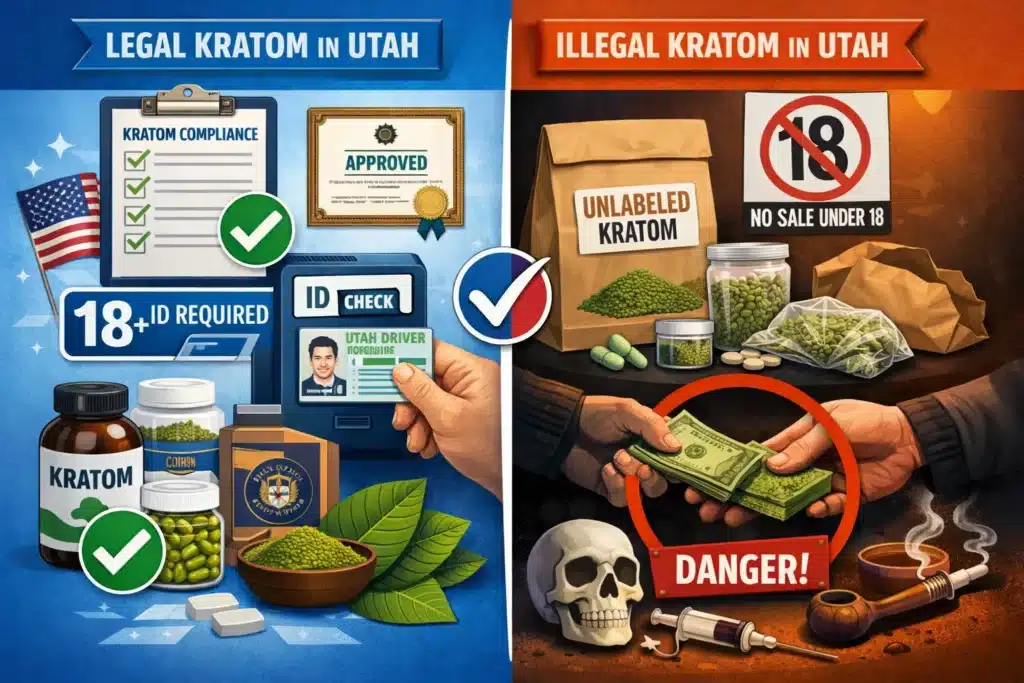
- Purchase requirements include valid ID verification for buyers 18 and older
- Quality standards and labeling requirements apply to all vendors
- Local municipalities may have additional restrictions beyond state law
Current Utah Kratom Legal Status
Is kratom legal in Utah? Yes, kratom is currently legal in Utah for adults aged 18 and older. The state has not implemented a complete ban on kratom products, distinguishing it from states like Alabama, Arkansas, Indiana, Rhode Island, Vermont, and Wisconsin, where kratom faces various levels of prohibition.
Utah’s approach reflects a measured response to kratom regulation. Rather than implementing outright bans, the state has chosen to regulate the substance through existing frameworks while monitoring federal developments. This position allows Utah residents to legally purchase, possess, and consume kratom products within established guidelines.
The legal status extends to all common kratom forms, including:
- Kratom powder in various strains
- Kratom capsules and tablets
- Kratom extracts and concentrates
- Kratom-infused beverages and edibles
However, this legal status comes with important caveats that buyers must understand to remain compliant with state and local laws.
Utah State Regulations and Restrictions
Utah’s kratom regulations operate within a framework that prioritizes consumer safety while maintaining legal access. The state has implemented several key restrictions that affect how kratom can be sold, marketed, and consumed.
Age Restrictions and Purchase Requirements
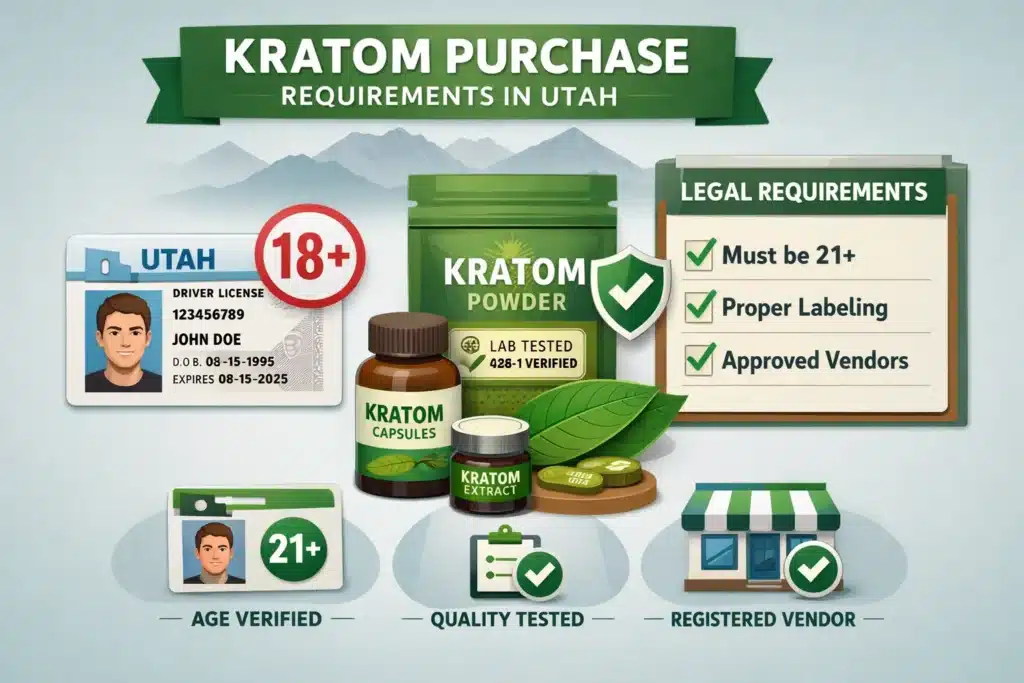
Utah law requires all kratom purchasers to be at least 18 years of age. This restriction applies to all forms of kratom products and all purchase methods, including online orders shipped to Utah addresses. Vendors must verify age through valid government-issued identification before completing any kratom transaction.
The age verification process includes:
- Photo ID check for in-person purchases
- Age verification systems for online orders
- Documentation requirements for vendors
- Penalties for non-compliance
Product Quality and Labeling Standards
Utah follows general consumer protection laws that impact kratom products. While the state hasn’t enacted kratom-specific quality legislation like the Kratom Consumer Protection Act (KCPA) adopted by some states, existing regulations still apply.
Required labeling information includes:
- Product contents and ingredients
- Recommended serving sizes
- Manufacturer or distributor information
- Batch or lot numbers for tracking
- Expiration or best-by dates
Vendor Compliance Requirements
Kratom vendors operating in Utah must comply with standard business licensing requirements and consumer protection laws. This includes maintaining accurate records, ensuring product safety, and following advertising guidelines that don’t make unsubstantiated health claims.
Local Municipality Laws
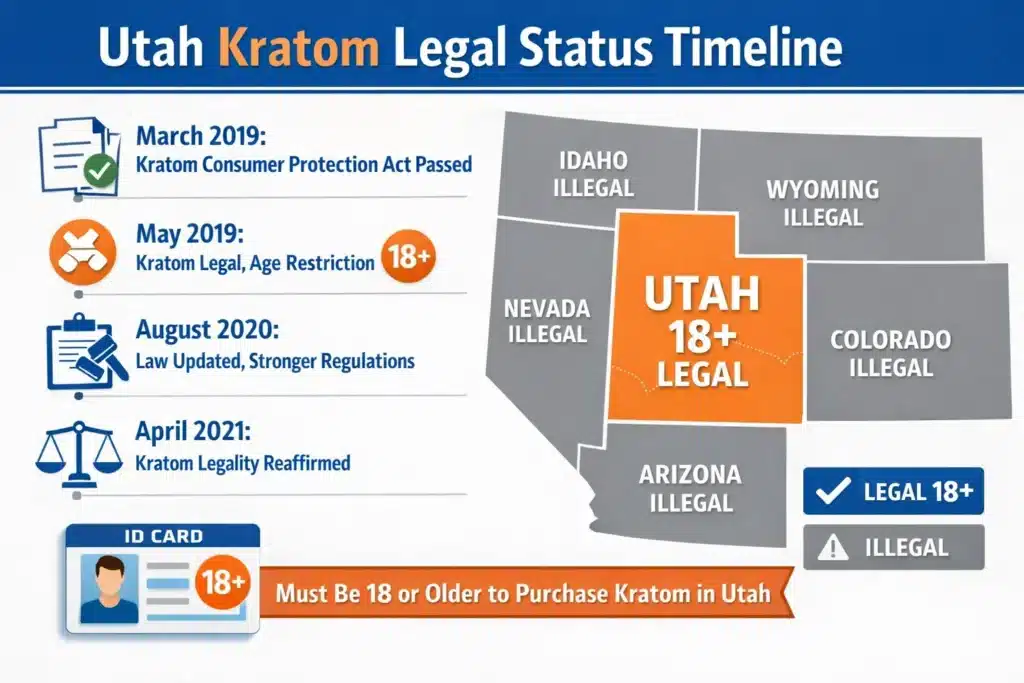
While kratom remains legal at the state level in Utah, local municipalities retain the authority to implement additional restrictions or outright bans within their jurisdictions. This creates a patchwork of regulations that vary by city and county.
City-Level Restrictions
Several Utah cities have considered or implemented local kratom ordinances. These local laws can be more restrictive than state regulations and may include:
- Complete bans on kratom sales within city limits
- Additional licensing requirements for vendors
- Restrictions on where kratom can be sold
- Enhanced age verification procedures
- Limits on advertising and marketing
County Regulations
County-level authorities may also implement kratom restrictions that affect unincorporated areas and can influence city policies within their boundaries. These regulations often focus on zoning restrictions and business licensing requirements.
Important Note: Local laws can change frequently. Residents should verify current local regulations in their specific area before purchasing or possessing kratom products.
What Utah Buyers Need to Know
Understanding the practical implications of Utah’s kratom laws helps consumers make informed decisions while staying compliant with all applicable regulations.
Legal Purchase Guidelines
Utah residents can legally purchase kratom through multiple channels, provided they meet age requirements and follow applicable laws. The most common purchase methods include:
Online Purchases:
- Age verification required at checkout
- Products shipped to Utah addresses
- Compliance with shipping regulations
- Documentation of purchase for records
Retail Locations:
- Smoke shops and head shops
- Health food stores
- Specialty kratom vendors
- Gas stations and convenience stores
When making purchases, buyers should prioritize vendors who demonstrate compliance with Utah regulations and maintain high quality standards. Quality kratom products from reputable vendors help ensure safety and legal compliance.
Possession and Use Laws
Utah law allows legal possession and personal use of kratom for adults. However, several important considerations apply:
- Public consumption may be restricted in certain areas
- Workplace policies may prohibit kratom use regardless of legal status
- Driving under the influence laws may apply to kratom
- School zones and other sensitive areas may have additional restrictions
Documentation and Records
While not legally required, maintaining documentation of kratom purchases can provide protection in case of legal questions. Recommended records include:
- Purchase receipts showing legal vendor and date
- Product packaging with labeling information
- Age verification documentation
- Medical consultation records if applicable
Penalties and Enforcement
Utah’s approach to kratom enforcement focuses primarily on vendor compliance rather than consumer penalties. However, violations of age restrictions or local ordinances can result in legal consequences.
Consumer Penalties
For consumers, potential penalties typically involve:
- Underage possession: Fines and potential juvenile court proceedings
- Violation of local ordinances: Municipal fines and confiscation
- Public consumption violations: Citations similar to alcohol violations
- DUI-related charges: If kratom use affects driving ability
Vendor Penalties
Kratom vendors face more significant potential penalties for non-compliance:
- Business license suspension or revocation
- Civil penalties and fines
- Criminal charges for willful violations
- Product seizure and disposal costs
Utah Kratom Legal Status Checker
Check kratom legality and requirements for your location and situation
Federal Considerations Affecting Utah
Utah’s kratom laws operate within the broader context of federal regulation, which continues to evolve. The Drug Enforcement Administration (DEA) has considered kratom scheduling multiple times, and federal decisions could override state laws.
Current Federal Status
At the federal level, kratom remains unscheduled, meaning it’s not classified as a controlled substance. However, the Food and Drug Administration (FDA) has raised concerns about kratom safety and has taken enforcement actions against certain vendors making health claims.
Potential Federal Changes
Federal kratom regulation could impact Utah in several ways:
- DEA scheduling would override state legality
- FDA regulation could impose new safety requirements
- Congressional action might establish national standards
- Interstate commerce restrictions could affect shipping
Utah residents should stay informed about federal developments that could affect local access to kratom products. Staying updated on regulations helps ensure continued compliance.
Safe and Legal Kratom Purchasing in Utah
For Utah residents seeking to purchase kratom legally and safely, several best practices can help ensure compliance while maximizing product quality and safety.
Choosing Reputable Vendors
Selecting the right vendor makes a significant difference in both legal compliance and product quality. Look for vendors who:
- Verify age properly and consistently
- Provide detailed labeling on all products
- Maintain quality testing and documentation
- Follow advertising guidelines without health claims
- Offer customer support for questions and concerns
Product Selection Considerations
Utah’s legal kratom market offers various product types, each with different considerations:
Kratom Powders:
- Traditional and most common form
- Available in multiple strains and varieties
- Requires accurate measuring for consistent serving sizes
- Premium kratom powders offer quality and variety
Kratom Capsules:
- Pre-measured for convenience
- Easier to consume discreetly
- Higher cost per serving than powder
- Consistent potency per capsule
Specialty Products:
- Gold kratom varieties offer unique processing
- Extract products with concentrated alkaloids
- Enhanced formulations with additional ingredients
- Liquid kratom products for fast absorption
Quality Assurance and Testing
While Utah doesn’t mandate specific kratom testing requirements, responsible consumers should seek vendors who provide:
- Third-party lab testing for purity and contaminants
- Alkaloid content verification
- Heavy metals screening for safety
- Microbial testing to prevent contamination
- Batch tracking for quality control
Interstate Travel and Kratom
Utah residents who travel should understand how kratom laws vary between states. What’s legal in Utah may not be legal in destination states, creating potential legal risks for travelers.
Travel Considerations
Before traveling with kratom, research:
- Destination state laws and local ordinances
- Transit state regulations for driving routes
- Airport security policies for air travel
- Hotel and accommodation policies regarding kratom
Safe Travel Practices
For legal kratom travel:
- Keep products in original packaging with labels
- Carry purchase documentation
- Research laws for all states on your route
- Consider shipping products instead of carrying them
- Have contact information for legal assistance
Consumer Rights and Protections
Utah consumers have several rights and protections when purchasing kratom, even though specific kratom consumer protection laws haven’t been enacted.
General Consumer Protections
Standard Utah consumer protection laws apply to kratom purchases:
- Truth in advertising requirements for vendors
- Product safety standards and liability
- Return and refund rights for defective products
- Privacy protection for customer information
- Fair business practices enforcement
Advocacy and Consumer Resources
Utah kratom consumers can access various resources for information and advocacy:
- American Kratom Association provides legal updates and advocacy
- Local consumer protection agencies handle complaints and violations
- Online communities share experiences and vendor recommendations
- Legal resources for questions about rights and regulations
Reporting Problems and Violations
Consumers who encounter problems with kratom vendors or products can take several steps:
- Contact the vendor directly to resolve issues
- File complaints with relevant consumer protection agencies
- Report safety concerns to appropriate health authorities
- Document problems for potential legal action
- Share experiences with community resources
Making Informed Decisions About Kratom in Utah
Understanding the legal landscape is just one aspect of making informed decisions about kratom use in Utah. Consumers should also consider personal factors, safety considerations, and long-term implications.
Personal Assessment Factors
Before purchasing kratom in Utah, consider:
- Individual health status and potential interactions
- Employment policies that may restrict kratom use
- Personal goals and intended use patterns
- Financial considerations for ongoing purchases
- Legal risk tolerance given evolving regulations
Safety and Responsibility
Responsible kratom use in Utah includes:
- Starting with small amounts to assess individual response
- Avoiding combination with other substances
- Monitoring effects and adjusting use accordingly
- Staying informed about legal and safety developments
- Seeking professional guidance when appropriate
Building Relationships with Vendors
Developing relationships with reputable kratom vendors provides several benefits:
- Consistent product quality and reliable supply
- Customer support for questions and concerns
- Updates on legal developments affecting the market
- Access to new products and special offerings
- Personalized recommendations based on preferences
Contacting experienced vendors can provide valuable guidance for both new and experienced kratom users in Utah.
Frequently Asked Questions – Is Kratom Legal In Utah
Is kratom legal in Utah?
Kratom is legal in Utah. The state allows the possession, sale, and use of kratom for adults. Utah does not classify kratom as a controlled substance. Instead, it regulates kratom through consumer protection laws that focus on product labeling and safety standards.
Does Utah have a kratom consumer protection law?
Yes. Utah has adopted a Kratom Consumer Protection Act. This law sets rules for how kratom products can be manufactured and sold. The goal is to reduce adulteration and improve transparency for consumers without banning the plant.
What rules does the Utah Kratom Consumer Protection Act include?
- Products must list ingredients clearly
- Adulterated kratom products are prohibited
- Synthetic additives are restricted
- Accurate labeling is required
Is kratom legal for adults only in Utah?
Utah law restricts kratom sales to adults. Retailers are expected to verify age at the point of sale. This aligns kratom with other age regulated herbal products sold within the state.
Can kratom be sold in stores in Utah?
Kratom can be sold in physical retail locations across Utah. Smoke shops, specialty stores, and herbal retailers commonly carry it. Sellers must comply with state labeling and safety requirements when offering kratom products.
Is online kratom sales allowed in Utah?
Online sales are allowed for Utah residents. Vendors shipping to Utah must follow the same consumer protection standards as in state sellers. This includes proper labeling and avoiding prohibited additives.
Are there any counties or cities in Utah where kratom is illegal?
There are no known county or city level bans on kratom in Utah. State law governs kratom legality, and local governments generally follow the statewide consumer protection framework.
What types of kratom products are legal in Utah?
- Kratom powder made from leaves
- Encapsulated kratom products
- Liquid extracts that meet labeling rules
Can kratom be mixed with other substances in Utah?
Utah law prohibits kratom products that are adulterated with dangerous or synthetic substances. Products should contain only kratom and disclosed ingredients that meet safety standards.
Is kratom considered a controlled substance in Utah?
Kratom is not listed as a controlled substance in Utah. The state chose regulation over prohibition, allowing legal access while setting quality and safety requirements for sellers.
Can kratom laws change in Utah?
Kratom laws can change through new legislation or regulatory updates. Residents should stay informed by checking official Utah state resources for the most current legal status.
Do law enforcement agencies enforce kratom regulations in Utah?
- They monitor compliance with labeling laws
- They may act on adulterated products
- They enforce age related sales rules
Conclusion
Is kratom legal in Utah? Yes, kratom remains legal for adults aged 18 and older throughout Utah, with the state taking a measured approach to regulation rather than implementing outright prohibition. However, the legal landscape includes important nuances that every consumer must understand.
Utah’s kratom laws provide a framework that balances consumer access with safety considerations. The state’s age restriction ensures that kratom remains an adult-only product, while existing consumer protection laws provide basic safeguards for purchasers. Local municipalities retain the authority to implement additional restrictions, creating the need for consumers to stay informed about regulations in their specific areas.
For Utah residents interested in kratom, the path forward involves several key steps. First, ensure compliance with all age requirements and maintain proper documentation of legal purchases. Second, choose reputable vendors who demonstrate commitment to quality and legal compliance. Third, stay informed about both local and federal regulatory developments that could affect future access.
The kratom market in Utah continues to evolve, with increasing vendor options and improving quality standards. However, this growth also brings increased regulatory scrutiny and the potential for future restrictions. Consumers who prioritize legal compliance, product safety, and responsible use will be best positioned to navigate these changes successfully.
Whether you’re new to kratom or an experienced user, understanding Utah’s legal framework provides the foundation for making informed decisions. By staying educated about regulations, choosing quality products from reputable vendors, and following best practices for legal compliance, Utah residents can continue to access kratom while protecting their rights and well-being.
Daniel Brooks
Daniel Brooks is a U.S. based botanical writer with over six years of hands on experience in kratom focused content. He studies kratom strains, sourcing standards, dosage patterns, and consumer safety topics. He stays up to date with current news, regulatory changes, and market trends related to kratom and botanical products.
His work includes educational guides, strain breakdowns, and vendor reviews written for everyday users. He avoids promotional language and presents clear facts. Daniel helps readers understand both benefits and risks so they can make informed choices about responsible kratom use.