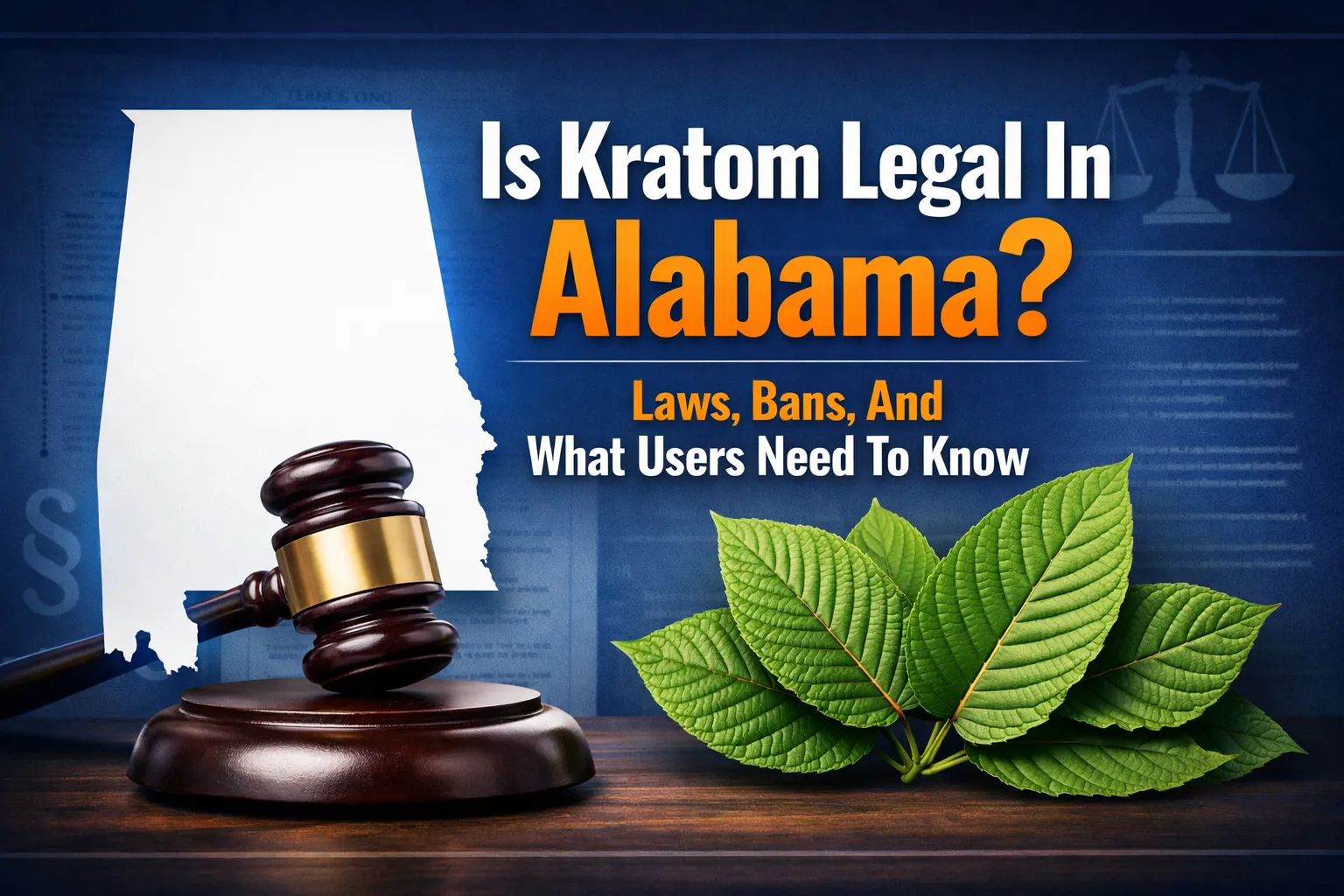
Is Kratom Legal In Alabama remains a common question because Alabama’s relationship with kratom has been anything but straightforward. While millions of Americans use this Southeast Asian botanical for wellness purposes, residents of the Heart of Dixie face a complex legal landscape that has shifted over the past decade. To understand the current status, you must look beyond existing laws and examine the political battles, regulatory efforts, and ongoing debates that continue to shape kratom’s legality in Alabama today.
- Kratom is currently legal in Alabama as of recent legislative changes, reversing previous bans
- Age restrictions apply – users must be 21 or older to purchase and possess kratom products
- Quality and labeling requirements are in place to ensure consumer safety and product standards
- Local jurisdictions may have additional restrictions beyond state-level regulations
- Federal oversight remains a possibility that could impact future kratom access nationwide
Understanding Kratom: The Botanical at the Center of Legal Debate
Kratom (Mitragyna speciosa) is a tropical tree native to Southeast Asia, particularly Thailand, Malaysia, and Indonesia. The leaves of this plant have been used traditionally for centuries by local populations for their energizing and pain-relieving properties. In recent decades, kratom has gained popularity in Western countries, including the United States, as people seek natural alternatives for managing various health concerns.
The active compounds in kratom, primarily mitragynine and 7-hydroxymitragynine, interact with opioid receptors in the brain, though they work differently than traditional opioids. This unique mechanism has made kratom both appealing to users and concerning to some health officials and lawmakers.
Why Kratom Became Controversial
The controversy surrounding kratom stems from several factors:
- Lack of FDA approval for medical use
- Concerns about dependency and withdrawal symptoms
- Reports of adverse effects when combined with other substances
- Inconsistent product quality in an unregulated market
- Debate over its classification as a dietary supplement versus controlled substance
These concerns have led to varying legal approaches across different states, with some embracing regulation while others have implemented outright bans.
The Evolution of Kratom Laws in Alabama
Early Legal Status (2010s)
Initially, kratom existed in a legal gray area in Alabama, as it did in most states. The plant wasn’t specifically regulated, meaning it could be sold and possessed without legal consequences. However, this changed as awareness of kratom grew and concerns about its safety emerged.
The 2016 Ban
In 2016, Alabama became one of the first states to ban kratom completely. The Alabama Legislature passed legislation that classified kratom’s active alkaloids as Schedule I controlled substances, making possession, sale, and distribution illegal. This ban was part of a broader trend of states taking precautionary measures against kratom before comprehensive research could be conducted.
The ban had immediate impacts:
- Retailers were forced to remove kratom products from shelves
- Users faced potential criminal charges for possession
- Advocacy groups began organizing to challenge the legislation
- Underground markets emerged, creating safety concerns
Advocacy and Legislative Efforts
Following the ban, kratom advocacy groups, including the American Kratom Association (AKA), began working to educate Alabama lawmakers about kratom’s benefits and push for evidence-based regulation rather than prohibition. These efforts included:
- Organizing user testimonials and scientific presentations
- Lobbying for the Kratom Consumer Protection Act (KCPA)
- Building coalitions with other advocacy organizations
- Highlighting successful regulation models from other states
Current Legal Status: Is Kratom Legal In Alabama Now?
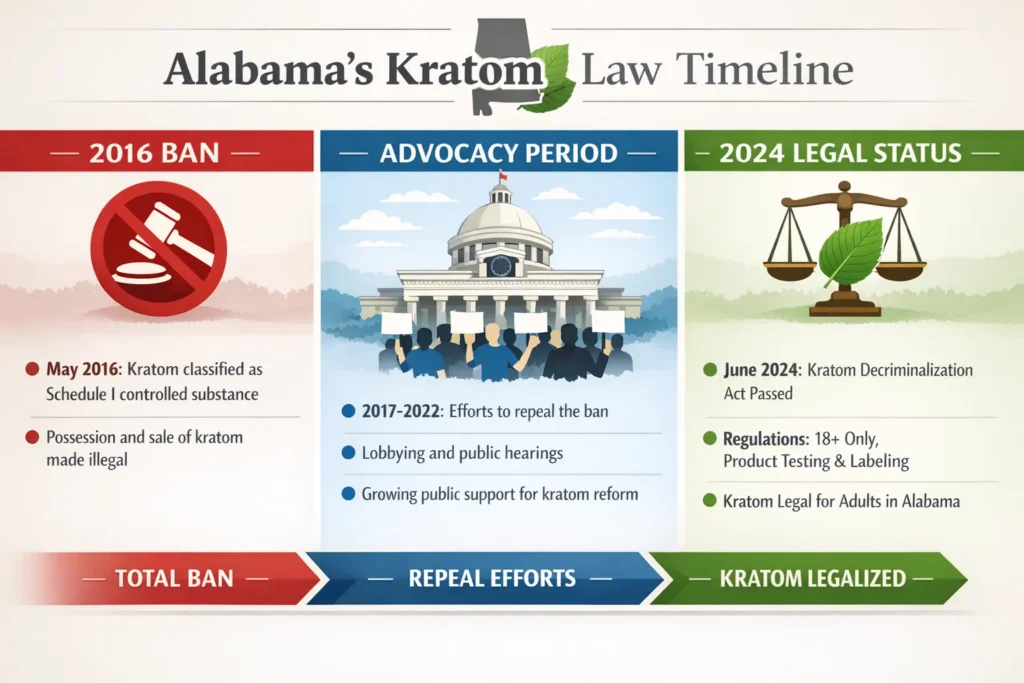
As of the most recent legislative session, kratom is legal in Alabama under specific regulatory conditions. The state reversed its previous ban and implemented a regulated framework similar to other states that have adopted the Kratom Consumer Protection Act.
Key Provisions of Alabama’s Kratom Laws
The current legal framework includes several important provisions:
Age Restrictions
- Minimum age of 21 for purchase and possession
- Valid ID required for all kratom transactions
- Penalties for underage use similar to alcohol violations
Product Standards
- Mandatory labeling requirements including alkaloid content
- Prohibited adulterants such as synthetic compounds
- Testing requirements for contaminants and heavy metals
- Good manufacturing practices for processors and retailers
Retail Regulations
- Licensed vendor requirements for kratom sales
- Record-keeping obligations for retailers
- Inspection protocols to ensure compliance
- Penalties for violations including fines and license revocation
What This Means for Alabama Residents
For kratom users in Alabama, the current legal status provides several benefits:
✅ Legal access to quality-tested kratom products
✅ Consumer protections against contaminated or adulterated products
✅ Clear guidelines for legal use and possession
✅ Reduced legal risks compared to the previous ban period
However, users should be aware of ongoing responsibilities:
⚠️ Age verification required for all purchases
⚠️ Compliance with local ordinances that may be more restrictive
⚠️ Staying informed about potential future legislative changes
⚠️ Responsible use to avoid potential health risks
Local Variations: City and County Regulations
While kratom is legal at the state level in Alabama, local jurisdictions may impose additional restrictions. Some cities and counties have enacted their own ordinances that may be more restrictive than state law.
Common Local Restrictions
- Zoning limitations on where kratom can be sold
- Additional licensing requirements for retailers
- Enhanced penalties for violations
- Stricter age verification procedures
Checking Local Laws
Before purchasing or using kratom in Alabama, it’s essential to verify local regulations in your specific area. Contact your city hall or county courthouse to inquire about any local kratom ordinances that may apply.
Understanding Kratom Dosage and Safety in Alabama
With legal access to kratom in Alabama, understanding proper dosage and safety considerations becomes crucial. Learn more about proper kratom dosing to ensure safe and effective use.
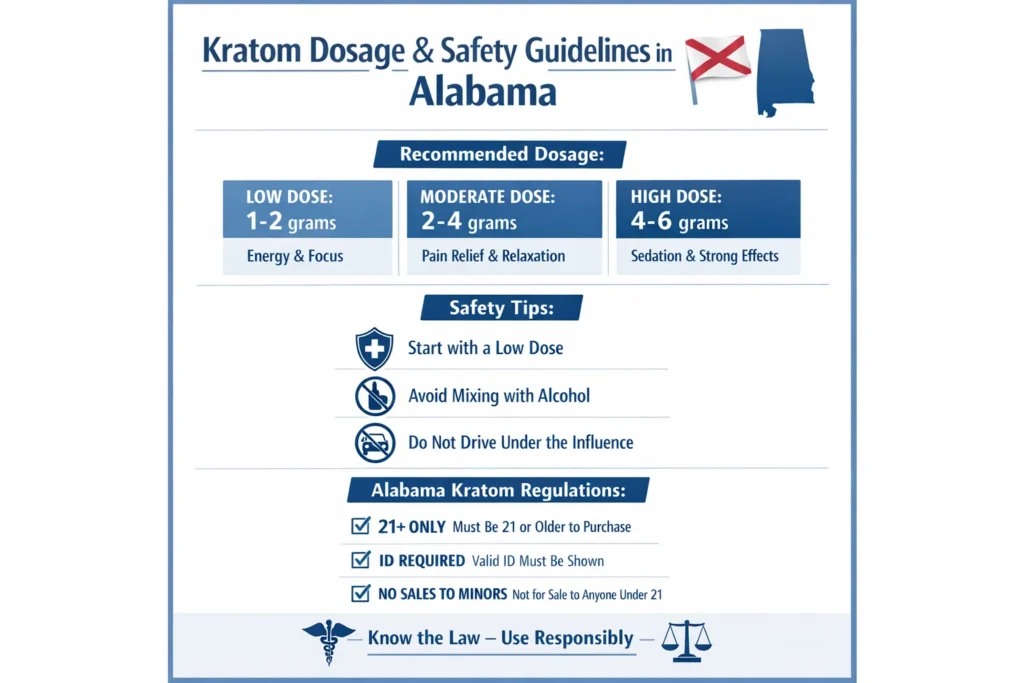
Recommended Dosage Guidelines
| Experience Level | Dosage Range | Effects |
|---|---|---|
| Beginner | 1-2 grams | Mild stimulation |
| Intermediate | 2-4 grams | Moderate effects |
| Experienced | 4-6 grams | Strong effects |
| High Tolerance | 6+ grams | Maximum effects |
Safety Considerations
When using kratom legally in Alabama, keep these safety tips in mind:
- Start with low doses and gradually increase as needed
- Avoid mixing with alcohol or other substances
- Stay hydrated and maintain proper nutrition
- Take regular breaks to prevent tolerance buildup
- Consult healthcare providers if you have medical conditions
For more detailed information about how long kratom takes to work, timing your doses appropriately can help optimize your experience while staying within legal guidelines.
Age Requirements and Legal Compliance
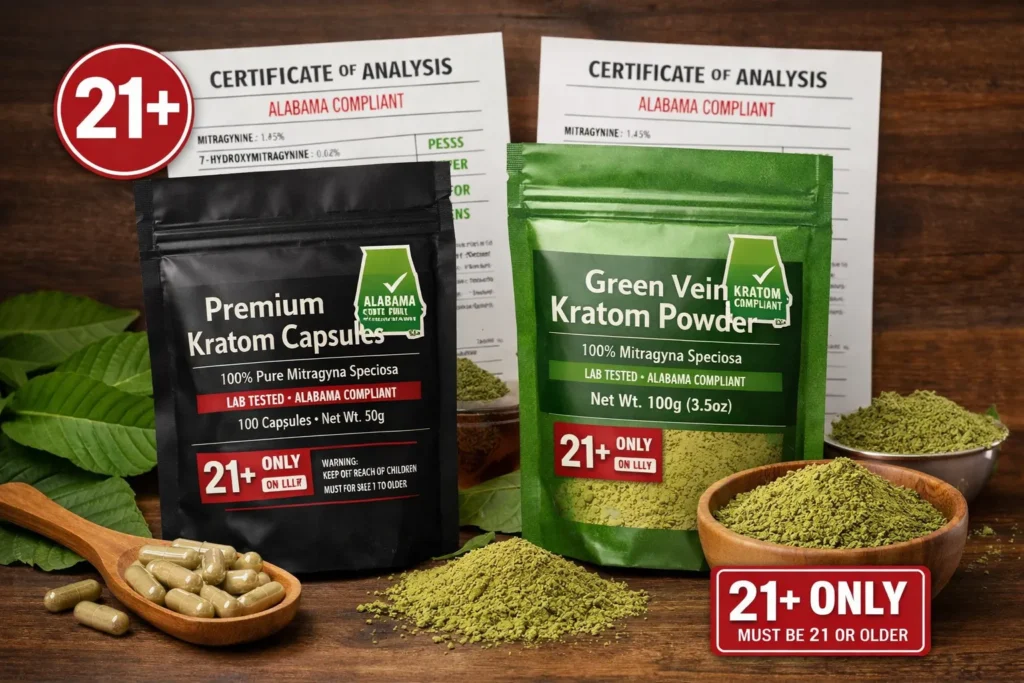
Alabama’s kratom laws include specific age requirements that users must understand and follow. The minimum age to purchase kratom in Alabama is 21, which is stricter than some other states.
Age Verification Process
Retailers in Alabama must:
- Check valid government-issued ID for all kratom purchases
- Refuse sales to anyone under 21
- Maintain records of age verification procedures
- Train staff on proper ID checking protocols
Penalties for Underage Use
Violations of age restrictions can result in:
- Fines for underage possession
- Legal consequences for providing kratom to minors
- Retailer penalties for failing to verify age
- Potential criminal charges in severe cases
Comparing Alabama’s Laws to Other States
Alabama’s approach to kratom regulation falls somewhere in the middle of the spectrum compared to other states. Understanding how Alabama compares to other jurisdictions can provide context for the current legal landscape.
States with Similar Regulations
Several states have adopted similar regulatory frameworks:
- Utah – Age restrictions and product standards
- Georgia – Consumer protection measures
- Arizona – Quality testing requirements
- Nevada – Licensed vendor systems
More Restrictive States
Some states maintain stricter approaches:
- Wisconsin – Complete ban on kratom
- Vermont – Prohibited for human consumption
- Rhode Island – Controlled substance classification
- Indiana – Age 18+ with additional restrictions
More Permissive States
Other states have fewer restrictions:
- Texas – Minimal state-level regulation
- Florida – No statewide restrictions (some local bans)
- California – Generally unrestricted at state level
- Colorado – Limited regulatory oversight
For comparison, you might be interested in kratom’s legal status in Mexico, which takes a different approach to regulation.
The Role of Kratom Vendors in Alabama’s Legal Market
With kratom’s legal status established in Alabama, the role of reputable vendors becomes crucial for maintaining compliance and ensuring consumer safety. Quality vendors must navigate both state regulations and industry best practices.
Vendor Responsibilities
Licensed kratom vendors in Alabama must:
- Maintain proper licensing with state and local authorities
- Implement quality testing for all products
- Provide accurate labeling including alkaloid content
- Follow good manufacturing practices for safety
- Keep detailed records for regulatory compliance
Choosing Reputable Vendors
When selecting kratom products in Alabama, consider vendors that:
✅ Display proper licensing information
✅ Provide third-party lab testing results
✅ Offer clear product labeling and descriptions
✅ Maintain professional customer service standards
✅ Follow all state and local regulations
For insights into vendor quality, you can read about reputable kratom vendor reviews to understand what to look for in a quality supplier.
Popular Kratom Strains Available in Alabama
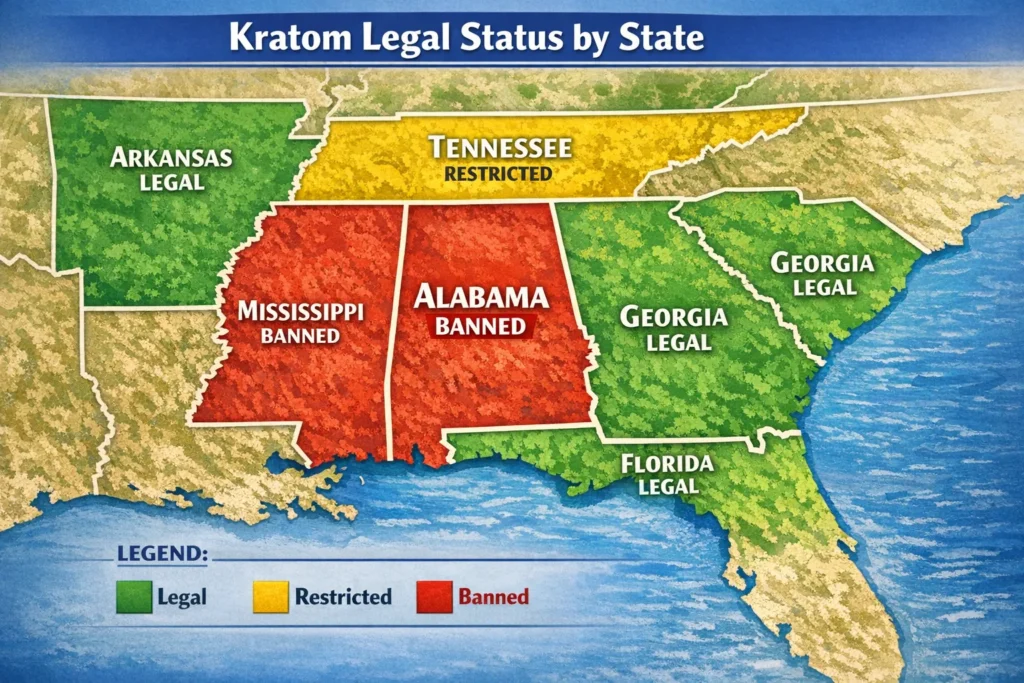
With legal access to kratom in Alabama, users can explore various strains that offer different effects and benefits. Understanding strain differences can help users make informed choices within the legal framework.
Red Vein Strains
Red vein kratom strains are known for their relaxing and pain-relieving properties:
- Red Vietnam – Known for its balanced effects and smooth experience
- Red Borneo – Popular for evening use and relaxation
- Red Maeng Da – Potent strain with strong effects
- Red Thai – Traditional strain with calming properties
Green Vein Strains
Green strains offer a balance between energy and relaxation:
- Green Malay – Long-lasting effects with moderate stimulation
- Green Borneo – Balanced strain suitable for daytime use
- Green Thai – Energizing with mild pain relief
- Green Vietnam – Smooth effects with good duration
White Vein Strains
White strains are typically more energizing and stimulating:
- White Maeng Da – Highly stimulating with mood enhancement
- White Borneo – Clean energy without jitters
- White Thai – Traditional energizing strain
- White Vietnam – Smooth stimulation with focus enhancement
Specialty Strains
Some vendors offer unique blends and specialty strains:
- Super Borneo – Enhanced potency Borneo variety
- Brown Borneo – Unique processing method for different effects
- Gold strains – Fermented varieties with distinct properties
- Yellow strains – Blended or specially processed kratom
Federal Considerations
While kratom is currently legal in Alabama at the state level, federal regulations could potentially impact its status in the future. Understanding federal considerations is important for long-term planning.
Current Federal Status
At the federal level, kratom remains:
- Not scheduled under the Controlled Substances Act
- Not approved by the FDA for medical use
- Subject to import restrictions in some cases
- Under ongoing review by various federal agencies
Potential Federal Changes
Several factors could influence future federal policy:
- DEA scheduling decisions based on safety reviews
- FDA regulatory actions regarding dietary supplements
- Congressional legislation either protecting or restricting kratom
- International pressure from organizations like the UN
Staying Informed
Alabama kratom users should:
- Monitor federal developments through advocacy organizations
- Participate in public comment periods when available
- Support evidence-based policy through advocacy efforts
- Stay connected with local and national kratom communities
Alabama Kratom Legal Status Checker
Check kratom legality for your age and location in Alabama
Quality and Testing Requirements in Alabama
Alabama’s kratom regulations include specific quality and testing requirements designed to protect consumers and ensure product safety. These standards help distinguish the legal market from unregulated sources.
Mandatory Testing Standards
All kratom products sold legally in Alabama must undergo testing for:
- Heavy metals (lead, mercury, cadmium, arsenic)
- Microbial contaminants (bacteria, yeast, mold)
- Pesticide residues from cultivation
- Alkaloid content (mitragynine and 7-hydroxymitragynine)
- Adulterants and synthetic compounds
Labeling Requirements
Legal kratom products must include:
✅ Alkaloid content clearly displayed
✅ Batch/lot numbers for traceability
✅ Expiration dates for freshness
✅ Manufacturer information and contact details
✅ Warning labels about age restrictions
✅ Recommended serving sizes where applicable
Good Manufacturing Practices (GMP)
Licensed kratom processors in Alabama must follow:
- Sanitary facility conditions for production
- Quality control procedures throughout processing
- Employee training programs for safety
- Equipment maintenance and calibration
- Documentation systems for compliance tracking
For detailed information about vendor quality standards, check out reviews of reputable kratom suppliers that meet these requirements.
Penalties and Enforcement in Alabama
Understanding the penalties for kratom law violations in Alabama is crucial for staying compliant with current regulations.
Violations and Penalties
| Violation Type | First Offense | Subsequent Offenses | Additional Consequences |
|---|---|---|---|
| Underage possession | Fine $100-500 | Fine $500-1000 | Possible community service |
| Selling to minors | Fine $1000-5000 | License revocation | Criminal charges possible |
| Unlicensed retail | Fine $2000-10000 | Business closure | Civil penalties |
| Product violations | Warning/Fine | License suspension | Product recalls |
Enforcement Agencies
Several agencies may be involved in kratom law enforcement:
- Alabama Department of Public Health – Product safety oversight
- Local law enforcement – Age restriction violations
- State licensing boards – Retail compliance
- Consumer protection agencies – Quality violations
Avoiding Legal Issues
To stay compliant with Alabama kratom laws:
🔍 Verify vendor licensing before purchasing
🆔 Always carry valid ID when possessing kratom
📋 Keep receipts as proof of legal purchase
🏛️ Check local ordinances in your area
📱 Stay updated on law changes
Economic Impact of Legal Kratom in Alabama
The legalization and regulation of kratom in Alabama has created economic opportunities while ensuring consumer protection. Understanding this impact provides context for the policy decisions.
Market Growth
Since legalization, Alabama’s kratom market has shown:
- Increased retail locations offering compliant products
- Job creation in retail and processing sectors
- Tax revenue from legitimate business operations
- Consumer savings from competitive pricing
- Innovation in product development and testing
Business Opportunities
Legal kratom businesses in Alabama include:
- Retail stores specializing in kratom products
- Online vendors serving Alabama customers
- Testing laboratories providing compliance services
- Processing facilities for kratom preparation
- Consulting services for regulatory compliance
Consumer Benefits
Regulation has provided Alabama consumers with:
✅ Quality assurance through testing requirements
✅ Product consistency from standardized processes
✅ Legal protection when purchasing and using
✅ Competitive pricing in a regulated market
✅ Consumer recourse for product issues
Health Considerations and Responsible Use
With legal access to kratom in Alabama, understanding health considerations and responsible use practices becomes essential for users.
Potential Benefits
Users report kratom may help with:
- Pain management for chronic conditions
- Energy and focus for daily activities
- Mood support during difficult periods
- Sleep quality improvement
- Stress reduction and relaxation
Potential Risks
Responsible use requires awareness of potential risks:
⚠️ Dependency potential with regular use
⚠️ Drug interactions with medications
⚠️ Digestive issues in some users
⚠️ Tolerance development over time
⚠️ Quality variations between products
Best Practices for Alabama Users
- Start with low doses and increase gradually
- Rotate strains to prevent tolerance
- Take regular breaks from use
- Stay hydrated and maintain good nutrition
- Consult healthcare providers about interactions
- Purchase only from licensed vendors
For more information about kratom’s effects and benefits, explore educational resources that can help guide responsible use.
Potential Changes
Future developments may include:
- Federal legislation affecting all states
- Updated testing standards for enhanced safety
- Expanded research into kratom’s effects
- International trade considerations
- Medical research applications
Staying Engaged
Alabama kratom users can stay involved by:
📧 Joining advocacy organizations for updates
🗳️ Participating in public comment periods on regulations
📞 Contacting legislators about kratom issues
📚 Supporting research efforts through participation
🤝 Building community with other responsible users
Alabama Kratom Laws FAQ
Essential information about kratom legality in Alabama
This information is for educational purposes only and should not be considered legal advice. Kratom laws can change rapidly. Always verify current local and state laws before purchasing or using kratom. Consult with legal professionals for specific legal guidance.
Resources for Alabama Kratom Users
Staying informed about kratom laws and best practices requires access to reliable resources and information sources.
Official Government Resources
- Alabama Department of Public Health – Regulatory information
- State legislature website – Current laws and bills
- Local government websites – Municipal ordinances
- FDA website – Federal guidance and warnings
Educational Resources
- American Kratom Association – Policy updates and advocacy
- Scientific journals – Research findings and studies
- Kratom educational content – User guides and information
- Medical professionals – Health guidance and advice
Support Networks
- Online forums – User experiences and advice
- Local meetup groups – Community support
- Healthcare providers – Medical guidance
- Legal professionals – Compliance advice
Conclusion
Is kratom legal in Alabama? Yes, kratom is currently legal in Alabama for adults aged 21 and older, following the implementation of comprehensive regulations that prioritize consumer safety while allowing access to this traditional botanical. The state’s journey from prohibition to regulated legalization demonstrates how evidence-based policy can balance public health concerns with individual freedom.
Alabama’s current kratom laws represent a significant victory for advocacy efforts and provide a framework that other states can learn from. The regulations ensure product quality through mandatory testing, protect minors through age restrictions, and create a legitimate marketplace for kratom businesses to operate safely and transparently.
For Alabama residents interested in kratom, the key to staying compliant is understanding both state regulations and any local ordinances that may apply in their area. This includes verifying age requirements, purchasing only from licensed vendors, and staying informed about potential future changes to the legal landscape.
Daniel Brooks
Daniel Brooks is a U.S. based botanical writer with over six years of hands on experience in kratom focused content. He studies kratom strains, sourcing standards, dosage patterns, and consumer safety topics. He stays up to date with current news, regulatory changes, and market trends related to kratom and botanical products.
His work includes educational guides, strain breakdowns, and vendor reviews written for everyday users. He avoids promotional language and presents clear facts. Daniel helps readers understand both benefits and risks so they can make informed choices about responsible kratom use.