

Tolerance can reduce what you enjoy about kratom if you use it too often. Higher amounts deliver weaker effects and cost you more over time. Your body also adapts faster. The good news is that most users can avoid tolerance with smart timing and restraint. How Often Can You Take Kratom matters more than dosage alone. This guide explains a practical schedule that helps you keep benefits steady and sustainable through 2026.
- Maximum twice weekly with three days between doses prevents tolerance for most users
- Every-other-day dosing works as the gold standard approach for regular users
- Low doses (1-3 grams) dramatically reduce tolerance development compared to high doses
- Tolerance breaks require 10 days minimum, or 3 months for heavy long-term users
- Individual factors like metabolism and genetics affect how quickly tolerance builds
Understanding Kratom Tolerance Development
Tolerance happens fast with kratom. Your body adapts when exposed to the same chemicals repeatedly[2]. The receptors become less sensitive. You need more to feel the same effects.
Kratom tolerance begins developing within 7-14 days of consistent daily use[1]. For most people, noticeable tolerance sets in within 2-4 weeks of daily kratom consumption[1].
This isn’t just theory. It’s what happens when you ignore spacing rules.
Why Tolerance Develops
Your body isn’t stupid. It recognizes patterns. When kratom’s alkaloids hit the same receptors daily, your system compensates. Receptor sensitivity drops. Enzyme production changes. Your baseline shifts.
The process accelerates with higher doses. Skip the science talk—just know this: daily use guarantees tolerance. No exceptions.
Individual Factors That Matter
Not everyone builds tolerance at the same rate. Your metabolism plays a role. Body weight matters. Genetics influence receptor sensitivity[1].
Some people develop tolerance faster. Others get lucky with slower progression. But nobody escapes it completely with daily use.
Consult doctor before starting any kratom regimen. Individual health conditions affect tolerance development.
How Often Can You Take Kratom: Proven Schedules
Three schedules work. Choose based on your needs and lifestyle. Each prevents tolerance when followed correctly.
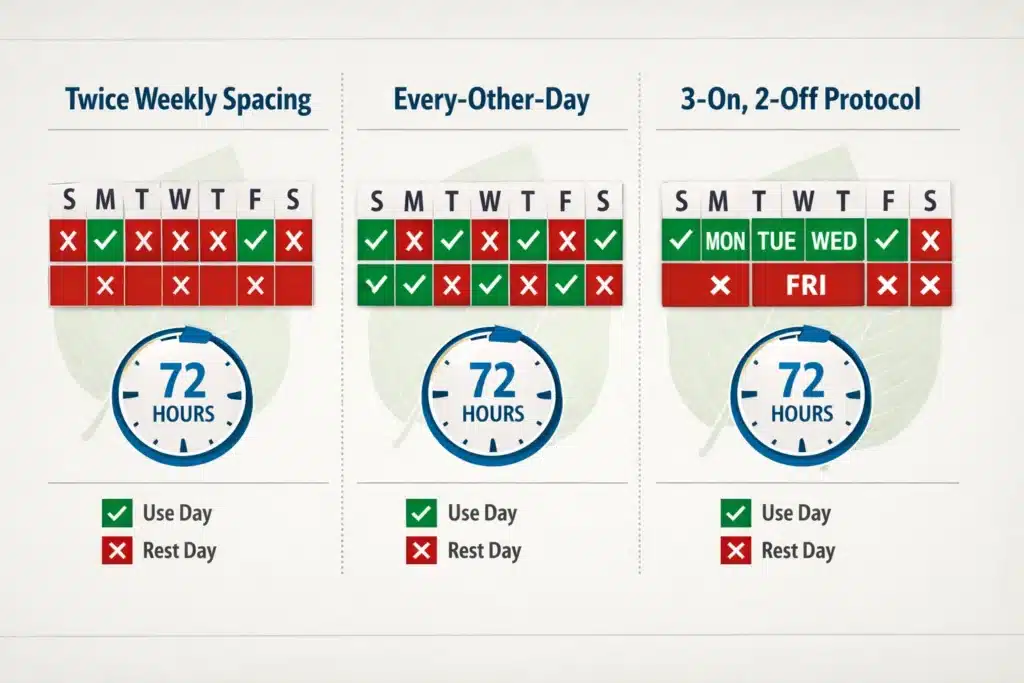
Twice Weekly Maximum (Best for Beginners)
Maximum twice weekly use is the safest approach[2][5]. Space doses at least three days apart. Never use on consecutive days[2][5].
This schedule works perfectly for occasional users. You maintain full effects. Tolerance doesn’t develop. Your receptors reset completely between doses.
Example schedule:
- Monday: Take kratom
- Thursday: Take kratom
- Repeat weekly
Simple. Effective. Works.
For more guidance on proper dosing amounts, check our complete guide on how many grams of kratom to take.
Every-Other-Day Protocol (Gold Standard)
Every-other-day dosing is the gold standard for most users[1]. One day on, one day off. This pattern maintains therapeutic benefits while preventing tolerance buildup.
Most users report sustained effects with this schedule. The 48-hour gap allows receptor sensitivity to recover. You keep the benefits without the downsides.
This approach costs more over time. But it worth it for consistent results.
3-On-2-Off Schedule (For Chronic Conditions)
The 3-on-2-off protocol works particularly well for people managing chronic conditions[1]. Take kratom three consecutive days. Rest for two full days. Repeat.
This schedule provides more consistent relief than twice-weekly dosing. The two-day break prevents significant tolerance development. Quality varies in results, but most users maintain effectiveness.
Example pattern:
- Monday-Wednesday: Daily kratom use
- Thursday-Friday: Complete break
- Saturday-Monday: Daily kratom use
- Tuesday-Wednesday: Complete break
Understanding how long kratom takes to kick in helps optimize this schedule.
Weekly Cycling Approach
Weekly cycling involves taking kratom 4-5 days per week with 2-3 consecutive rest days[1]. This provides flexibility while maintaining tolerance control.
Try this if other schedules don’t fit your lifestyle. The key: keep rest days consecutive. Scattered days off don’t work as well.
🌿 Kratom Frequency Calculator
Your Personalized Schedule
Optimal Kratom Dosage to Prevent Tolerance
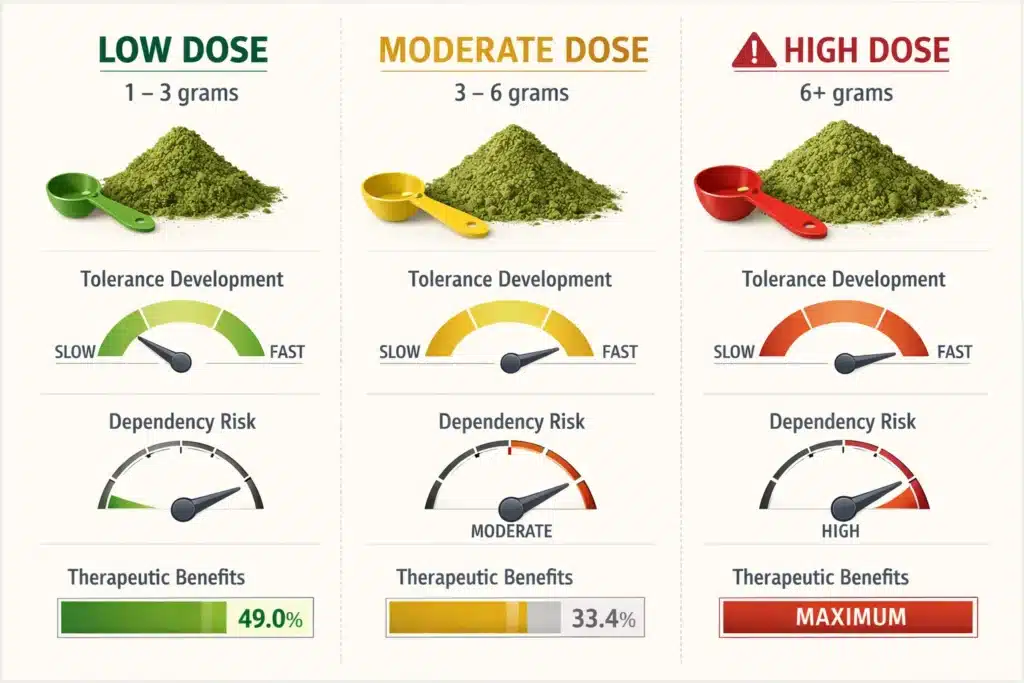
Dose matters as much as frequency. Low doses prevent tolerance better than any schedule.
Low Dose Range (1-3 Grams)
Start with 1-3 grams. This range dramatically reduces tolerance development[1]. Lower side effect risk. Better long-term sustainability.
Research shows 49.0% of respondents use this dosage range[1][4]. There’s a reason—it works.
Lasts longer in terms of maintaining effectiveness. You won’t need to increase doses constantly. For specific guidance, see our article on how much kratom to take.
Moderate Dose Range (3-6 Grams)
Moderate doses (3-6 grams) show reasonable tolerance development with good therapeutic potential[1]. About 33.4% of study respondents reported this range[1][4].
This sweet spot balances effects and tolerance risk. Better than high doses for long-term use. Still manageable for tolerance control.
Most beneficial effects occur at 1-3 grams and 3-5 grams taken 2-3 times per day[4]. Stay in this range when possible.
If you prefer capsules, learn how many kratom capsules to take for equivalent dosing.
High Dose Range (6+ Grams)
Avoid doses above 6 grams when possible. High doses (6+ grams) dramatically accelerate tolerance development[1]. Dependency potential increases. Side effects multiply.
Adverse effects in studies required higher doses of >8 grams with 4-5 times daily frequency[4]. This pattern destroys tolerance fast.
Skip it unless absolutely necessary. The short-term boost isn’t worth the long-term cost.
Taking Tolerance Breaks: Reset Strategies
Tolerance breaks work. They reset your system. But timing matters.
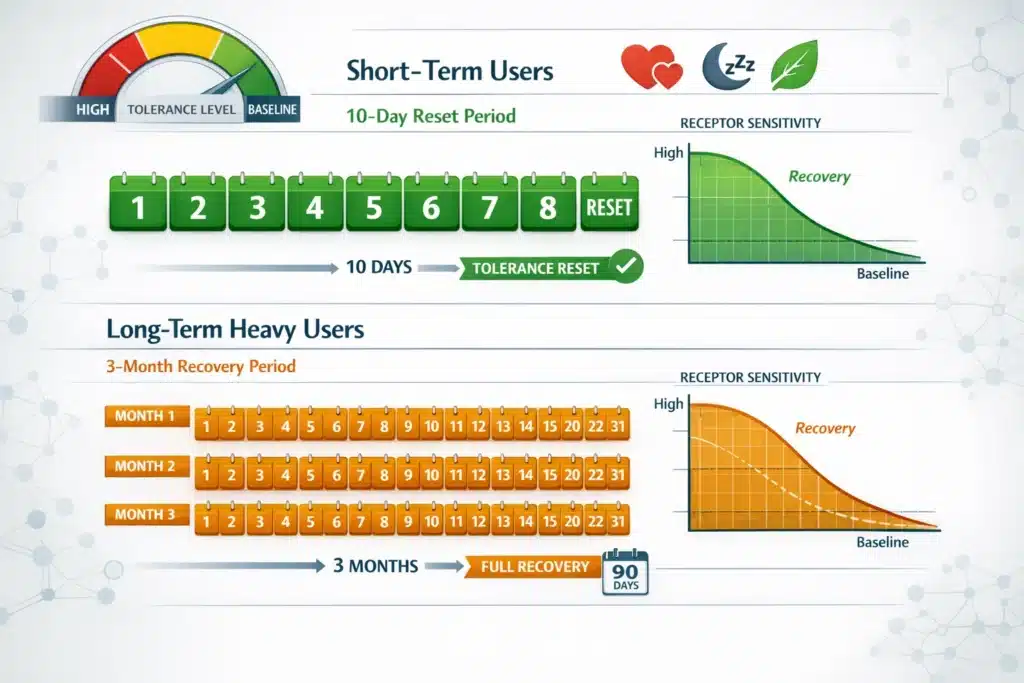
Short-Term Tolerance Breaks
Kratom tolerance breaks require approximately 10 days when tolerance levels are low[3]. This works for people who caught tolerance early.
Ten days feels long. But it’s necessary. Shorter breaks don’t fully reset receptors. You’ll just build tolerance faster afterward.
Reliable results come from complete abstinence during breaks. No cheating. No “just this once.”
Long-Term Tolerance Breaks
Heavy users need longer breaks. At least 3 months for users who consumed high amounts for extended periods[3]. This isn’t negotiable.
Your receptors need serious recovery time. Three months resets most physiological adaptations. Anything shorter leaves residual tolerance.
For those looking to reduce usage, our guide on how to taper off kratom provides essential strategies.
Managing Breaks Effectively
Consult doctor before starting tolerance breaks. Withdrawal symptoms can occur. Medical supervision helps manage discomfort safely.
Plan breaks during low-stress periods. Stock up on supplements. Stay hydrated. Exercise helps. Sleep quality matters.
The discomfort passes. The reset worth it for restored effectiveness.
Frequently Asked Questions
How often can you take kratom?
Most users space kratom use to avoid building tolerance. Many take it no more than once or twice per day, with breaks between days. Frequency depends on individual sensitivity, amount used, and personal goals. Regular daily use may increase tolerance over time.
Can you take kratom every day?
Some people use kratom daily, but frequent use can reduce effectiveness. Daily intake may lead to tolerance, meaning higher amounts are needed for the same effect. Many users prefer scheduled breaks to help maintain consistent results and avoid habitual patterns.
How long should you wait between kratom doses?
Most users wait several hours between doses. Common spacing includes:
- At least 4 to 6 hours between servings
- Longer gaps for higher amounts
- One dose per day for beginners
Is it better to take kratom daily or occasionally?
Occasional use is often preferred for maintaining sensitivity. Taking kratom only a few times per week may help limit tolerance buildup. Daily use is more likely to require increasing amounts over time, which some users aim to avoid through moderation.
How often do beginners usually take kratom?
Beginners typically start with infrequent use. A common approach includes:
- One dose in a day
- Use on non consecutive days
- Observation of personal response
Does taking kratom too often reduce its effects?
Yes, frequent use can lead to tolerance. This means the same amount may feel less effective over time. Users often manage this by lowering frequency, rotating strains, or taking short breaks to reset sensitivity.
How many times per week do most people take kratom?
Usage varies, but many people limit intake to a few days per week. Common patterns include:
- Two to three times weekly
- Weekday use with weekend breaks
- Single use on high demand days
Can you take kratom more than once in a day?
Some users take more than one dose per day, but this increases the chance of tolerance. When doing so, spacing doses several hours apart is common. Many prefer limiting total daily frequency to reduce overuse.
Should you take breaks from kratom use?
Taking breaks is a common practice. Breaks may help maintain effectiveness and reduce dependency. Popular break schedules include:
- One to two days off per week
- Several days off each month
- Short pauses after regular use periods
Does kratom frequency depend on the strain?
Yes, perceived effects may vary by strain type. Some strains feel more stimulating or longer lasting, which can affect how often they are taken. Individual response still plays a major role regardless of strain.
How can you tell if you are taking kratom too often?
Signs may include reduced effects or feeling the need to increase frequency. Other indicators include:
- Shorter time between doses
- Less noticeable results
- Difficulty skipping days
Conclusion
How often can you take kratom without building tolerance? Maximum twice weekly for beginners. Every-other-day for regular users. 3-on-2-off for chronic conditions. These schedules work when followed consistently.
Keep doses low. Take real tolerance breaks when needed. Track your usage. Rotate strains. Buy quality products.
References
[1] How Often Can You Take Kratom – https://jackbotanicals.com/guides/how-often-can-you-take-kratom/
[2] Kratom Tolerance – https://www.ridgefieldrecovery.com/drugs/kratom/kratom-tolerance/
[3] Kratom Tolerance – https://katsbotanicals.com/kratom-tolerance/
[4] Full – https://www.frontiersin.org/journals/pharmacology/articles/10.3389/fphar.2022.765917/full
[5] How Long Does Kratom Last – https://www.elev8centers.com/blog/how-long-does-kratom-last
Daniel Brooks
Daniel Brooks is a U.S. based botanical writer with over six years of hands on experience in kratom focused content. He studies kratom strains, sourcing standards, dosage patterns, and consumer safety topics. He stays up to date with current news, regulatory changes, and market trends related to kratom and botanical products.
His work includes educational guides, strain breakdowns, and vendor reviews written for everyday users. He avoids promotional language and presents clear facts. Daniel helps readers understand both benefits and risks so they can make informed choices about responsible kratom use.
Ryan Mitchell
Ryan Mitchell reviews and approves all kratom and botanical content before it is published. He has worked in the botanical space since 2013 and has been closely involved in kratom education, sourcing standards, and product evaluation.
Ryan actively supports responsible kratom use and spends time engaging with user communities where botanicals are discussed in detail. He has guided tens of thousands of customers through product selection and usage questions over the years. He works directly with trusted growers and suppliers to verify quality. He also ensures third party lab testing is completed so products meet safety and purity expectations before reaching the public.