

Finding the right kratom dosage can feel uncertain. Many users ask, How Many Grams Of Kratom Should I Take, because small changes in dose can affect results. Reports range from helpful effects to unwanted reactions. The difference often comes down to grams, sometimes even fractions of a gram.
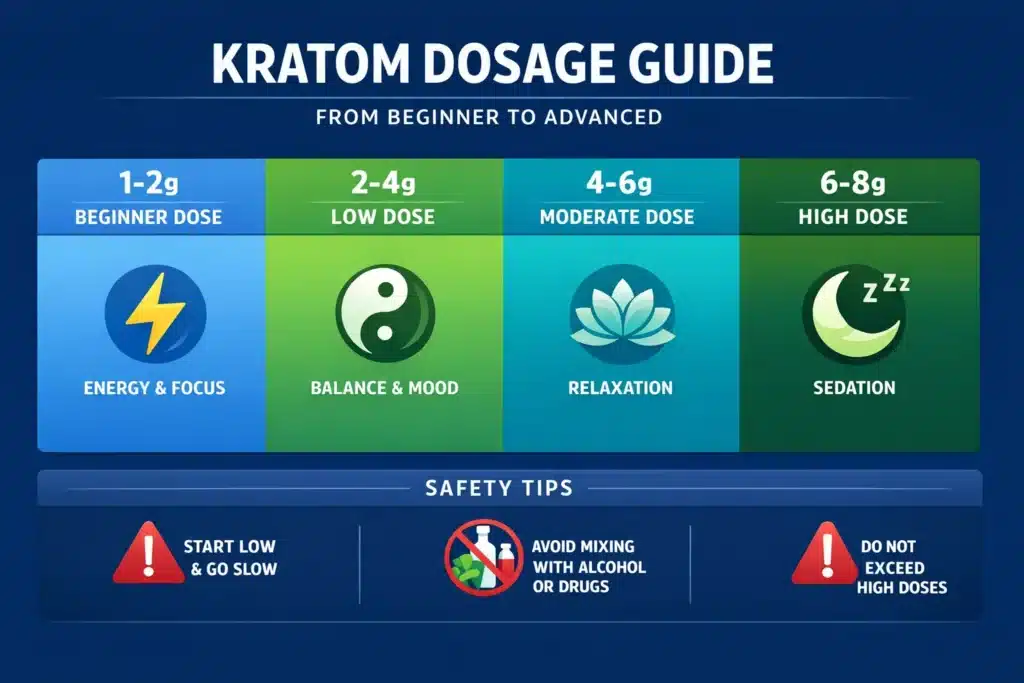
- Start with 1-2 grams for beginners and increase gradually by 0.5-1 gram intervals
- Low doses (1-3g) typically provide stimulating effects, while higher doses (4-8g) tend to be more sedating
- Individual factors like body weight, tolerance, and kratom strain significantly affect optimal dosing
- Never exceed 8 grams in a single dose, and avoid daily use to prevent dependency
- Always consult healthcare professionals before starting kratom, especially if taking medications
Understanding Kratom Basics
Kratom (Mitragyna speciosa) is a tropical tree native to Southeast Asia, where its leaves have been used traditionally for centuries. The active compounds, primarily mitragynine and 7-hydroxymitragynine, interact with opioid receptors in the brain, producing dose-dependent effects.
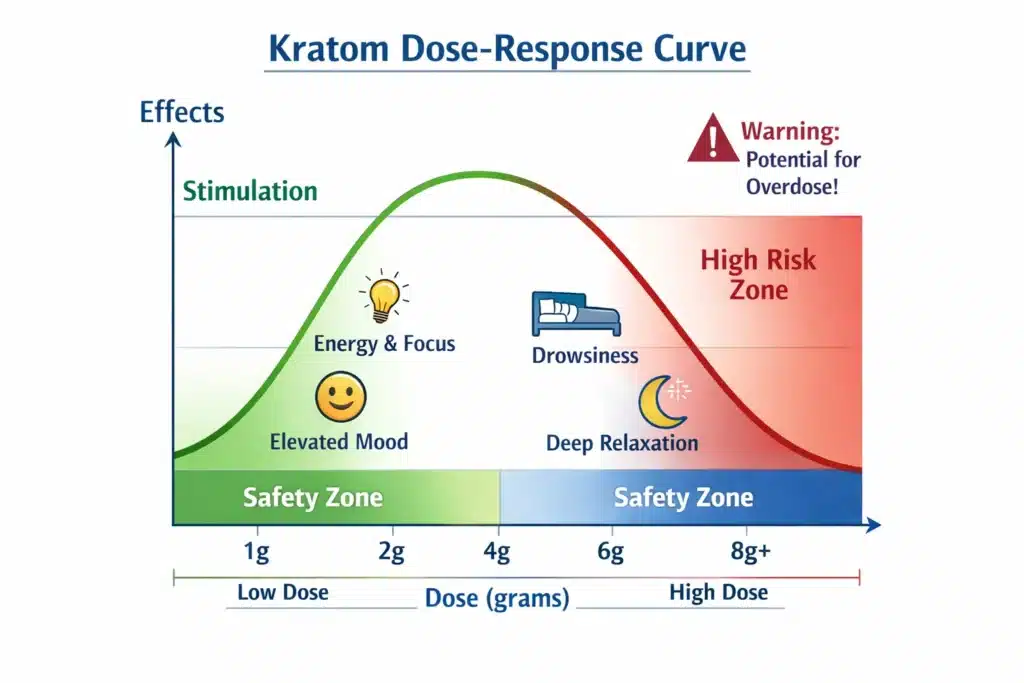
Unlike many substances, kratom exhibits a unique dose-response relationship. Lower doses typically produce stimulant-like effects, including increased energy, alertness, and sociability. Higher doses tend to produce sedating, analgesic effects similar to opioids.
Understanding this biphasic nature is essential when determining how many grams of kratom to take for your desired effects.
Factors That Influence Kratom Dosage
Body Weight and Metabolism
Your body weight plays a significant role in determining appropriate kratom dosage. Generally, individuals with higher body weight may require slightly larger doses to achieve the same effects. However, this relationship isn’t linear, and metabolism speed also factors into the equation.
Fast metabolizers may process kratom more quickly, potentially requiring higher doses or more frequent dosing. Slow metabolizers might find that smaller doses last longer and produce more pronounced effects.
Tolerance Levels
Regular kratom use leads to tolerance development, requiring progressively higher doses to achieve the same effects. This is why many experienced users find themselves asking, “How many grams of kratom should I take now that my usual dose isn’t working?”
Tolerance management strategies include:
- Taking regular tolerance breaks (2-7 days)
- Rotating between different strains
- Avoiding daily use
- Implementing “less is more” dosing protocols
Strain Variations
Different kratom strains contain varying concentrations of active alkaloids, significantly affecting potency. Red vein strains typically require lower doses for sedating effects, while white and green veins might need higher amounts for stimulation.
Strain potency considerations:
- Red strains: Often more potent for pain relief and relaxation
- White strains: May require higher doses for energy effects
- Green strains: Generally balanced, moderate dosing recommended
- Gold/Yellow strains: Unique processing creates distinct alkaloid profiles
For those interested in exploring different options, gold kratom powder varieties offer a middle ground between stimulating and sedating effects.
Beginner Dosage Guidelines
Starting Dose Recommendations
For kratom newcomers, the golden rule is “start low and go slow.” Begin with 1-2 grams and wait at least 45-60 minutes before considering additional doses. This conservative approach helps identify your personal sensitivity level while minimizing the risk of adverse effects.
First-time dosing protocol:
- Take 1-2 grams on an empty stomach
- Wait 45-60 minutes for effects
- If no effects, add 0.5-1 gram
- Wait another 30-45 minutes
- Stop once desired effects are achieved
What to Expect at Different Doses
1-2 grams (Threshold dose):
- Mild alertness increase
- Subtle mood enhancement
- Minimal risk of side effects
- Good for sensitivity testing
2-3 grams (Low dose):
- Noticeable energy boost
- Enhanced focus and concentration
- Mild euphoria
- Increased sociability
3-4 grams (Moderate-low dose):
- Balanced energy and relaxation
- Pain relief begins
- Mood elevation
- Potential for mild side effects
Intermediate Dosage Ranges
Finding Your Sweet Spot
Once you’ve established basic tolerance, finding your optimal dose becomes a personalized process. Most users find their “sweet spot” between 3-6 grams, depending on desired effects and individual factors.
Dose escalation guidelines:
- Increase by 0.5-gram increments
- Allow 2-3 days between dose increases
- Keep detailed records of effects and timing
- Note any side effects or diminishing returns
Moderate Dose Effects (3-6 grams)
This range represents the most commonly used dosages among regular kratom users. Effects become more pronounced and duration extends to 4-6 hours.
4-5 grams (Moderate dose):
- Strong analgesic effects
- Balanced stimulation and relaxation
- Enhanced mood and well-being
- Suitable for most daily activities
5-6 grams (Moderate-high dose):
- Pronounced pain relief
- Significant mood enhancement
- Beginning of sedating effects
- May impair complex tasks
For those seeking quality products in this dosage range, exploring kratom powder options can help find suitable strains for your needs.
Advanced Dosage Considerations
Higher Dose Effects (6-8 grams)
Higher kratom doses shift toward predominantly sedating effects. While some users find these doses beneficial for severe pain or sleep issues, they also carry increased risks.
6-7 grams (High dose):
- Strong sedation
- Significant pain relief
- Potential for nausea
- Increased dependency risk
7-8 grams (Very high dose):
- Heavy sedation
- Risk of respiratory depression
- High nausea probability
- Significant impairment
Maximum Safe Limits
Never exceed 8 grams in a single dose. Beyond this point, the risk of serious adverse effects increases dramatically without proportional benefit increases. The “ceiling effect” means that higher doses often produce more side effects rather than enhanced benefits.
Kratom Dosage Calculator
Recommended Dosage:
Timing and Frequency Guidelines
Optimal Dosing Schedule
How many grams of kratom should I take is only half the question – timing matters equally. Kratom’s effects typically last 4-6 hours, making it tempting to redose frequently. However, responsible use requires careful timing consideration.
Recommended dosing frequency:
- Maximum: Once per day
- Ideal: 3-4 times per week
- Tolerance prevention: 2-3 times per week with rest days
Empty Stomach vs. With Food
Taking kratom on an empty stomach enhances absorption and effect intensity. However, this also increases the likelihood of nausea, especially at higher doses.
Empty stomach benefits:
- Faster onset (15-30 minutes)
- Stronger effects
- Better bioavailability
With food considerations:
- Slower onset (45-90 minutes)
- Reduced nausea risk
- Gentler, longer-lasting effects
- May require slightly higher doses
Safety Precautions and Side Effects
Common Side Effects
Understanding potential side effects helps determine if your current dose is appropriate. Mild side effects often indicate you’re approaching your optimal dose, while severe side effects suggest immediate dose reduction.
Mild side effects (dose-dependent):
- Mild nausea
- Slight dizziness
- Dry mouth
- Constipation
- Mild headache
Severe side effects (reduce dose immediately):
- Severe nausea and vomiting
- Significant dizziness
- Respiratory depression
- Extreme sedation
- Hallucinations
Drug Interactions
Kratom can interact with various medications, particularly those affecting the central nervous system. Always consult healthcare providers before combining kratom with any medications.
High-risk combinations:
- Opioid medications
- Benzodiazepines
- Alcohol
- MAO inhibitors
- Blood pressure medications
For specific questions about interactions or safety concerns, consider contacting qualified professionals who can provide personalized guidance.
Special Populations and Considerations
Age-Related Factors
Older adults may be more sensitive to kratom’s effects due to slower metabolism and potential medication interactions. Conservative dosing becomes even more critical for this population.
Elderly dosing modifications:
- Start with 0.5-1 gram
- Extend waiting periods to 90 minutes
- Monitor for enhanced sedation
- Check for medication interactions
Medical Conditions
Certain medical conditions may affect how kratom is processed or increase risk of adverse effects.
Conditions requiring extra caution:
- Liver disease: Reduced metabolism
- Kidney problems: Altered clearance
- Heart conditions: Potential rhythm effects
- Mental health disorders: Possible mood interactions
- Respiratory issues: Sedation concerns
Pregnancy and Breastfeeding
Kratom is not recommended during pregnancy or breastfeeding. Limited research exists on developmental effects, making avoidance the safest option.
Tolerance Management Strategies
Preventing Tolerance Buildup
Regular kratom users often find themselves asking, “How many grams of kratom should I take now that my usual dose isn’t working?” This indicates tolerance development, which can be managed through strategic approaches.
Effective tolerance prevention:
- Rotate strains weekly: Different alkaloid profiles prevent receptor adaptation
- Take regular breaks: 2-3 day breaks every 1-2 weeks
- Avoid daily use: Limit to 3-4 times per week maximum
- Use lowest effective dose: Resist urge to increase unnecessarily
Tolerance Break Protocols
When tolerance becomes noticeable, planned breaks can reset sensitivity levels.
Break duration guidelines:
- Mild tolerance: 2-3 day break
- Moderate tolerance: 5-7 day break
- Significant tolerance: 2-3 week break
During tolerance breaks, some users experience mild withdrawal symptoms including irritability, restlessness, and sleep disturbances. These typically resolve within 3-5 days.
Strain-Specific Dosing Guidelines
Red Vein Strains
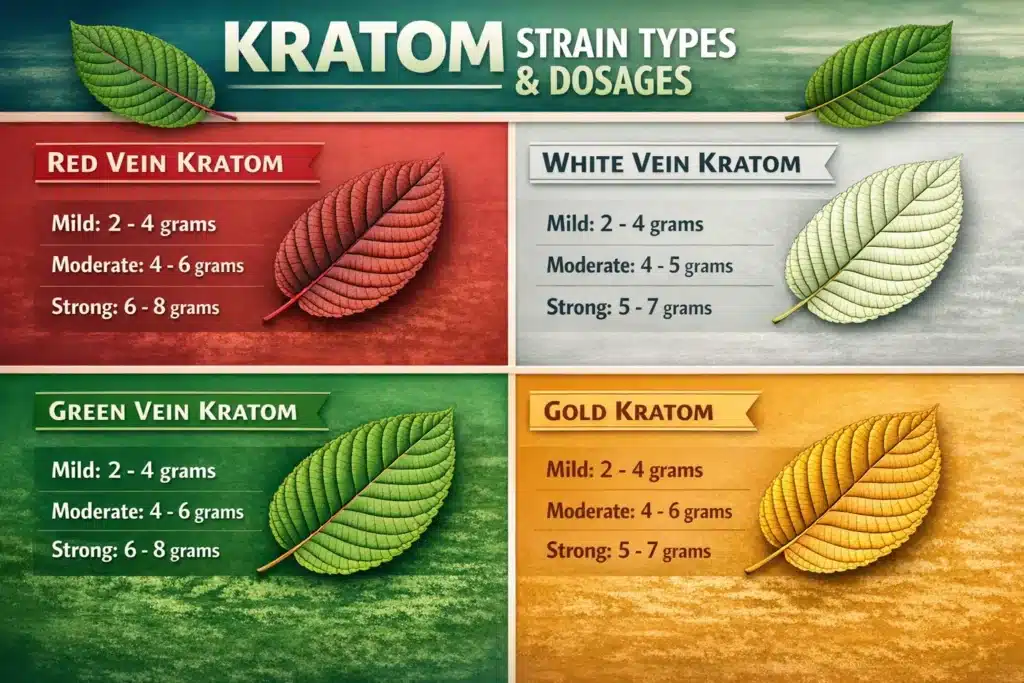
Red vein kratom typically provides the most potent analgesic and sedating effects, often requiring lower doses than other varieties.
Red vein dosing:
- Beginners: 1-2 grams
- Pain relief: 3-5 grams
- Sleep aid: 4-6 grams
- Maximum: 7 grams
White Vein Strains
White vein varieties tend to be more stimulating and may require higher doses for relaxation effects.
White vein dosing:
- Energy boost: 2-4 grams
- Focus enhancement: 3-5 grams
- Balanced effects: 4-6 grams
- Maximum: 8 grams
Green Vein Strains
Green strains offer balanced effects between stimulation and relaxation, making them popular for daytime use.
Green vein dosing:
- Mild energy: 2-3 grams
- Balanced mood: 3-5 grams
- Pain management: 4-6 grams
- Maximum: 7 grams
For those interested in exploring different strain options, browsing available kratom products can help identify suitable varieties for your specific needs.
Measuring and Preparation Methods
Accurate Measurement Tools
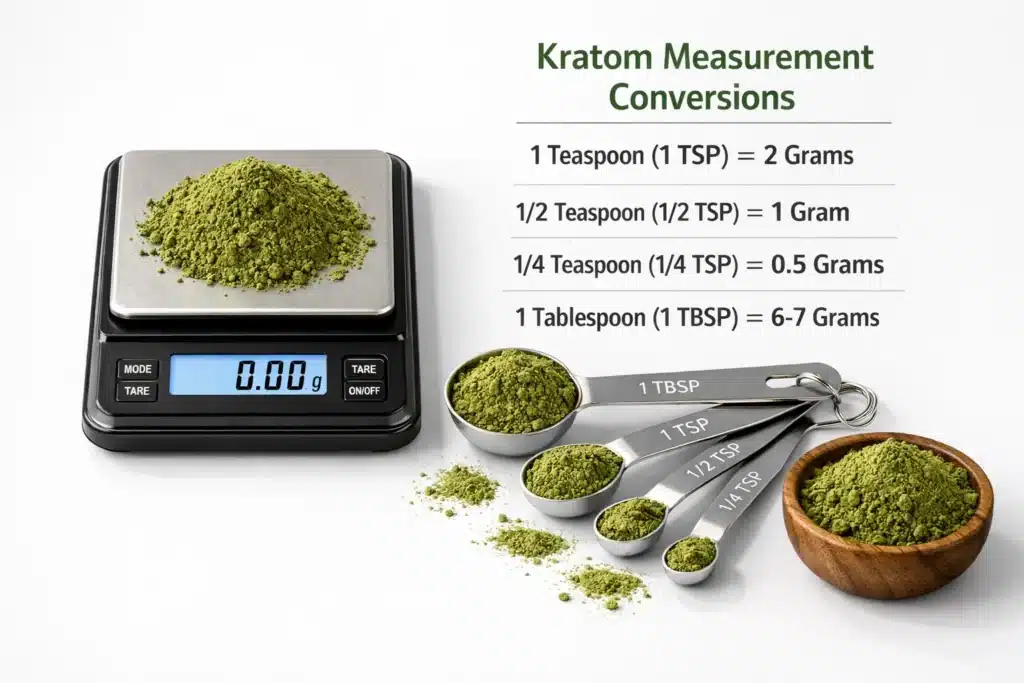
Proper dosing requires accurate measurement. Digital scales provide the most precise measurements, while measuring spoons offer reasonable approximations.
Measurement conversions:
- 1 gram: Approximately 1/2 teaspoon
- 2 grams: Approximately 1 teaspoon
- 3 grams: Approximately 1.5 teaspoons
- 5 grams: Approximately 1 tablespoon
Preparation Methods
Different preparation methods can affect absorption and onset timing.
Toss and wash:
- Place powder on tongue
- Wash down with liquid
- Fastest onset
- Highest bioavailability
Tea preparation:
- Simmer powder in water 15-20 minutes
- Strain if desired
- Gentler on stomach
- Slightly reduced potency
Capsule form:
- Pre-measured convenience
- No taste issues
- Slower onset (30-60 minutes)
- Consistent dosing
Recognizing Optimal Dosage
Signs You’ve Found Your Sweet Spot
Determining the right amount isn’t just about avoiding side effects – it’s about achieving your desired therapeutic goals with minimal drawbacks.
Indicators of optimal dosing:
- Desired effects achieved within 30-45 minutes
- Effects last 4-6 hours
- No significant side effects
- Consistent results across sessions
- No urge to immediately redose
When to Adjust Your Dose
Several factors might indicate it’s time to modify your kratom dosage.
Reasons to decrease dose:
- Persistent nausea or dizziness
- Excessive sedation interfering with daily activities
- Developing tolerance requiring frequent increases
- Side effects outweighing benefits
Reasons to increase dose:
- No effects after 60 minutes at current dose
- Effects wearing off too quickly
- Insufficient symptom relief
- Switching to less potent strain
For additional guidance on dosing and product selection, the frequently asked questions section provides valuable insights from experienced users.
Legal and Regulatory Considerations
Current Legal Status
Kratom’s legal status varies by location and continues evolving. Before determining how many grams of kratom to take, ensure its legal use in your area.
Legal considerations:
- Check local and state laws
- Understand workplace policies
- Be aware of travel restrictions
- Stay informed about changing regulations
Quality and Source Considerations
The source and quality of kratom significantly impact dosing requirements and safety.
Quality indicators:
- Third-party lab testing: Confirms purity and potency
- Proper storage: Prevents contamination and degradation
- Reputable vendors: Established track records and transparency
- Fresh product: Recent harvest dates ensure potency
When selecting products, choosing vendors who prioritize quality testing and transparency helps ensure consistent dosing experiences.
Emergency Situations and Overdose
Recognizing Kratom Overdose
While kratom overdose is rare, understanding warning signs helps ensure safety.
Overdose symptoms:
- Severe nausea and vomiting
- Extreme dizziness or confusion
- Difficulty breathing
- Loss of consciousness
- Seizures (extremely rare)
Emergency Response
If overdose is suspected, take immediate action:
- Call emergency services (911)
- Keep person awake if conscious
- Monitor breathing and pulse
- Provide accurate information about dose and timing
- Stay with person until help arrives
Prevention Strategies
Overdose prevention:
- Never exceed 8 grams in single dose
- Avoid combining with other depressants
- Don’t redose within 4 hours
- Keep emergency contacts readily available
- Inform trusted friends about kratom use
Building a Personal Dosing Protocol
Creating Your Dosing Journal
Maintaining detailed records helps optimize your kratom experience and identify patterns.
Journal elements:
- Date and time of dose
- Strain and vendor information
- Exact dose amount
- Food intake timing
- Effects experienced
- Duration of effects
- Side effects noted
- Overall satisfaction rating
Developing Consistency
Consistent results require standardized approaches to kratom use.
Consistency factors:
- Same measurement tools
- Consistent timing relative to meals
- Regular sleep schedule
- Stable stress levels
- Consistent hydration
Long-term Planning
Sustainable kratom use requires long-term perspective and planning.
Long-term considerations:
- Regular tolerance breaks
- Periodic dose evaluations
- Health monitoring
- Legal status updates
- Alternative therapy exploration
Frequently Asked Questions – Kratom Dose
What is a typical starting kratom dose?
A typical starting kratom dose for beginners is often low to assess personal response. Many users begin with 1 to 2 grams. This amount helps reduce the chance of unwanted effects. Individual sensitivity, body weight, and prior experience can influence how kratom feels at this level.
How much kratom is considered a low dose?
- Usually ranges from 1 to 3 grams for most people.
- Often associated with lighter effects.
- Common for first time or infrequent users.
- Allows easier adjustment in later doses.
What is a moderate kratom dose?
A moderate kratom dose commonly falls between 3 and 5 grams. This range is often chosen by people with some prior experience. Effects can vary based on strain type and individual tolerance. It is generally advised to avoid increasing beyond this range without understanding personal limits.
What is considered a high kratom dose?
- Often starts around 6 grams or more.
- More likely used by experienced users.
- Effects may feel stronger and longer lasting.
- Higher doses increase the chance of discomfort.
Does body weight affect kratom dosing?
Body weight can influence how kratom feels, but it is not the only factor. Metabolism, tolerance, and individual sensitivity also matter. Two people of similar weight may respond differently. Because of this variation, many users rely on gradual dose adjustments rather than weight alone.
How often should kratom doses be taken?
- Many users space doses several hours apart.
- Frequent dosing can increase tolerance.
- Effects usually last a few hours.
- Waiting helps assess full effects.
Can kratom strain type change the dose needed?
Different kratom strains can vary in perceived strength. Some users report needing less of certain strains to feel similar effects. Because labeling and potency are not standardized, dose adjustments are common when switching strains. Starting lower than usual is often used to gauge response.
Is it better to increase kratom dose slowly?
Increasing kratom dose slowly allows better control over effects. Small adjustments help users understand how their body reacts. Rapid increases can make it harder to identify an appropriate amount. Gradual changes also reduce the likelihood of taking more than intended at one time.
What factors can change how a kratom dose feels?
- Food intake before use.
- Personal tolerance level.
- Strain and product form.
- Hydration and general condition.
Why do kratom doses feel different for each person?
Kratom affects people differently due to unique body chemistry and experience levels. Genetics, metabolism, and previous use all play a role. Even the same dose from the same product can feel different on separate days. This variability is why no single dose fits everyone.
Conclusion
Determining how many grams of kratom to take requires careful consideration of multiple factors including experience level, body weight, desired effects, and strain characteristics. Starting with 1-2 grams and gradually increasing by 0.5-gram increments provides the safest approach for finding your optimal dose.
Remember that less is often more with kratom – higher doses don’t always produce better effects and significantly increase the risk of side effects. The goal is finding the minimum effective dose that achieves your desired outcomes while maintaining safety and preventing tolerance development.
- Start with conservative doses and increase gradually
- Maintain detailed dosing records to track what works
- Implement regular tolerance breaks to prevent dependency
- Never exceed 8 grams in a single dose
- Consult healthcare providers, especially if taking medications
- Stay informed about legal status in your area
- Choose quality products from reputable sources
The path to optimal kratom dosing is highly individual, requiring patience, careful observation, and a commitment to safety. By following these guidelines and listening to your body’s responses, you can develop a sustainable approach that maximizes benefits while minimizing risks.
Daniel Brooks
Daniel Brooks is a U.S. based botanical writer with over six years of hands on experience in kratom focused content. He studies kratom strains, sourcing standards, dosage patterns, and consumer safety topics. He stays up to date with current news, regulatory changes, and market trends related to kratom and botanical products.
His work includes educational guides, strain breakdowns, and vendor reviews written for everyday users. He avoids promotional language and presents clear facts. Daniel helps readers understand both benefits and risks so they can make informed choices about responsible kratom use.