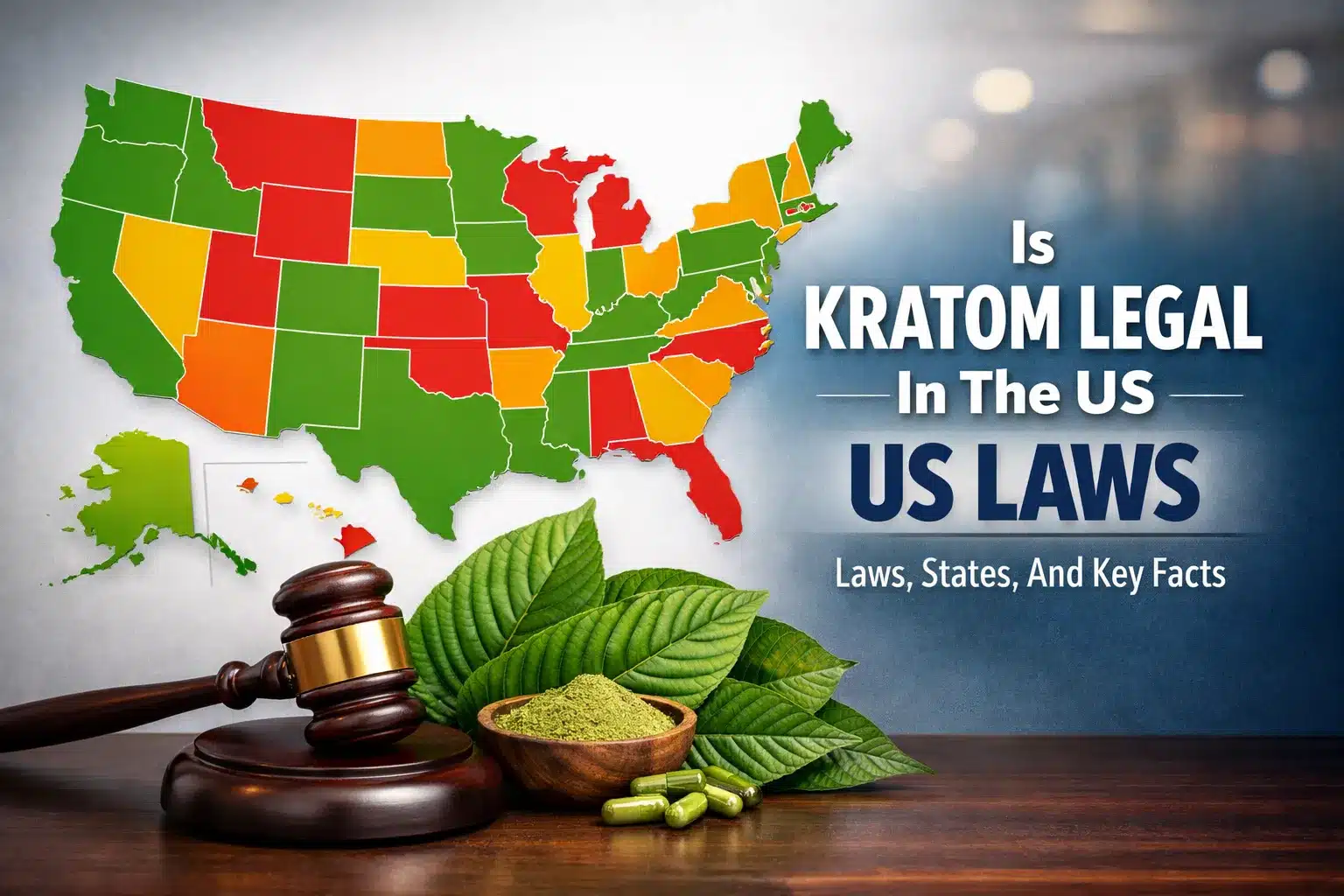
The legal status of kratom in the United States is complex. Federal rules, state laws, and local ordinances differ across the country, which creates confusion for consumers and businesses. Millions of Americans use kratom daily, but the question Is Kratom Legal In The US does not have a single clear answer because legality depends on where you live and local regulations in place.
- Kratom remains federally legal but unregulated by the FDA
- Six states have banned kratom completely as of 2024
- Multiple states have age restrictions and quality control measures
- Local municipalities may have their own kratom ordinances
- Legal status continues to evolve with ongoing legislative changes
What Is Kratom and Why Does Legal Status Matter?
Kratom (Mitragyna speciosa) is a tropical tree native to Southeast Asia, where its leaves have been used traditionally for centuries. The plant contains naturally occurring alkaloids, primarily mitragynine and 7-hydroxymitragynine, which interact with the body’s receptors.
Understanding whether kratom is legal in the US matters for several critical reasons:
- Consumer Safety: Legal markets often have better quality control
- Business Operations: Retailers need clear guidelines for compliance
- Personal Use: Individuals want to avoid legal complications
- Medical Research: Legal status affects scientific studies
The complexity of kratom’s legal status stems from its classification as a botanical supplement rather than a controlled substance at the federal level, while individual states maintain the authority to regulate or ban it within their borders.
Federal Kratom Laws and Regulations
At the federal level, kratom occupies a unique position in the regulatory landscape. The Drug Enforcement Administration (DEA) has not classified kratom as a controlled substance, despite considering such action in 2016. This decision followed significant public opposition and congressional intervention.
Current Federal Status
The federal government’s approach to kratom includes:
FDA Position: The Food and Drug Administration has not approved kratom for any medical use and has issued warning letters to companies making health claims. However, this doesn’t make kratom illegal.
DEA Stance: While the DEA has expressed concerns about kratom’s safety, it has not moved to schedule the substance under the Controlled Substances Act.
Import Regulations: The FDA occasionally detains kratom shipments at borders, particularly those suspected of contamination or adulteration.
Congressional Action
Several congressional representatives have advocated for kratom protection through proposed legislation like the Kratom Consumer Protection Act (KCPA), which would establish federal standards for kratom products while maintaining legal access.
State by State Kratom Legal Status
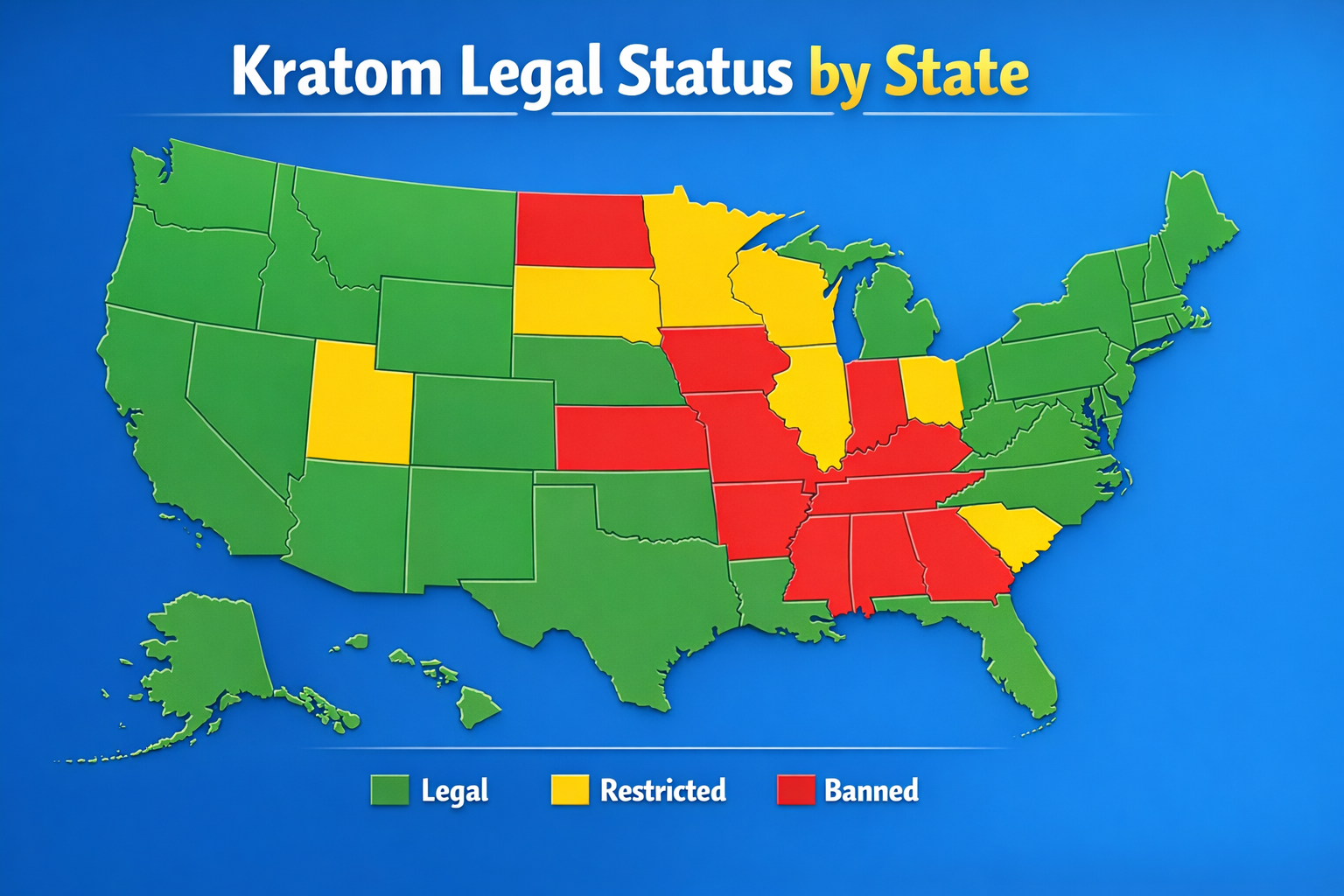
The question of whether kratom is legal in the US requires examining each state’s individual laws. The legal landscape varies dramatically across different jurisdictions.
States Where Kratom Is Banned
As of 2024, kratom is completely illegal in the following states:
- Alabama: Classified as a controlled substance since 2016
- Arkansas: Banned under controlled substance laws
- Indiana: Prohibited with criminal penalties
- Rhode Island: Classified as a controlled substance
- Vermont: Banned with possession penalties
- Wisconsin: Illegal under state controlled substance act
States with Age Restrictions
Many states allow kratom use but impose age restrictions:
- Arizona: 18+ with KCPA-style regulations
- Georgia: 18+ with labeling requirements
- Nevada: 18+ with quality standards
- Utah: 18+ with strict manufacturing guidelines
States with Full Legal Access
The majority of US states maintain full legal access to kratom for adults, including major markets like:
- California
- Texas
- Florida
- New York
- Colorado
For those interested in purchasing kratom products legally, Jack Botanicals offers a wide selection of quality kratom products in states where it’s legal.
Local and Municipal Kratom Laws
Beyond state regulations, local governments may impose their own restrictions on kratom. Cities and counties can ban kratom even in states where it’s legal at the state level.
Notable Local Bans
Several major cities have implemented kratom bans:
- Sarasota County, Florida: Local ban despite state legality
- San Diego, California: City ordinance prohibiting kratom
- Denver, Colorado: Age restrictions and vendor regulations
Why Local Laws Matter
Local ordinances can create legal complications because:
- They may be more restrictive than state laws
- Enforcement varies by jurisdiction
- Penalties can include fines or criminal charges
- Business licenses may be affected
Consumers should research both state and local laws before purchasing or using kratom products. For questions about specific legal requirements, contact our knowledgeable team for guidance.
Kratom Legal Status Checker
Kratom Consumer Protection Act (KCPA)
The Kratom Consumer Protection Act represents a significant development in kratom regulation. This model legislation aims to establish consistent standards while maintaining legal access to kratom products.
KCPA Provisions
States that have adopted KCPA-style legislation typically include:
Age Restrictions: Minimum age of 18 for purchase and possession
Quality Standards: Requirements for testing and labeling
Manufacturing Guidelines: Good manufacturing practices for processors
Prohibited Additives: Bans on synthetic additives and adulterants
States with KCPA Legislation
Several states have enacted KCPA-style laws:
- Arizona
- Georgia
- Nevada
- Utah
- Oklahoma
These regulations help ensure product quality while maintaining legal access. Consumers can find high-quality kratom products that meet these stringent standards.
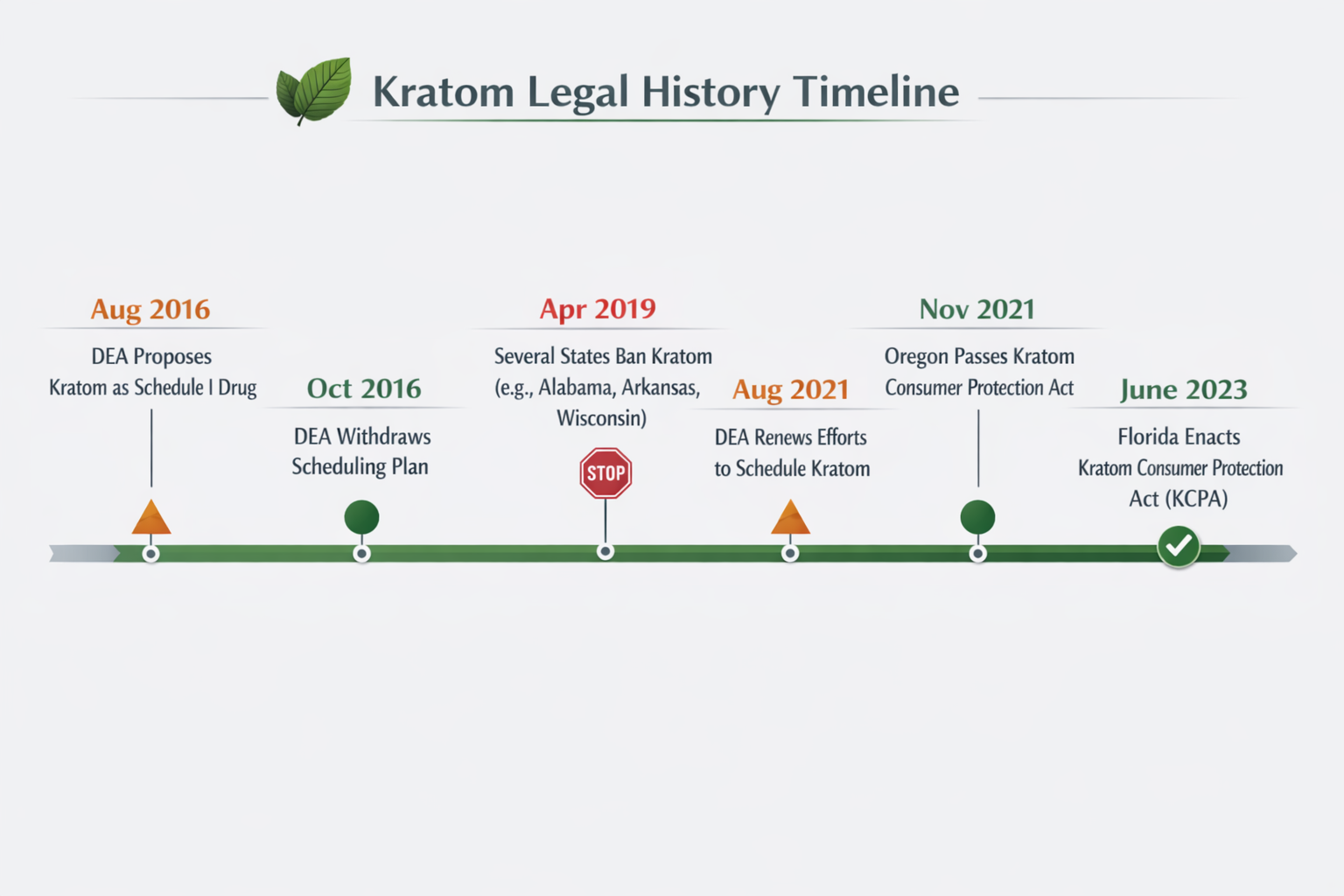
Impact of Federal Agencies on Kratom Legality
While kratom remains federally legal, various federal agencies influence its regulation and availability.
FDA Actions and Positions
The Food and Drug Administration has taken several actions regarding kratom:
Import Alerts: The FDA has issued import alerts for kratom products, allowing detention of shipments
Warning Letters: Companies making health claims about kratom receive FDA warning letters
Safety Communications: The FDA has issued public communications about kratom safety concerns
Research Barriers: FDA positions can affect research funding and opportunities
DEA Considerations
The Drug Enforcement Administration continues to monitor kratom:
Scheduling Threats: The DEA has considered scheduling kratom as a controlled substance
Public Comment Periods: The agency has sought public input on kratom regulation
State Coordination: The DEA works with state agencies on kratom-related issues
Enforcement Priorities: Current enforcement focuses on other substances
Other Federal Involvement
Additional federal agencies influence kratom regulation:
USDA: Oversees some aspects of botanical imports and agriculture
FTC: Monitors advertising claims and consumer protection issues
Postal Service: Handles shipping restrictions and regulations
Customs and Border Protection: Implements import controls and inspections
Frequently Asked Questions
Is kratom legal in the United States?
Kratom is legal at the federal level in the United States. The federal government has not classified it as a controlled substance. However, legality depends on state and local laws. Some states and cities restrict or ban kratom, so its legal status can change based on where you live.
Which states have banned kratom?
Several states have laws that prohibit kratom. These bans are enforced at the state level and may include additional local restrictions.
- Alabama enforces a statewide ban
- Arkansas classifies kratom as illegal
- Indiana prohibits sale and possession
- Vermont has a statewide restriction
- Wisconsin treats kratom as a banned substance
Is kratom legal in all US cities?
No. Even in states where kratom is legal, some cities or counties have their own bans. Local governments can pass ordinances that restrict sale or possession. This means kratom may be legal at the state level but illegal within specific city limits.
Can kratom be shipped legally within the USA?
Shipping kratom within the United States is generally allowed where it is legal. Sellers and buyers must follow state and local laws. Carriers may refuse delivery to restricted areas. Responsibility usually falls on both the seller and the buyer to confirm local legality.
Is kratom legal for personal use?
Personal use of kratom is legal in areas where it is not banned. Laws focus on possession rather than intent. In restricted states or cities, possession alone can lead to penalties. Always verify current local laws before possessing kratom.
How can I check if kratom is legal in my state?
You can confirm kratom legality by reviewing official sources. Laws can change, so checking recent information is important.
- State government or legislative websites
- Local city or county ordinances
- Public health department notices
- Recent state law updates
Why is kratom illegal in some states?
States that ban kratom often cite safety and regulatory concerns. Decisions vary based on local policy priorities and available research.
- Lack of standardized regulation
- Concerns about misuse
- Public health policy choices
- State controlled substance laws
Is kratom regulated by the federal government?
The federal government does not ban kratom, but it monitors it. Agencies have issued warnings and taken actions related to product safety. Regulation mainly focuses on consumer protection rather than criminal enforcement.
Can kratom legality change in the future?
Yes. Kratom laws can change at both state and local levels. New legislation or court decisions may affect legality. Ongoing public debate and research can influence future policies, so staying informed is important.
What happens if I possess kratom in a banned state?
Penalties vary by jurisdiction and depend on local law.
- Possible fines for possession
- Confiscation of kratom products
- Misdemeanor charges in some areas
- Legal consequences based on quantity
Conclusion
The question “is kratom legal in the US” reveals a complex regulatory landscape that varies significantly by state and locality. While kratom remains federally legal, six states have implemented complete bans, and many others have age restrictions or quality control measures.
Understanding kratom’s legal status requires ongoing attention to legislative developments at federal, state, and local levels. The trend toward Kratom Consumer Protection Act legislation suggests a path forward that balances consumer access with appropriate regulatory oversight.
Daniel Brooks
Daniel Brooks is a U.S. based botanical writer with over six years of hands on experience in kratom focused content. He studies kratom strains, sourcing standards, dosage patterns, and consumer safety topics. He stays up to date with current news, regulatory changes, and market trends related to kratom and botanical products.
His work includes educational guides, strain breakdowns, and vendor reviews written for everyday users. He avoids promotional language and presents clear facts. Daniel helps readers understand both benefits and risks so they can make informed choices about responsible kratom use.
Ryan Mitchell
Ryan Mitchell reviews and approves all kratom and botanical content before it is published. He has worked in the botanical space since 2013 and has been closely involved in kratom education, sourcing standards, and product evaluation.
Ryan actively supports responsible kratom use and spends time engaging with user communities where botanicals are discussed in detail. He has guided tens of thousands of customers through product selection and usage questions over the years. He works directly with trusted growers and suppliers to verify quality. He also ensures third party lab testing is completed so products meet safety and purity expectations before reaching the public.