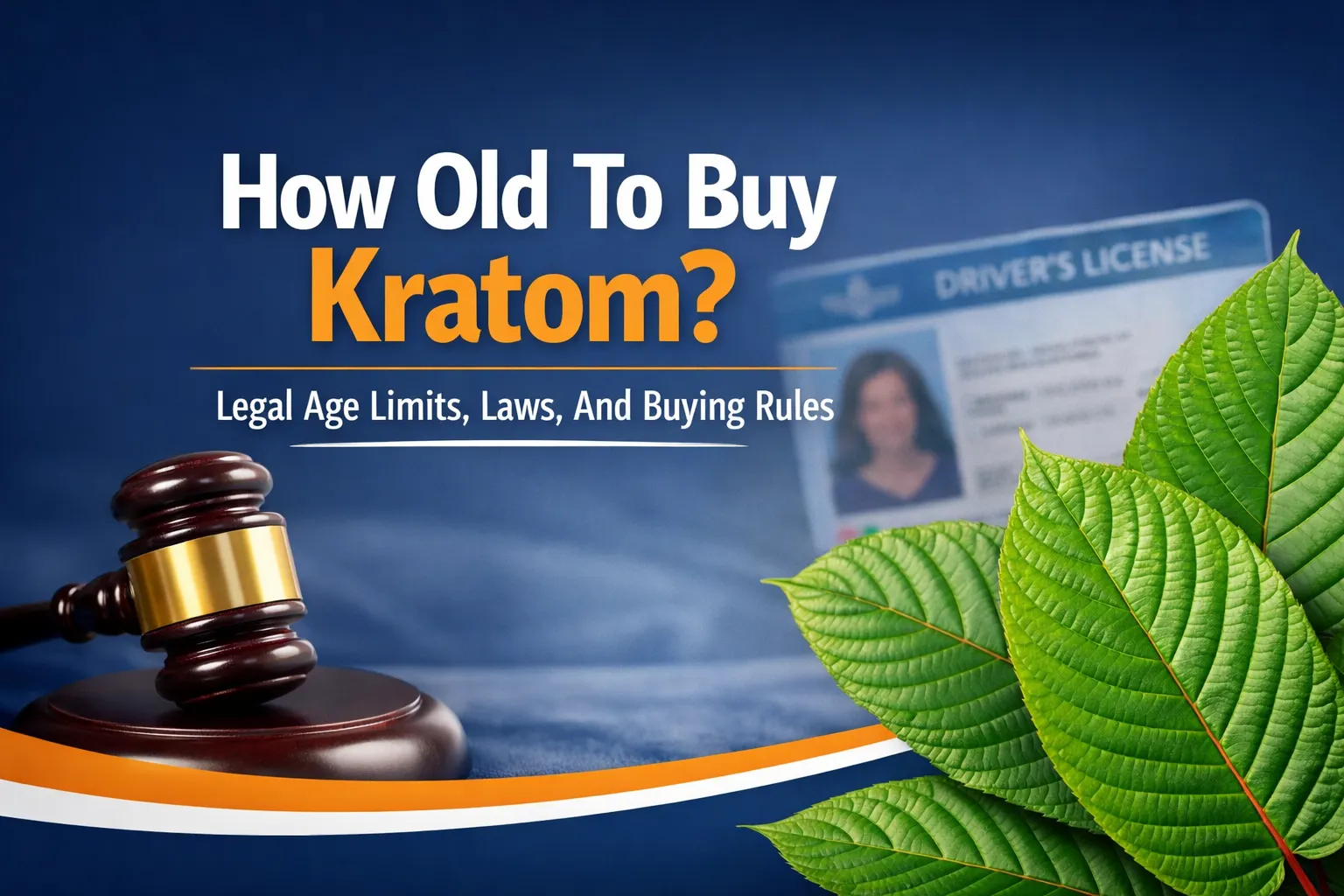
The botanical supplement industry has grown rapidly in recent years, with kratom becoming one of the most in-demand natural products. One critical issue remains unclear for many buyers. How Old To Buy Kratom depends on where you live, since age restrictions vary by state and country. Whether you are new to kratom or planning your first purchase, you need to understand local laws, age limits, and seller requirements. This knowledge helps you avoid legal problems and ensures you buy from compliant, reputable vendors.
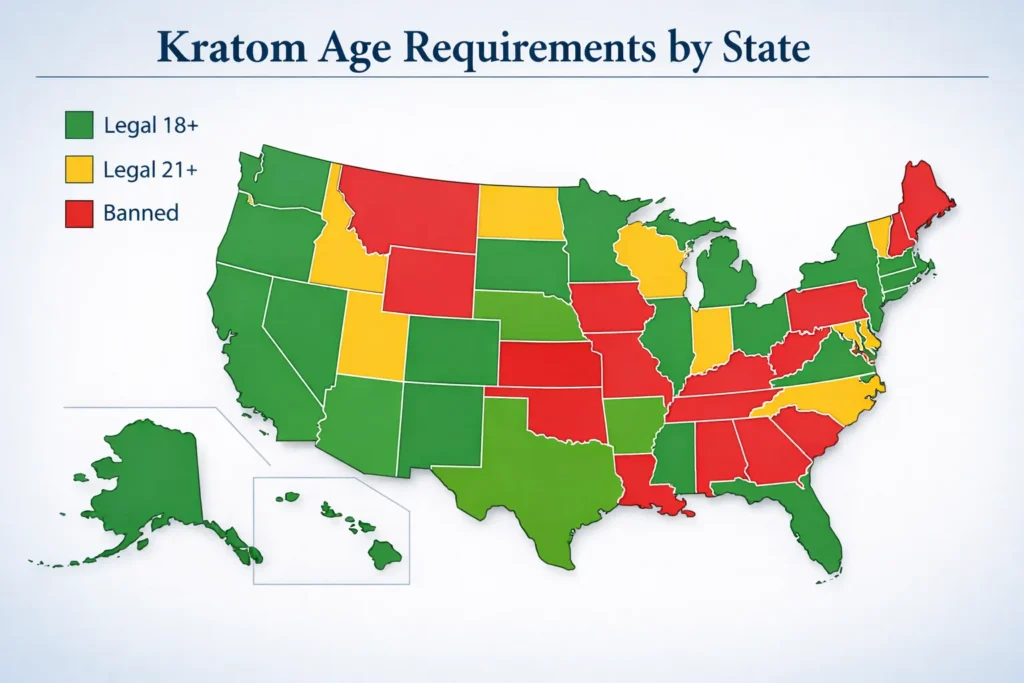
- Most states require buyers to be 18 years old to purchase kratom, though some states set the minimum age at 21
- Six states have completely banned kratom, making it illegal regardless of age
- Local municipalities may have stricter rules than state laws, even in kratom-legal states
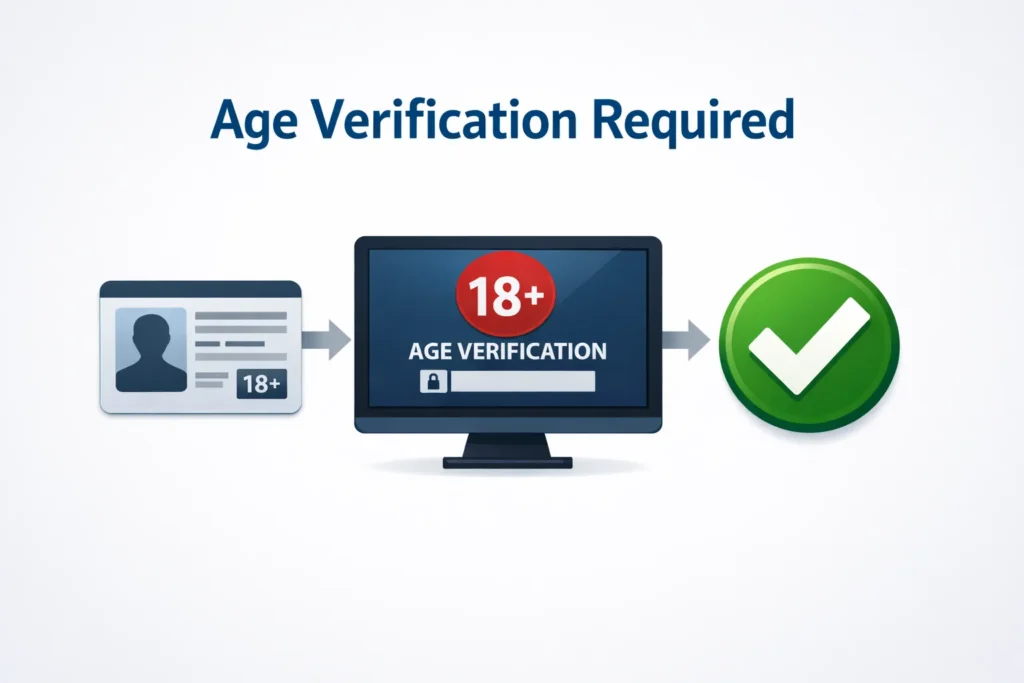
- Age verification is mandatory for both online and in-store kratom purchases
- Penalties for underage purchases can include fines, confiscation, and potential legal consequences
Understanding Kratom’s Legal Status in the United States
Kratom (Mitragyna speciosa) exists in a complex legal gray area across the United States. Unlike federally controlled substances, kratom regulation falls primarily to individual states and local governments. This patchwork of laws creates confusion for consumers trying to understand how old to buy kratom legally.
The Drug Enforcement Administration (DEA) has considered scheduling kratom as a controlled substance multiple times but has not yet taken definitive action. This federal uncertainty means state laws currently govern kratom’s legality and age restrictions.
Federal vs. State Jurisdiction
At the federal level, kratom remains unscheduled, meaning it’s not classified as a controlled substance. However, the Food and Drug Administration (FDA) has issued warnings about kratom and has taken action against vendors making unsubstantiated health claims.
State governments have taken varied approaches:
- Complete prohibition in some states
- Age restrictions ranging from 18 to 21 years old
- No specific regulations in certain jurisdictions
- Local municipal bans even within kratom-legal states
State-by-State Age Requirements for Kratom Purchases
States Where You Must Be 21 to Buy Kratom
Several states have set the minimum purchasing age at 21 years old, treating kratom similarly to alcohol or tobacco products:
Illinois 🏛️
- Minimum age: 21
- Enacted in 2019
- Includes both online and retail purchases
- Violations can result in fines
New Hampshire 🗻
- Minimum age: 21
- Comprehensive kratom consumer protection act
- Requires product testing and labeling
- Strict vendor licensing requirements
Utah 🏔️
- Minimum age: 21
- Part of broader kratom regulation framework
- Includes possession and consumption restrictions
- Regular legislative review process
States with 18+ Age Requirements
The majority of kratom-legal states set the minimum age at 18 years old:
- Arizona
- Colorado
- Florida
- Georgia
- Montana
- Nevada
- North Carolina
- Oklahoma
- Oregon
- Tennessee
- Texas
- And many others
These states typically treat kratom purchases similarly to dietary supplements, requiring only that buyers reach the age of majority.
States Where Kratom is Completely Banned
Regardless of age, kratom is completely prohibited in these states:
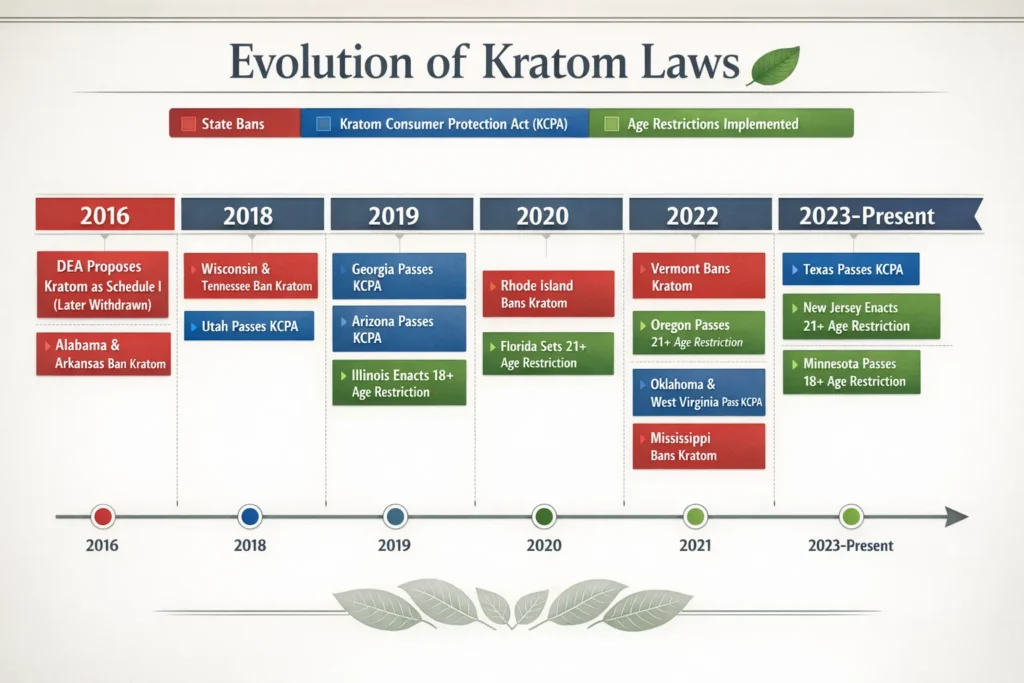
- Alabama – Banned since 2016
- Arkansas – Prohibited with criminal penalties
- Indiana – Classified as synthetic drug
- Rhode Island – Complete prohibition
- Vermont – Banned for all ages
- Wisconsin – Illegal to possess or distribute
In these states, how old to buy kratom becomes irrelevant since the substance is entirely prohibited.
Local Municipality Restrictions
Even in kratom-legal states, individual cities and counties may impose their own restrictions. These local laws can be more restrictive than state regulations but cannot be more permissive.
Examples of Local Bans
California – While legal statewide, several cities have banned kratom:
- San Diego (banned in 2016)
- Oceanside
- Several other municipalities
Florida – State allows 18+ purchases, but local restrictions include:
- Sarasota County (banned)
- Various city-level restrictions
Texas – Legal statewide for 18+, but some areas have restrictions
💡 Important Note: Always check both state and local laws before attempting to purchase kratom. Local restrictions often carry the same penalties as state-level violations.
Age Verification Requirements for Kratom Purchases
Online Purchases
Reputable kratom vendors implement strict age verification processes:
Digital ID Verification
- Photo ID upload requirements
- Third-party age verification services
- Credit card verification (must match ID)
- Address confirmation
Shipping Restrictions
- No delivery to banned states
- Adult signature required upon delivery
- Package labeling compliance
- Return-to-sender for failed deliveries
In-Store Purchases
Physical retailers must verify age through:
- Government-issued photo ID inspection
- Manual age calculation by trained staff
- Point-of-sale systems that flag age-restricted items
- Staff training on local and state laws
When shopping at reputable vendors, you’ll find comprehensive information about kratom dosing guidelines and product selection to help make informed decisions.
Consequences of Underage Kratom Purchases
Legal Penalties
Attempting to purchase kratom while underage can result in:
Misdemeanor Charges
- Fines ranging from $50 to $500
- Community service requirements
- Mandatory education programs
- Potential court appearances
Product Confiscation
- Immediate seizure of kratom products
- No refund for confiscated items
- Potential investigation of purchase source
Vendor Penalties
- Fines for vendors who sell to minors
- License suspension or revocation
- Increased regulatory scrutiny
- Potential criminal charges for repeat offenses
Long-term Consequences
Beyond immediate legal issues, underage purchases can lead to:
- Permanent criminal record in some jurisdictions
- Educational consequences for students
- Employment impact for background-sensitive jobs
- Parental notification requirements
How Vendors Verify Age: Industry Standards
Responsible Vendor Practices
Quality kratom vendors implement multiple verification layers:
Pre-Purchase Verification
- Account creation requires age confirmation
- ID verification before first purchase
- Regular compliance audits
- Staff training on age verification
Technology Solutions
- Automated age verification systems
- Database cross-referencing
- Fraud detection algorithms
- Compliance tracking software
Physical Store Protocols
- Clear signage about age requirements
- Staff training on ID inspection
- Point-of-sale age prompts
- Manager approval for questionable IDs
Many experienced vendors, like those reviewed in our comprehensive vendor guides, prioritize compliance and customer education about legal requirements.
International Age Restrictions and Kratom Laws
Global Perspective
Kratom legality varies significantly worldwide:
Countries with Complete Bans
- Australia (Schedule 9 substance)
- Malaysia (country of origin, ironically)
- Myanmar
- Thailand (recently legalized for traditional use)
Countries with Age Restrictions
- Canada (18+ in most provinces)
- United Kingdom (legal but regulated)
- Germany (18+ requirement)
Legal Gray Areas
- Many European Union countries
- Various Asian nations
- Most African countries
For travelers, understanding international kratom laws becomes crucial to avoid legal complications.
Tips for Legal Kratom Purchasing
Research Before You Buy
Verify Local Laws
- Check state-level regulations
- Research municipal restrictions
- Confirm age requirements
- Understand possession limits
Choose Reputable Vendors
- Look for established businesses
- Read customer reviews
- Verify compliance certifications
- Check return policies
Safe Purchasing Practices
Documentation
- Keep purchase receipts
- Maintain product packaging
- Document vendor information
- Save shipping confirmations
Quality Assurance
- Buy from tested products only
- Verify lab results
- Check expiration dates
- Research strain information
Understanding different kratom varieties can help new users make informed decisions about their first purchases.
Trending Legislative Changes
Several trends are emerging in kratom regulation:
Standardization Efforts
- Push for uniform age requirements
- Federal regulation discussions
- Industry self-regulation initiatives
- Consumer protection advocacy
Increased Oversight
- Enhanced vendor licensing
- Product testing requirements
- Labeling standardization
- Quality control measures
What to Expect When Buying Kratom Legally
First-Time Purchase Process
Online Shopping Experience
- Account Creation – Provide accurate age information
- ID Verification – Upload clear government-issued ID
- Address Confirmation – Verify shipping address
- Payment Processing – Use matching payment methods
- Age Confirmation – Final verification at checkout
In-Store Shopping
- Bring Valid ID – Government-issued photo identification
- Product Selection – Browse available strains and formats
- Age Verification – Present ID to cashier
- Purchase Completion – Complete transaction with proper documentation
Understanding Product Information
Quality vendors provide comprehensive product details:
- Strain information and origin
- Lab testing results for purity
- Dosage recommendations for beginners
- Storage instructions for freshness
For new users, understanding how long kratom takes to work helps set appropriate expectations for their experience.
🌿 Kratom Age Requirement Checker
Common Questions About Kratom Age Requirements
Can Minors Use Kratom with Parental Permission?
No. Even with parental consent, minors cannot legally purchase or possess kratom in states with age restrictions. The law treats kratom similarly to tobacco or alcohol in this regard.
What Happens if You’re Caught with Kratom Under Age?
Consequences vary by state but typically include:
- Immediate confiscation of the product
- Fines ranging from $50-$500
- Court appearances in some jurisdictions
- Parental notification for minors
- Potential criminal record depending on local laws
Do Age Requirements Apply to All Kratom Products?
Yes, age restrictions apply to all kratom products including:
- Powder forms
- Capsules and tablets
- Liquid extracts
- Kratom-infused products
- Any derivative containing mitragynine or 7-hydroxymitragynine
Can You Order Kratom Online If You’re of Legal Age?
Yes, but with important considerations:
- Age verification is required
- Valid ID must be provided
- Adult signature required for delivery
- No shipping to banned states or restricted areas
For those interested in exploring different strains once they reach legal age, resources like Borneo kratom varieties provide valuable information about product options.
Responsible Kratom Use and Education
Industry Self-Regulation
The kratom industry has implemented several self-regulation measures:
Good Manufacturing Practices (GMP)
- Quality control standards
- Product testing requirements
- Facility inspections
- Staff training protocols
Labeling Standards
- Clear age restrictions
- Dosage information
- Safety warnings
- Ingredient transparency
Vendor Certification Programs
- Third-party testing verification
- Compliance audits
- Customer education requirements
- Responsible marketing practices
Consumer Education Initiatives
Safety Information
- Proper dosage guidelines
- Potential interactions
- Storage recommendations
- Quality indicators
Legal Awareness
- Age requirement education
- State law updates
- Local restriction alerts
- Compliance assistance
For comprehensive information about responsible use, including dosage guidelines, consumers should consult reputable educational resources.
Staying Updated on Kratom Laws
Legislative Tracking
Kratom laws change frequently, making it essential to stay informed:
Official Sources
- State legislature websites
- Local government announcements
- Regulatory agency updates
- Court decisions and precedents
Industry Resources
- American Kratom Association updates
- Vendor compliance notifications
- Trade publication alerts
- Legal analysis reports
Community Networks
- Local advocacy groups
- Online forums and communities
- Social media monitoring
- Newsletter subscriptions
Signs of Changing Legislation
Watch for these indicators of potential law changes:
- Public hearings on kratom regulation
- Legislative committee discussions
- Media coverage of kratom issues
- Law enforcement policy changes
- Health department advisories
Kratom Age Requirements FAQ
Building a Compliant Kratom Purchase Strategy
Pre-Purchase Checklist
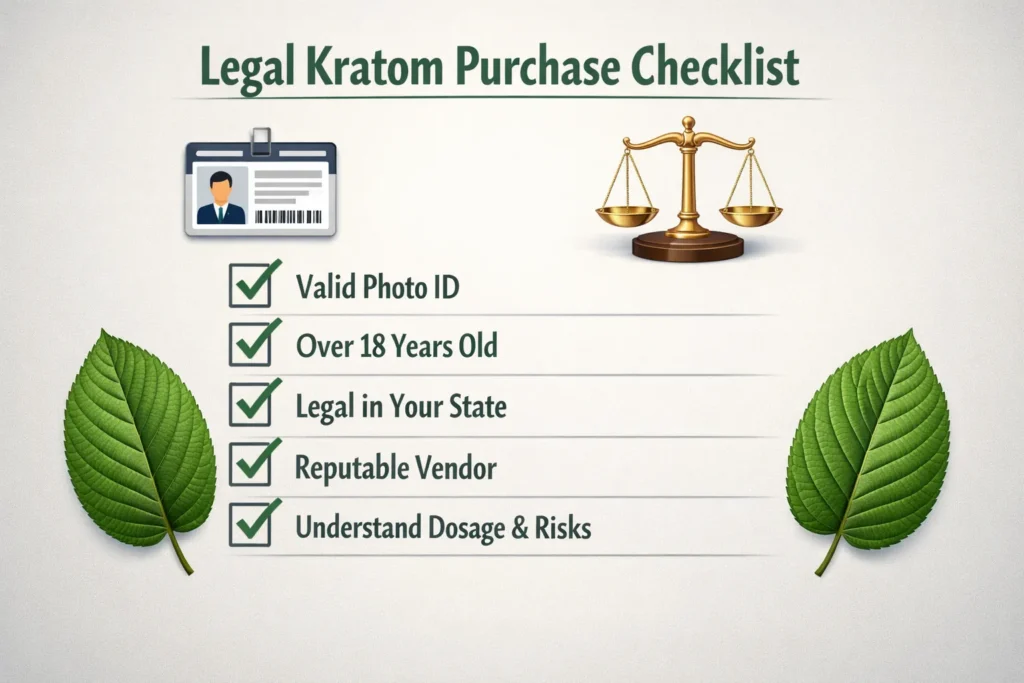
Before making any kratom purchase, verify:
✅ Legal Status – Confirm kratom is legal in your state and locality
✅ Age Requirements – Ensure you meet minimum age requirements
✅ Vendor Legitimacy – Research vendor reputation and compliance
✅ Product Quality – Look for lab-tested, properly labeled products
✅ Documentation – Have valid government-issued ID ready
Ongoing Compliance
Stay Informed
- Subscribe to legal update newsletters
- Follow advocacy organizations
- Monitor local news for regulation changes
- Maintain awareness of travel restrictions
Maintain Records
- Keep purchase receipts
- Document vendor information
- Store products in original packaging
- Track expiration dates
Practice Responsible Use
- Follow dosage recommendations
- Understand strain differences
- Respect age restrictions
- Support compliant vendors
Quality vendors often provide educational resources about different kratom strains to help consumers make informed choices within legal boundaries.
Advocacy and Policy Development
Stakeholder Engagement
- Consumer advocacy groups
- Scientific research communities
- Healthcare professionals
- Industry representatives
Policy Considerations
- Public health impacts
- Economic implications
- Individual freedom balance
- Enforcement practicality
Conclusion
Understanding how old to buy kratom requires navigating a complex landscape of federal, state, and local regulations that continue to evolve. While most states set the minimum age at 18, several require buyers to be 21, and six states prohibit kratom entirely regardless of age.
The key takeaways for potential kratom buyers include:
Legal Compliance is non-negotiable. Always verify current laws in your specific location before attempting to purchase kratom, as regulations can change rapidly and vary significantly between jurisdictions.
Age verification is mandatory across all legal kratom markets. Reputable vendors implement strict verification processes for both online and in-store purchases, and attempting to circumvent these systems can result in serious legal consequences.
Local restrictions may be more stringent than state laws. Even in kratom-legal states, individual municipalities may impose additional restrictions or outright bans that supersede state regulations.
Vendor selection matters significantly. Choose established, compliant vendors who prioritize age verification, product testing, and legal compliance over those offering shortcuts or questionable practices.
Staying informed about changing regulations protects both your legal standing and your ability to continue purchasing kratom legally. Laws in this space evolve rapidly, and what’s legal today may not be tomorrow.
For those who meet the legal age requirements in their jurisdiction, kratom can be purchased safely and legally by following proper procedures, choosing reputable vendors, and maintaining awareness of applicable laws. The industry continues to mature with improved safety standards, better age verification systems, and enhanced consumer protections.
Daniel Brooks
Daniel Brooks is a U.S. based botanical writer with over six years of hands on experience in kratom focused content. He studies kratom strains, sourcing standards, dosage patterns, and consumer safety topics. He stays up to date with current news, regulatory changes, and market trends related to kratom and botanical products.
His work includes educational guides, strain breakdowns, and vendor reviews written for everyday users. He avoids promotional language and presents clear facts. Daniel helps readers understand both benefits and risks so they can make informed choices about responsible kratom use.