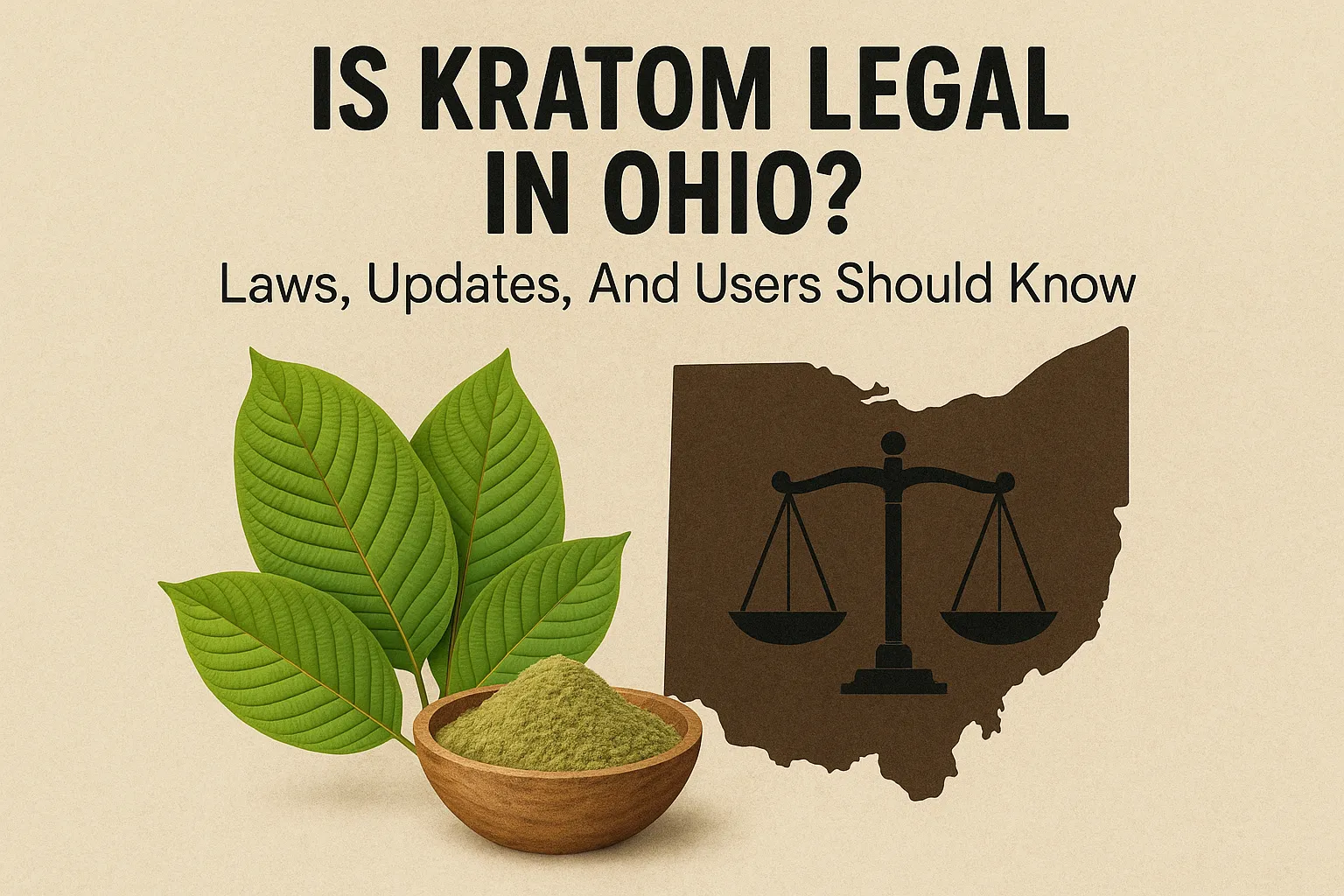
In the heart of the Midwest, Ohio residents are navigating a complex landscape of kratom regulations that could change at any moment. While millions of Americans use this Southeast Asian botanical for wellness purposes, the legal status of kratom varies dramatically from state to state, leaving many Ohioans wondering: is kratom legal in Ohio?
The answer isn’t as straightforward as you might hope. Ohio’s kratom laws have evolved significantly over the past few years, with ongoing legislative efforts that could reshape the entire regulatory framework. Whether you’re a current kratom user, considering trying it for the first time, or simply staying informed about botanical regulations in your state, understanding Ohio’s current stance is crucial.
- Kratom is currently legal in Ohio for adults 18 and older, but with specific regulations and restrictions
- The Kratom Consumer Protection Act (KCPA) was signed into law in 2022, establishing quality standards and age restrictions
- Local municipalities may have their own additional restrictions beyond state law
- Purchasing from reputable vendors is essential to ensure compliance with Ohio’s quality standards
- Future legislative changes could impact kratom’s legal status, making it important to stay informed
Current Legal Status: Is Kratom Legal In Ohio?
Yes, kratom is legal in Ohio as of 2023, but this wasn’t always the case. The state has implemented a comprehensive regulatory framework through the Ohio Kratom Consumer Protection Act, which governs how kratom can be sold, marketed, and consumed within state boundaries.
The Ohio Kratom Consumer Protection Act
In April 2022, Ohio Governor Mike DeWine signed House Bill 210 into law, officially enacting the Kratom Consumer Protection Act (KCPA). This legislation marked a significant milestone for kratom advocates and users throughout the state, providing legal clarity while establishing important safety standards.
The KCPA includes several key provisions:
- ✅ Age restriction: Kratom sales are limited to individuals 18 years and older
- ✅ Product testing requirements: Vendors must ensure products are free from harmful contaminants
- ✅ Labeling standards: All kratom products must include proper ingredient lists and alkaloid content
- ✅ Prohibited additives: Products cannot contain synthetic alkaloids or dangerous substances
What This Means for Ohio Residents
For Ohio residents, the KCPA provides both legal protection and quality assurance. Unlike states where kratom exists in a legal gray area, Ohio users can purchase and possess kratom with confidence, knowing they’re operating within established legal boundaries.
However, it’s important to understand that legal doesn’t mean unregulated. The state has implemented these protections to ensure consumer safety while maintaining access to this botanical supplement.
Historical Timeline of Kratom Laws in Ohio
Understanding how we arrived at the current legal status requires looking back at Ohio’s legislative journey with kratom regulation.
Pre-2019: Unregulated Status
Before 2019, kratom operated in Ohio without specific state-level regulations. This period was characterized by:
- No age restrictions on purchases
- Limited quality control standards
- Inconsistent product labeling
- Varying local ordinances across municipalities
2019-2021: Legislative Uncertainty
During this period, several bills were introduced in the Ohio legislature addressing kratom regulation:
2019: Initial discussions began about implementing age restrictions and quality standards
2020: The COVID-19 pandemic delayed many legislative initiatives, including kratom regulation
2021: Serious legislative efforts gained momentum with the introduction of comprehensive kratom protection acts
2022: The Breakthrough Year
April 2022 marked the turning point when Governor DeWine signed the KCPA into law. This legislation represented months of collaboration between:
- Kratom advocacy groups
- State legislators
- Public health officials
- Industry stakeholders
For those interested in how other states have approached kratom regulation, you can learn about kratom laws in Georgia and kratom’s legal status in Canada to see how Ohio’s approach compares.
Understanding Ohio’s Kratom Consumer Protection Act

The Ohio KCPA is one of the most comprehensive kratom regulation frameworks in the United States. Let’s break down its key components and what they mean for consumers.
Age Restrictions and Penalties
Minimum Age: 18 years old for purchase, possession, and consumption
Penalties for Violations:
- Vendors selling to minors face fines up to $1,000
- Repeat offenses can result in license suspension
- Criminal charges may apply for willful violations
Product Quality Standards
The KCPA establishes strict quality requirements that all kratom products sold in Ohio must meet:
Prohibited Substances
Kratom products cannot contain:
- Synthetic alkaloids (7-hydroxymitragynine exceeding naturally occurring levels)
- Dangerous additives like fentanyl, tramadol, or other controlled substances
- Harmful contaminants including heavy metals above safe levels
- Pathogenic bacteria such as salmonella or E. coli
Required Testing
All kratom products must undergo testing to verify:
- Alkaloid content accuracy
- Absence of prohibited substances
- Microbiological safety
- Heavy metal contamination levels
Labeling and Marketing Requirements
Mandatory Label Information:
- Complete ingredient list
- Alkaloid content percentages
- Manufacturer contact information
- Batch or lot numbers for traceability
- Clear product weight or volume
Prohibited Marketing Claims:
- Cannot claim to diagnose, treat, cure, or prevent diseases
- Must avoid medical terminology in advertising
- Cannot market to minors through youth-oriented platforms
Local Ordinances and Municipal Restrictions
While kratom is legal at the state level in Ohio, local municipalities retain the authority to implement additional restrictions. This creates a patchwork of regulations that users must navigate carefully.
Cities with Additional Restrictions
Several Ohio cities have implemented their own kratom ordinances:
Columbus: Follows state guidelines with enhanced vendor licensing requirements
Cleveland: Has discussed additional zoning restrictions for kratom retailers
Cincinnati: Requires special permits for kratom sales in certain districts
Toledo: Implements additional signage requirements for kratom vendors
Understanding Local vs. State Law
When local and state laws differ, the more restrictive regulation typically applies. This means:
- If your city prohibits kratom sales, state legality doesn’t override local bans
- Local age restrictions higher than 18 would supersede state minimums
- Additional local testing or labeling requirements must be followed
Checking Your Local Laws
Before purchasing or possessing kratom, verify your local regulations by:
- Contacting city hall or municipal offices
- Reviewing city council meeting minutes for recent ordinances
- Consulting with local kratom vendors about area-specific requirements
- Checking municipal websites for published ordinances
Where to Buy Kratom Legally in Ohio
With kratom’s legal status established, Ohio residents have several options for purchasing quality products that comply with state regulations.
Licensed Retail Stores
Many brick-and-mortar stores throughout Ohio now carry kratom products:
Smoke Shops: Often carry basic kratom varieties, though selection may be limited
Health Food Stores: Increasingly stocking kratom alongside other botanical supplements
Specialty Kratom Stores: Dedicated retailers with extensive product lines and knowledgeable staff
Gas Stations and Convenience Stores: Some carry kratom, though quality and compliance may vary
Online Vendors
Online purchasing offers several advantages for Ohio residents:
- Wider selection of strains and products
- Better pricing due to lower overhead costs
- Detailed lab testing results often available
- Customer reviews to guide purchasing decisions
When buying online, ensure vendors comply with Ohio’s KCPA requirements and purchase kratom from reputable sources that prioritize quality and safety.
What to Look for in Vendors
Quality Indicators:
- Third-party lab testing certificates
- Clear ingredient and alkaloid labeling
- Proper age verification processes
- Responsive customer service
- Positive customer reviews and ratings
Red Flags to Avoid:
- No lab testing documentation
- Unrealistic medical claims
- Extremely low prices (may indicate poor quality)
- No age verification
- Lack of contact information
Quality Standards and Testing Requirements

Ohio’s KCPA places significant emphasis on product quality and safety through mandatory testing and standards compliance.
Required Laboratory Testing
All kratom products sold in Ohio must undergo comprehensive testing:
Alkaloid Content Analysis
- Mitragynine levels: Must be accurately labeled
- 7-hydroxymitragynine: Cannot exceed naturally occurring concentrations
- Total alkaloid profile: Complete breakdown required
Contaminant Screening
- Heavy metals: Lead, mercury, cadmium, arsenic below FDA limits
- Pesticides: Screening for agricultural chemical residues
- Microbiological: Testing for harmful bacteria and pathogens
- Synthetic adulterants: Detection of artificial additives
Certificate of Analysis (COA)
Reputable vendors provide Certificates of Analysis for each product batch, including:
- Testing laboratory credentials
- Specific test results and methodology
- Date of testing and batch information
- Pass/fail status for all required parameters
Consumer Protection Benefits
These testing requirements provide Ohio consumers with:
- Safety assurance through contaminant screening
- Product consistency via alkaloid standardization
- Informed purchasing through transparent labeling
- Legal recourse if products don’t meet standards
For those new to kratom, understanding proper dosing guidelines is essential for safe and effective use.
Ohio Kratom Law Compliance Checker
Age Requirements
Product Quality Standards
Vendor Requirements
Local Compliance
Age Restrictions and Penalties
Ohio’s kratom laws include specific age-related provisions designed to protect minors while ensuring legal access for adults.
Minimum Age Requirements
Legal Age: 18 years old for all kratom-related activities including:
- Purchasing kratom products
- Possessing kratom in any form
- Consuming kratom supplements
- Entering kratom-only retail establishments
Penalties for Underage Use
For Minors:
- First offense: Confiscation of product and warning
- Subsequent offenses: Potential fines up to $150
- Possible community service requirements
- Parental notification in all cases
For Vendors Selling to Minors:
- First violation: Fine of $500-$1,000
- Second violation: Fine of $1,000-$2,500 plus temporary license suspension
- Third violation: Permanent license revocation and criminal charges
Age Verification Requirements
Vendors must implement robust age verification systems:
In-Person Sales:
- Valid photo ID required for all purchases
- ID must be physically examined, not just requested
- Suspicious or expired IDs must be rejected
Online Sales:
- Digital age verification through third-party services
- Credit card verification (must match legal age holder)
- Address verification for shipping confirmation
Understanding how long kratom stays in your system can be important for users who may be subject to drug testing policies.
Penalties for Non-Compliance
Ohio takes kratom regulation seriously, with significant penalties for those who violate the KCPA provisions.
Consumer Violations
While consumers face minimal penalties compared to vendors, violations can still result in:
Underage Possession:
- Product confiscation
- Fines up to $150 for repeat offenses
- Possible court appearances
- Community service requirements
Vendor Violations
Quality Standard Violations:
- First offense: $2,500-$5,000 fine
- Product recall requirements
- Mandatory retesting of all inventory
- Potential license suspension
Selling to Minors:
- Criminal misdemeanor charges possible
- Fines ranging from $1,000-$10,000
- License suspension or revocation
- Possible jail time for willful violations
Labeling Violations:
- $1,000-$3,000 fines per violation
- Product relabeling requirements
- Enhanced oversight periods
- Potential license restrictions
Criminal Charges
Serious violations can result in criminal prosecution:
Felony Charges may apply for:
- Knowingly selling adulterated products
- Operating without required licenses
- Repeat willful violations of safety standards

Comparing Ohio to Other States
Ohio’s approach to kratom regulation represents a middle-ground strategy that balances access with safety concerns.
States with Similar Frameworks
Arizona: Implemented comprehensive KCPA with age restrictions and quality standards
Georgia: Kratom legal in Georgia with similar consumer protection measures
Nevada: Age restrictions and labeling requirements mirror Ohio’s approach
Utah: Strong quality standards with vendor licensing requirements
More Restrictive States
Alabama: Complete kratom prohibition with criminal penalties
Arkansas: Scheduled as controlled substance with possession penalties
Indiana: Banned with limited exceptions for research
Wisconsin: Classified as controlled substance with criminal penalties
Less Regulated States
Texas: Legal with minimal state-level regulation
Florida: Legal but with some local municipal restrictions
California: Legal with primarily local-level governance
Colorado: Legal with basic consumer protection measures
Tips for Safe and Legal Kratom Use in Ohio
Following Ohio’s kratom laws while ensuring personal safety requires attention to multiple factors.
Purchasing Guidelines
Choose Reputable Vendors:
- Verify third-party lab testing availability
- Check for proper licensing and registration
- Read customer reviews and ratings
- Confirm age verification processes
Product Selection:
- Look for clear alkaloid content labeling
- Avoid products with synthetic additives
- Choose vendors with detailed product information
- Verify batch testing documentation
For comprehensive vendor reviews, check out detailed assessments of retailers like Beleafer Kratom and Beaufort Organics to understand what quality vendors should provide.
Dosage and Safety
Responsible Use:
- Start with minimal amounts to assess tolerance
- Follow manufacturer guidelines
- Avoid mixing with alcohol or other substances
- Consult healthcare providers about potential interactions
Quality Indicators:
- Fresh, pleasant aroma without chemical odors
- Consistent color and texture
- No visible contamination or foreign materials
- Proper packaging with intact seals
Popular strains like Gold Borneo kratom and Yellow Borneo kratom are available through compliant vendors who meet Ohio’s quality standards.
Resources for Ohio Kratom Users

Staying informed about kratom laws and safety requires access to reliable information sources.
Government Resources
Ohio Department of Health:
- Regulatory updates and guidance
- Safety alerts and recalls
- Vendor compliance information
- Consumer complaint processes
Ohio Board of Pharmacy:
- Licensing requirements for vendors
- Enforcement actions and penalties
- Regulatory interpretation guidance
- Professional education materials
Advocacy Organizations
American Kratom Association (AKA):
- Legislative tracking and updates
- Vendor certification programs
- Consumer education resources
- Advocacy training and support
Kratom Trade Association:
- Industry best practices
- Quality standards development
- Vendor compliance assistance
- Research funding initiatives
Kratom in Ohio: Frequently Asked Questions
Conclusion
Is kratom legal in Ohio? Yes, kratom is legal for adults 18 and older under Ohio’s comprehensive Kratom Consumer Protection Act. This legislation provides a robust framework that protects consumers while ensuring product quality and safety standards.
Ohio residents can confidently purchase and use kratom products that comply with state regulations, which include mandatory lab testing, proper labeling, age restrictions, and prohibitions on dangerous additives. The state’s approach represents a balanced regulatory model that other states are beginning to adopt.
- Purchase only from compliant vendors who follow KCPA requirements
- Verify local municipal laws that may impose additional restrictions
- Choose quality-tested products with proper labeling and documentation
- Stay informed about legislative changes that could affect future legality
Daniel Brooks
Daniel Brooks is a U.S. based botanical writer with over six years of hands on experience in kratom focused content. He studies kratom strains, sourcing standards, dosage patterns, and consumer safety topics. He stays up to date with current news, regulatory changes, and market trends related to kratom and botanical products.
His work includes educational guides, strain breakdowns, and vendor reviews written for everyday users. He avoids promotional language and presents clear facts. Daniel helps readers understand both benefits and risks so they can make informed choices about responsible kratom use.