In a state where everything’s bigger, the confusion surrounding kratom legality might be the biggest surprise of all. Despite widespread misconceptions, kratom remains completely legal in Texas – but the journey to this status has been anything but straightforward, involving legislative battles, local bans, and ongoing federal uncertainty that continues to shape how Texans access and use this controversial botanical.
- Kratom is fully legal at the state level in Texas with no restrictions on possession, sale, or use
- Local municipalities can still impose their own bans, creating a patchwork of regulations across the state
- Age restrictions apply in most areas, typically limiting sales to adults 18 and older
- Quality and safety concerns remain unregulated, making vendor selection crucial for consumer safety
- Federal uncertainty continues to loom, with potential DEA scheduling decisions affecting future legality
Understanding Kratom: The Basics Every Texan Should Know
Kratom (Mitragyna speciosa) is a tropical tree native to Southeast Asia whose leaves have been used traditionally for centuries. The plant contains natural alkaloids, primarily mitragynine and 7-hydroxymitragynine, which interact with opioid receptors in the brain to produce various effects.
What Makes Kratom Controversial?
The debate surrounding kratom stems from several factors:
- Dual nature: Can act as both a stimulant and sedative depending on dosage
- Opioid-like effects: Provides pain relief but raises dependency concerns
- Limited research: Scientific studies remain insufficient for definitive safety conclusions
- Regulatory uncertainty: Caught between traditional use advocates and public health officials
For those interested in safe kratom consumption practices, understanding these complexities is essential before making any decisions about use.
Current Legal Status: Is Kratom Legal in Texas?
Yes, kratom is legal in Texas at the state level. Unlike some states that have implemented outright bans or the federal government’s ongoing scheduling considerations, Texas has maintained a relatively permissive stance toward kratom.
State-Level Regulations
Texas has no state-wide restrictions on:
- Kratom possession
- Kratom sales
- Kratom distribution
- Kratom manufacturing
- Age restrictions (though vendors typically self-regulate)
The Legislative Landscape
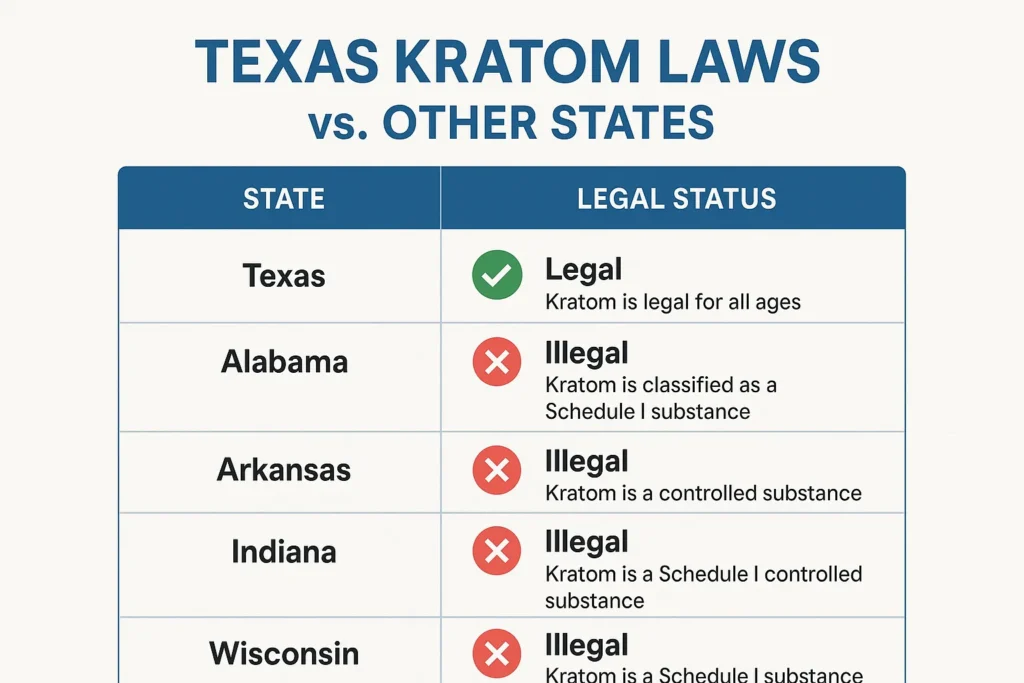
The Texas Legislature has considered various kratom-related bills over the years, but none have resulted in statewide prohibition. This contrasts sharply with states like Alabama, Arkansas, and Wisconsin, where kratom faces complete bans.
🏛️ Texas Kratom Legal Status Checker
Local Ordinances: The Municipal Maze
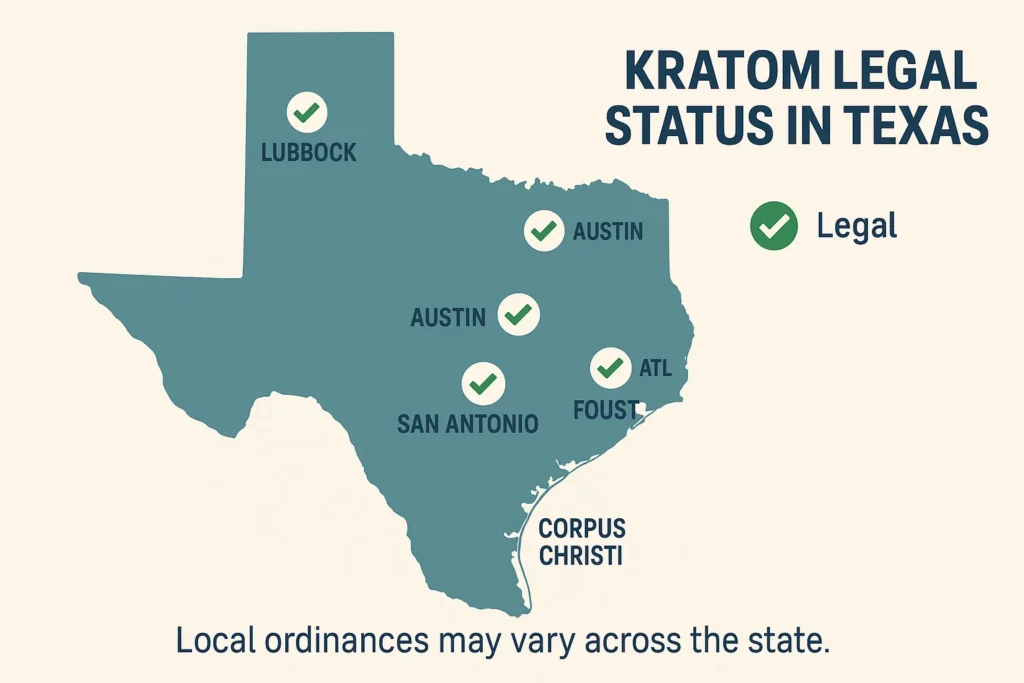
While kratom enjoys legal status at the state level, local municipalities in Texas retain the authority to implement their own restrictions. This creates a complex patchwork of regulations that varies significantly across different cities and counties.
Cities with Potential Restrictions
Although most major Texas cities allow kratom, some smaller municipalities have considered or implemented local bans. Key areas to watch include:
- Conservative rural counties where local officials may be more restrictive
- Cities with strong anti-drug ordinances that might extend to kratom
- University towns where local governments may be more cautious about substances
How to Verify Local Laws
Before purchasing or using kratom in Texas, consider these verification steps:
- Check city websites for current ordinances
- Contact local law enforcement for clarification
- Consult with local kratom vendors who stay updated on regulations
- Review county-level restrictions that might differ from city laws
The Federal Factor: DEA and Kratom’s Uncertain Future
Understanding kratom’s legal status in Texas requires acknowledging the federal uncertainty that continues to loom over the substance. The Drug Enforcement Administration (DEA) has considered scheduling kratom multiple times, creating ongoing concern for users and advocates.
DEA Scheduling Attempts
The most significant federal action occurred in 2016 when the DEA announced plans to classify kratom as a Schedule I controlled substance. However, massive public opposition and congressional intervention led to the withdrawal of this proposal.
Current Federal Status
As of now, kratom remains:
- Unscheduled at the federal level
- Legal to import, possess, and sell in most states
- Subject to FDA warnings about potential risks
- Under ongoing review by federal agencies
This federal uncertainty means that even in states like Texas where kratom is legal, the situation could change rapidly if federal authorities decide to schedule the substance.
Age Restrictions and Purchase Requirements
While Texas doesn’t mandate specific age restrictions for kratom, industry standards and vendor policies typically require purchasers to be at least 18 years old. Some retailers may set even higher age limits.
Common Purchase Requirements
Most legitimate kratom vendors in Texas require:
- Valid government-issued ID for age verification
- 18+ years of age minimum (some vendors require 21+)
- In-person verification for physical store purchases
- Age confirmation for online orders
Why Age Restrictions Matter
These self-imposed industry standards exist because:
- Kratom affects brain development in younger individuals
- Legal liability concerns for vendors
- Industry self-regulation to prevent government intervention
- Responsible business practices aligned with other botanical supplements
Quality and Safety Concerns in the Unregulated Market
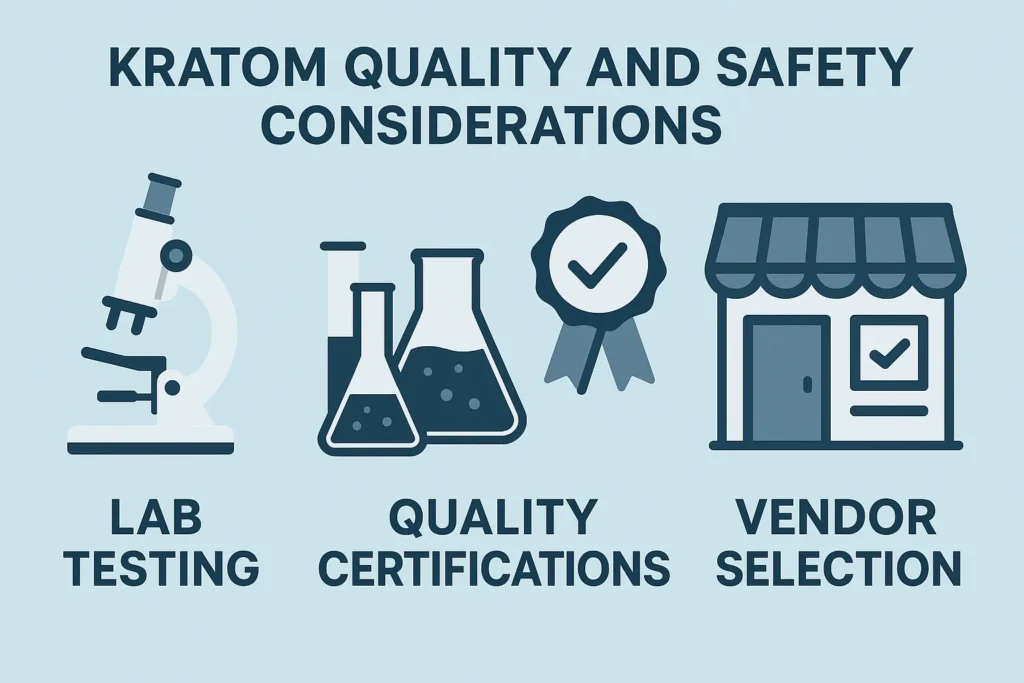
One of the most significant challenges facing Texas kratom users is the lack of standardized regulations governing product quality and safety. Without federal oversight, consumers must navigate an unregulated market where product quality can vary dramatically.
Common Quality Issues
The unregulated kratom market presents several risks:
- Heavy metal contamination from poor growing conditions
- Bacterial contamination from improper processing
- Adulterated products containing undisclosed substances
- Inconsistent alkaloid content affecting potency and effects
- Misleading labeling regarding strain types and origins
How to Identify Quality Vendors
When searching for authentic kratom vendor reviews, Texas consumers should look for vendors who provide:
- Third-party lab testing for contaminants and alkaloid content
- Certificate of Analysis (COA) for each batch
- Transparent sourcing information about origin and processing
- Good Manufacturing Practices (GMP) compliance
- Customer reviews and industry reputation
Popular Kratom Strains and Their Legal Status in Texas
All kratom strains that are legal federally remain legal in Texas, giving consumers access to the full spectrum of available varieties. Understanding different strains can help users make informed decisions about their purchases.
Red Vein Strains
Red vein kratom strains are known for their calming effects:
- Red Borneo: Popular for relaxation and stress relief
- Red Maeng Da: Known for potent effects and pain management
- Red Bali: Widely available and beginner-friendly
For those interested in red strains, Red Borneo kratom has gained popularity for its balanced effects profile.
Green Vein Strains
Green vein varieties offer moderate effects:
- Green Malay: Long-lasting effects with balanced energy
- Green Thai: Energizing properties with mood enhancement
- Green Indo: Mild effects suitable for beginners
White Vein Strains
White vein strains are typically more energizing:
- White Maeng Da: High energy and focus enhancement
- White Borneo: Clean energy without jitters
- White Thai: Traditional energizing variety
Learning about Super Indo kratom can provide insights into how different processing methods affect kratom’s characteristics.
Purchasing Kratom in Texas: Retail vs. Online Options
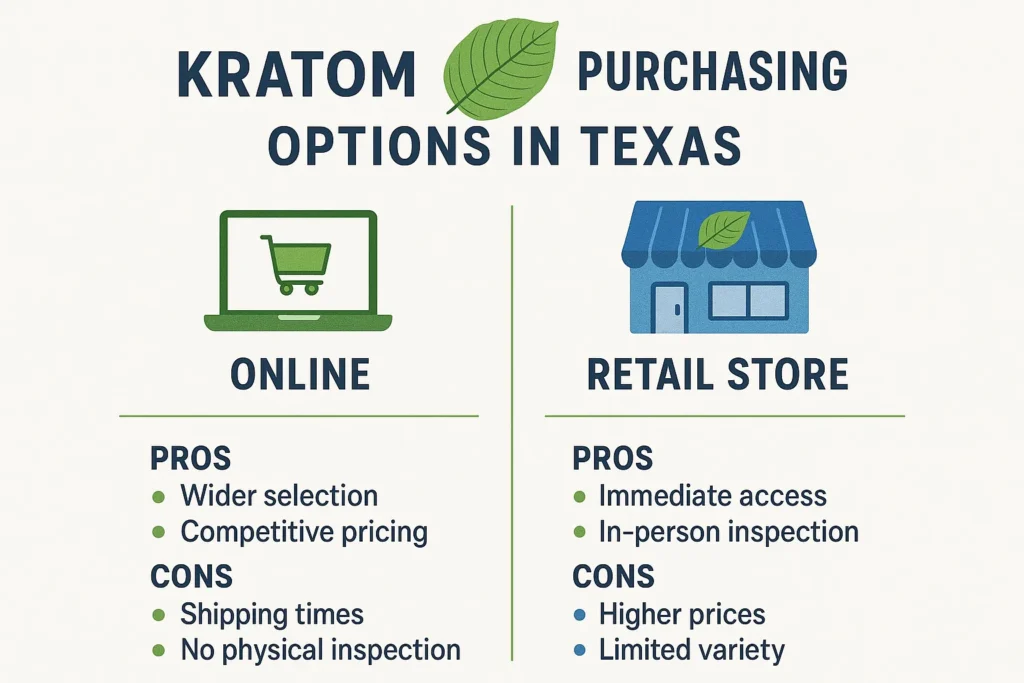
Texas residents have multiple options for purchasing kratom, each with distinct advantages and considerations.
Physical Retail Locations
Smoke shops, head shops, and botanical stores throughout Texas carry kratom products. Benefits include:
- Immediate availability without shipping delays
- Physical product inspection before purchase
- Face-to-face vendor consultation for product questions
- Support for local businesses
However, retail locations may have limitations:
- Higher prices due to overhead costs
- Limited selection compared to online vendors
- Variable quality depending on vendor knowledge
- Inconsistent stock availability
Online Purchasing
Many Texas residents prefer online kratom purchases for several reasons:
- Wider selection of strains and products
- Competitive pricing with bulk discounts
- Detailed product information and lab results
- Customer reviews and vendor reputation data
- Convenient delivery to home addresses
When considering where to buy kratom online safely, Texas consumers should prioritize vendors with strong reputations and transparent business practices.
Vendor Evaluation Criteria
Whether purchasing locally or online, Texas kratom buyers should evaluate vendors based on:
- Lab testing protocols and result transparency
- Customer service responsiveness and knowledge
- Return policies and satisfaction guarantees
- Shipping practices and packaging quality
- Industry certifications and compliance standards
Legal Consequences and Enforcement in Texas
Since kratom is legal in Texas, possession and use carry no criminal penalties at the state level. However, understanding the broader legal landscape helps users stay informed about potential changes.
Current Enforcement Reality
Texas law enforcement agencies generally do not prioritize kratom due to its legal status. Officers are more likely to focus on:
- Scheduled controlled substances
- Illegal drug trafficking
- DUI/DWI enforcement (though kratom’s impairment effects are debated)
- Public safety violations unrelated to kratom use
Potential Legal Complications
While kratom itself is legal, users should be aware of situations that could create legal issues:
- Driving under the influence if kratom causes impairment
- Workplace violations if employers prohibit kratom use
- Probation conditions that may restrict kratom use
- Interstate travel to states where kratom is illegal
Understanding how long kratom stays in your system can help users make informed decisions about timing and usage.
Medical and Health Considerations
While this article focuses on legal aspects, the intersection of kratom use and healthcare in Texas presents important considerations for users.
Healthcare Provider Communication
Texas kratom users should consider:
- Informing healthcare providers about kratom use
- Potential drug interactions with prescription medications
- Pre-surgical disclosure due to anesthesia interactions
- Mental health considerations if using kratom for mood support
Medical Marijuana vs. Kratom
Texas has limited medical marijuana laws, and some patients consider kratom as an alternative. Key differences include:
- Kratom: Legal for all adults, unregulated, widely available
- Medical Marijuana: Highly restricted, limited conditions, prescription required
Economic Impact of Kratom in Texas
The legal status of kratom in Texas has created a significant economic ecosystem that benefits various stakeholders across the state.
Market Size and Growth
The Texas kratom market represents a substantial portion of the national industry:
- Estimated annual sales in the hundreds of millions
- Growing consumer base across urban and rural areas
- Job creation in retail, distribution, and related services
- Tax revenue from legitimate business operations
Industry Employment
Legal kratom sales in Texas support various employment sectors:
- Retail workers in smoke shops and botanical stores
- Distribution personnel for wholesale operations
- Customer service representatives for online vendors
- Quality control specialists for testing and compliance
Small Business Impact
Many kratom businesses in Texas are small, locally-owned operations that contribute to community economic development. These businesses often provide:
- Local employment opportunities
- Community investment through local spending
- Specialized knowledge about kratom products and safety
- Customer education about responsible use practices
Kratom Advocacy and Legal Protection Efforts
The continued legal status of kratom in Texas results partly from active advocacy efforts by consumers, vendors, and organizations dedicated to protecting access to botanical supplements.
Key Advocacy Organizations
Several organizations work to protect kratom access:
- American Kratom Association (AKA): Leading national advocacy group
- Botanical Education Alliance: Focuses on education and research
- Local consumer groups: Texas-based advocacy networks
Legislative Monitoring
Advocacy groups actively monitor:
- State legislative sessions for proposed kratom bills
- Federal regulatory developments that could affect state laws
- Local municipal meetings where ordinances might be discussed
- Industry standards development for self-regulation
How Consumers Can Support Advocacy
Texas kratom users can support continued legal access by:
- Joining advocacy organizations and staying informed
- Contacting legislators about kratom issues
- Supporting responsible vendors who follow best practices
- Educating others about kratom’s traditional uses and safety
Comparison with Other States’ Kratom Laws
Understanding Texas’s position within the broader national kratom legal landscape provides context for the state’s relatively permissive approach.
States with Complete Bans
Several states have banned kratom entirely:
- Alabama: Complete prohibition since 2016
- Arkansas: Banned with criminal penalties
- Indiana: Prohibited under controlled substance laws
- Rhode Island: Complete ban with enforcement
- Vermont: Prohibited for all uses
- Wisconsin: Classified as controlled substance
States with Regulations
Some states allow kratom with specific regulations:
- Nevada: Legal with age restrictions and labeling requirements
- Utah: Regulated under kratom consumer protection act
- Georgia: Legal with specific purity and labeling standards
States with Full Legality
Texas joins many states with unrestricted kratom access:
- Florida: Legal with some local restrictions
- California: Legal statewide with local variations
- New York: Legal with ongoing legislative discussions
For comparison, readers might find it helpful to review kratom laws in Florida to see how other large states handle kratom regulation.
Consumer Safety and Best Practices
For Texas residents who choose to use kratom, following safety best practices helps ensure positive experiences while minimizing risks.
Dosage Guidelines
Responsible kratom use involves understanding proper dosing:
- Start low: Begin with 1-2 grams to assess tolerance
- Increase gradually: Add 0.5-1 gram increments if needed
- Avoid high doses: Large amounts increase side effect risks
- Take breaks: Regular tolerance breaks prevent dependence
Quality Verification
Texas consumers should prioritize quality by:
- Requesting lab results for heavy metals and contaminants
- Choosing reputable vendors with positive customer feedback
- Avoiding enhanced products with unknown additives
- Storing properly in cool, dry conditions
Interaction Awareness
Kratom can interact with various substances:
- Prescription medications: Consult healthcare providers
- Alcohol: Avoid combining due to increased risks
- Other supplements: Research potential interactions
- CNS depressants: Exercise extreme caution
For comprehensive safety information, Texas users should review guides on how to take kratom safely.
Workplace Considerations for Texas Kratom Users
While kratom is legal in Texas, workplace policies may still restrict its use, creating important considerations for employees.
Employment Policies
Many Texas employers maintain policies that could affect kratom users:
- Drug-free workplace policies may include kratom
- Safety-sensitive positions might prohibit any psychoactive substances
- Federal contractors must comply with federal drug-free workplace requirements
- Transportation workers face DOT regulations that could include kratom
Drug Testing Considerations
Standard drug tests typically do not screen for kratom, but specialized tests can detect its alkaloids:
- Standard 5-panel tests: Do not detect kratom
- Extended panels: May include kratom screening
- Specialized kratom tests: Available but rarely used
- Detection windows: Vary based on usage patterns and metabolism
Professional Recommendations
Texas kratom users in the workforce should consider:
- Reviewing employee handbooks for relevant policies
- Consulting HR departments about substance policies
- Avoiding use before safety-sensitive work
- Maintaining open communication with supervisors when appropriate
The Role of Education in Kratom Policy
Education plays a crucial role in maintaining kratom’s legal status in Texas and ensuring responsible use among consumers.
Consumer Education Priorities
Well-informed consumers help maintain positive public perception:
- Understanding traditional uses and cultural context
- Recognizing quality indicators in kratom products
- Learning about potential risks and contraindications
- Practicing responsible use to avoid negative outcomes
Healthcare Provider Education
Many healthcare providers lack knowledge about kratom:
- Continuing education programs could improve understanding
- Research dissemination helps providers stay informed
- Patient communication facilitates better healthcare decisions
- Clinical guidelines could standardize approaches
Public Health Messaging
Balanced public health messaging supports informed policy:
- Evidence-based information rather than fear-based campaigns
- Harm reduction approaches that prioritize safety
- Recognition of traditional uses and cultural significance
- Honest assessment of both benefits and risks
Community Resources and Support
Texas kratom users have access to various community resources that provide support, education, and advocacy opportunities.
Online Communities
Digital platforms offer valuable resources:
- Reddit communities for experience sharing and advice
- Facebook groups focused on Texas kratom users
- Forums dedicated to kratom education and safety
- Vendor review sites helping consumers make informed choices
Local Support Networks
Physical communities provide additional support:
- Kratom meetup groups in major Texas cities
- Educational seminars hosted by advocacy organizations
- Vendor events offering product education
- Healthcare provider networks knowledgeable about kratom
Educational Resources
Comprehensive information sources include:
- Scientific literature on kratom research
- Advocacy organization websites with policy updates
- Vendor educational materials about specific products
- Healthcare provider resources for medical considerations
For additional educational content, Texas residents can explore comprehensive kratom guides covering various aspects of kratom use and safety.
Economic Benefits of Legal Kratom in Texas
The economic impact of kratom’s legal status extends beyond direct sales to encompass broader economic benefits for Texas communities.
Tax Revenue Generation
Legal kratom sales contribute to Texas tax revenues:
- Sales taxes on retail and online purchases
- Business taxes from kratom-related enterprises
- Employment taxes from industry workers
- Property taxes from commercial kratom operations
Tourism and Commerce
Kratom legality can attract visitors and business:
- Kratom tourism from restrictive states
- Conference and convention hosting for industry events
- Cross-border commerce with legal neighboring states
- Research and development opportunities for Texas institutions
Innovation Opportunities
Legal status enables innovation:
- Product development for new kratom formulations
- Quality testing services for the kratom industry
- Agricultural research into kratom cultivation
- Technology solutions for industry compliance and safety
Kratom Legal FAQ for Texas
- Kratom powder
- Kratom capsules
- Kratom extracts
- Kratom tea
- Kratom leaves
- Start with small amounts to assess tolerance
- Purchase from reputable, lab-tested sources
- Be aware of potential interactions with medications
- Understand your employer’s drug testing policies
- Stay informed about local and federal regulations
Conclusion
The question “Is kratom legal in Texas?” has a clear answer: Yes, kratom remains fully legal at the state level throughout Texas. However, the complete picture involves understanding local ordinances, federal uncertainty, quality concerns, and the evolving regulatory landscape that continues to shape kratom access and use.
Texas kratom users benefit from the state’s permissive approach while navigating an unregulated market that requires careful vendor selection and responsible use practices. The continued legal status depends on ongoing advocacy efforts, industry self-regulation, and informed consumer behavior that maintains positive public perception.
Key action steps for Texas kratom users:
✅ Verify local laws in your specific city or county before purchasing
✅ Choose reputable vendors who provide lab testing and quality assurance
✅ Stay informed about legislative developments that could affect legality
✅ Practice responsible use following established safety guidelines
✅ Support advocacy efforts that protect continued legal access
As the kratom landscape continues evolving, Texas residents must remain vigilant about potential changes while taking advantage of current legal access to make informed decisions about kratom use. Whether you’re new to kratom or an experienced user, understanding the legal framework provides the foundation for safe and responsible engagement with this traditional botanical.
Daniel Brooks
Daniel Brooks is a U.S. based botanical writer with over six years of hands on experience in kratom focused content. He studies kratom strains, sourcing standards, dosage patterns, and consumer safety topics. He stays up to date with current news, regulatory changes, and market trends related to kratom and botanical products.
His work includes educational guides, strain breakdowns, and vendor reviews written for everyday users. He avoids promotional language and presents clear facts. Daniel helps readers understand both benefits and risks so they can make informed choices about responsible kratom use.