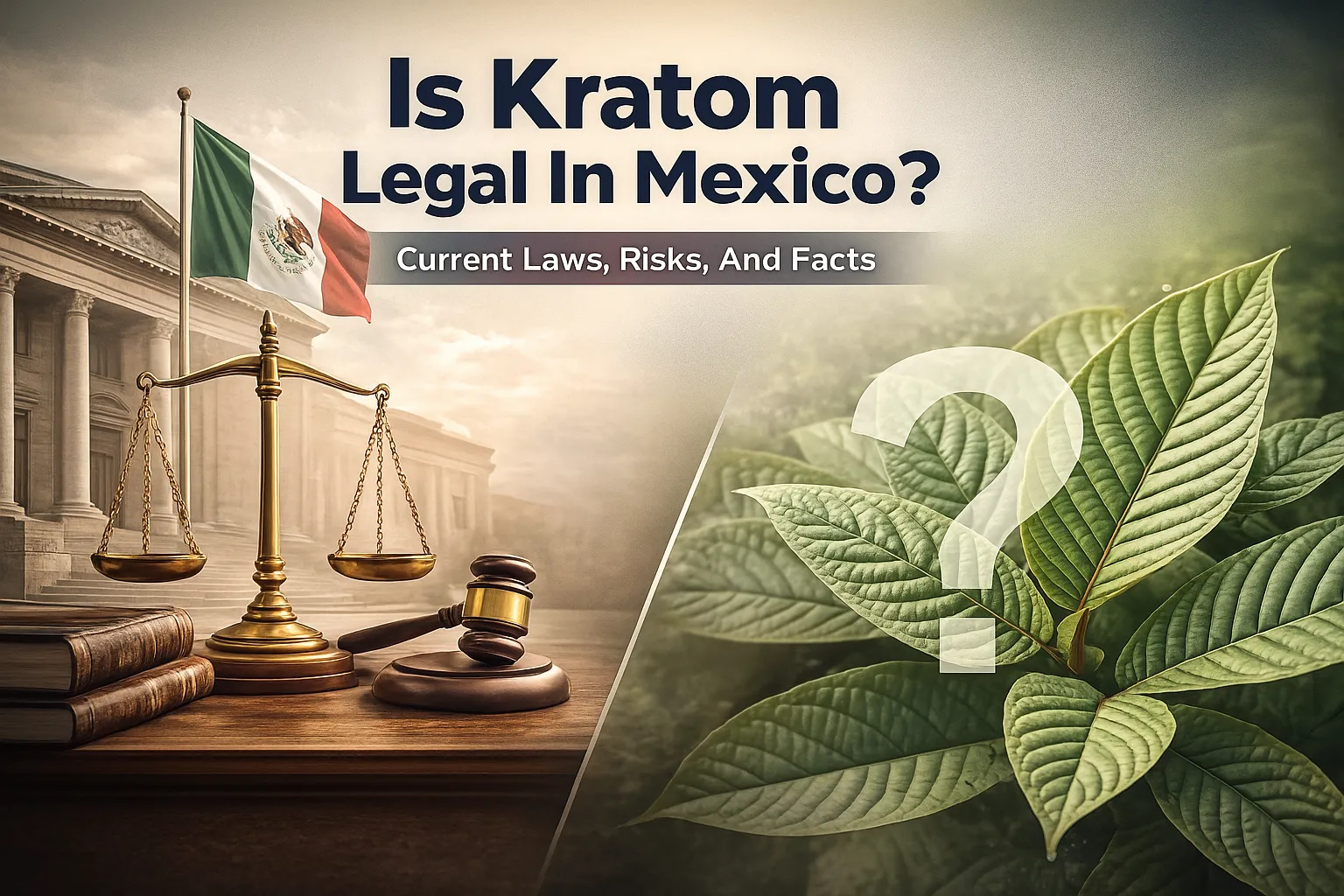
Is Kratom Legal In Mexico is a question many travelers and residents overlook until it becomes urgent. Mexico does not clearly regulate kratom under a specific national law, which creates confusion. It is not explicitly listed as a controlled substance, yet it is also not approved as a supplement or medicine. This lack of clarity places kratom in a legal gray area. Customs officers and local authorities may interpret its status differently, especially when it appears in labeled capsules or powder form. What seems harmless in one country can quickly become a serious issue at the border.
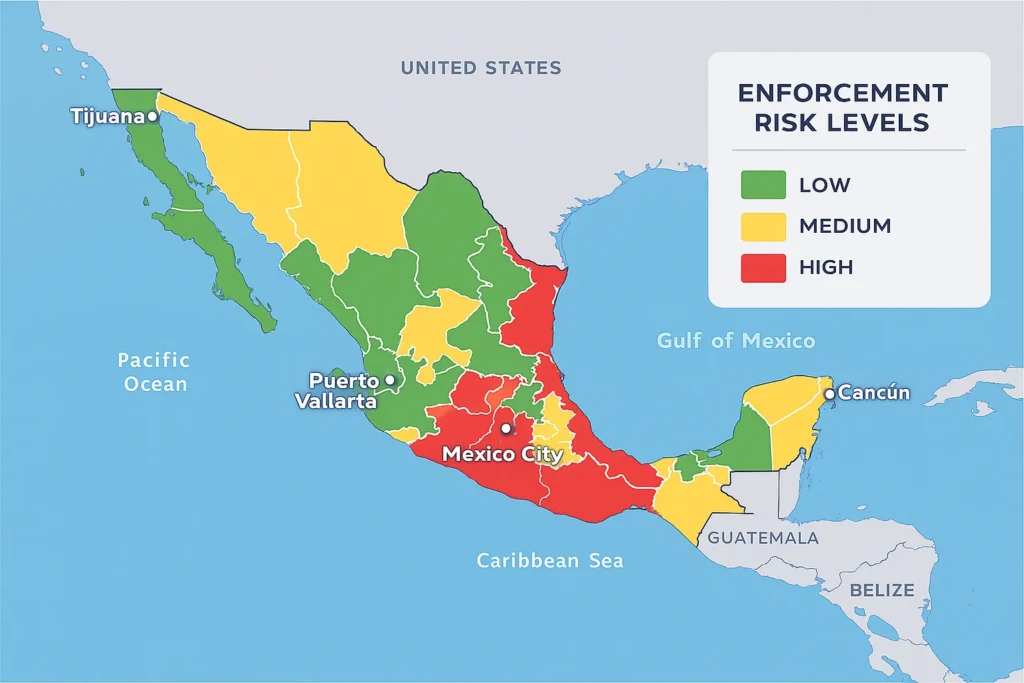
Enforcement varies widely across Mexico and depends on location, quantity, and how kratom is presented. Small personal amounts may pass without issue in some regions, while others treat it as an unapproved herbal product or suspect substance. Airports and border crossings carry higher risk due to stricter inspections. Online sales inside Mexico exist, but they do not guarantee legality or protection from enforcement. Travelers often face product confiscation, fines, or questioning rather than clear guidance. If you are asking Is Kratom Legal In Mexico, the safest approach is caution. Avoid traveling with it, research local enforcement patterns, and understand that uncertainty itself is the primary risk.
- Kratom exists in a legal gray area in Mexico – it’s not explicitly banned but lacks clear regulation
- COFEPRIS (Mexico’s health authority) has not approved kratom for medical or recreational use
- Border enforcement can be unpredictable – customs officials may confiscate kratom products
- Regional enforcement varies significantly across Mexican states and municipalities
- Travelers should exercise extreme caution when bringing kratom into Mexico
Understanding Mexico’s Drug Laws and Kratom’s Position
Mexico’s approach to controlled substances has evolved significantly over the past decade. The country operates under a complex framework that distinguishes between different categories of psychoactive substances, with kratom falling into an uncertain classification.
The General Health Law (Ley General de Salud) serves as the primary legislation governing controlled substances in Mexico. Under this framework, substances are classified into different schedules based on their medical utility and potential for abuse. However, kratom (Mitragyna speciosa) does not appear on any official controlled substance list.
COFEPRIS and Regulatory Oversight
The Federal Commission for the Protection against Sanitary Risk (COFEPRIS) acts as Mexico’s equivalent to the FDA. This agency has the authority to regulate, approve, or ban substances for medical and commercial use. Currently, COFEPRIS has not issued any official statements specifically addressing kratom’s legal status.
This regulatory silence creates a problematic situation where:
- No explicit ban exists on kratom possession or use
- No approval pathway has been established for kratom products
- Customs enforcement operates without clear guidelines
- Local authorities may interpret laws differently
Current Legal Framework: What the Law Actually Says
Federal Level Regulations
At the federal level, Mexico’s drug laws focus primarily on substances listed in the Ley General de Salud. The absence of kratom from these lists suggests it’s not federally prohibited. However, this doesn’t necessarily mean it’s legal.
Article 234 of the General Health Law grants COFEPRIS broad authority to regulate substances that may pose public health risks. This provision could theoretically be used to restrict kratom without formal scheduling.
State and Municipal Variations
Mexican states retain significant autonomy in health and safety regulations. Some key considerations include:
- Quintana Roo (Cancún, Playa del Carmen) – tourism-focused enforcement
- Jalisco (Guadalajara, Puerto Vallarta) – varying local interpretations
- Mexico City – federal district with unique regulatory approach
- Border states – heightened scrutiny due to drug trafficking concerns
Border Control and Customs Enforcement
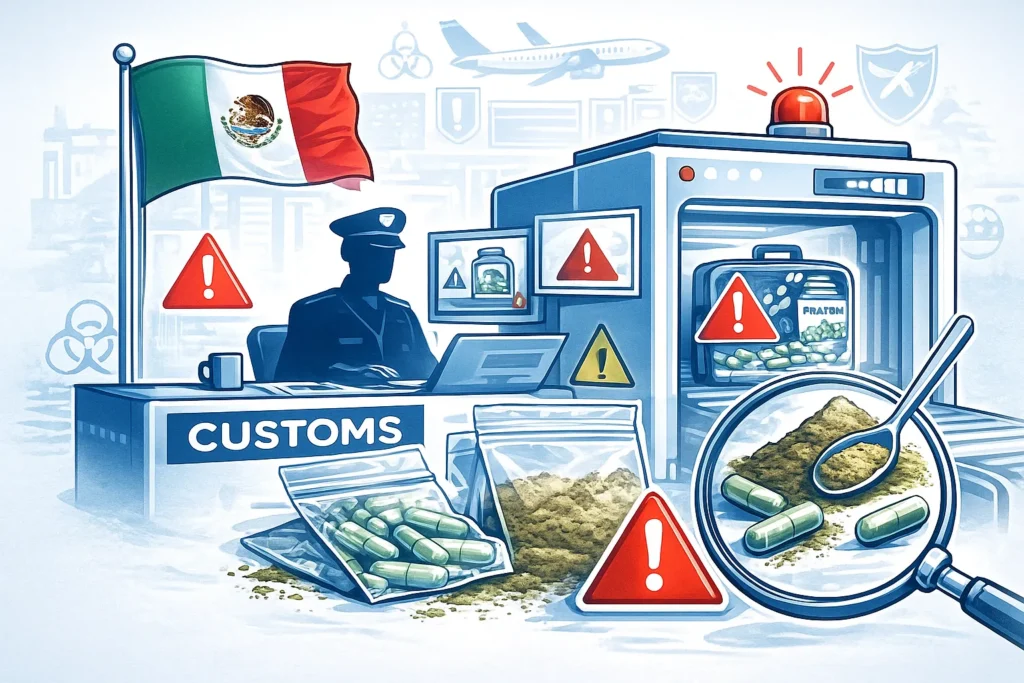
Airport Screening Procedures
Mexican customs officials operate under broad discretionary powers when examining incoming goods. Even legal substances can be confiscated if officials deem them suspicious or potentially harmful.
Common scenarios at Mexican airports:
- Random baggage searches may reveal kratom products
- Suspicious packaging can trigger additional scrutiny
- Large quantities may suggest commercial intent
- Lack of proper documentation creates complications
Documentation Requirements
While kratom may not be explicitly banned, travelers should consider carrying:
- Original product packaging with ingredient lists
- Medical documentation if using kratom therapeutically
- Purchase receipts showing legal acquisition
- Research articles explaining kratom’s botanical nature
Risks and Consequences of Kratom Possession
Legal Penalties
Although kratom isn’t specifically scheduled, Mexican authorities could potentially pursue charges under various statutes:
Potential charges include:
- Importation of unregulated substances
- Possession of suspicious materials
- Violation of health regulations
- Drug trafficking (for large quantities)
Practical Consequences
Beyond formal legal penalties, kratom possession in Mexico could result in:
- Product confiscation at borders
- Detention and questioning by authorities
- Deportation for foreign nationals
- Criminal record affecting future travel
- Legal fees and court proceedings
Regional Enforcement Patterns
Tourist Areas
Popular tourist destinations often employ zero-tolerance policies for any substances that could be construed as drugs. Resort areas like Cancún, Puerto Vallarta, and Cabo San Lucas maintain strict enforcement to protect their tourism industry.
Enforcement characteristics in tourist zones:
- Heightened security at airports and hotels
- Regular police patrols in tourist areas
- Cooperation with international authorities
- Swift processing of suspected violations
Border Regions
Northern Mexican states bordering the United States face intense scrutiny due to ongoing drug trafficking issues. Authorities in these regions may be particularly suspicious of any unknown substances.
Interior Mexico
Rural and interior regions often have less sophisticated enforcement capabilities but may lack understanding of kratom’s legal status, potentially leading to misunderstandings or arbitrary enforcement.
Comparing Mexico’s Stance to Other Countries
Understanding Mexico’s position requires context from regional and international perspectives:
North American Comparison
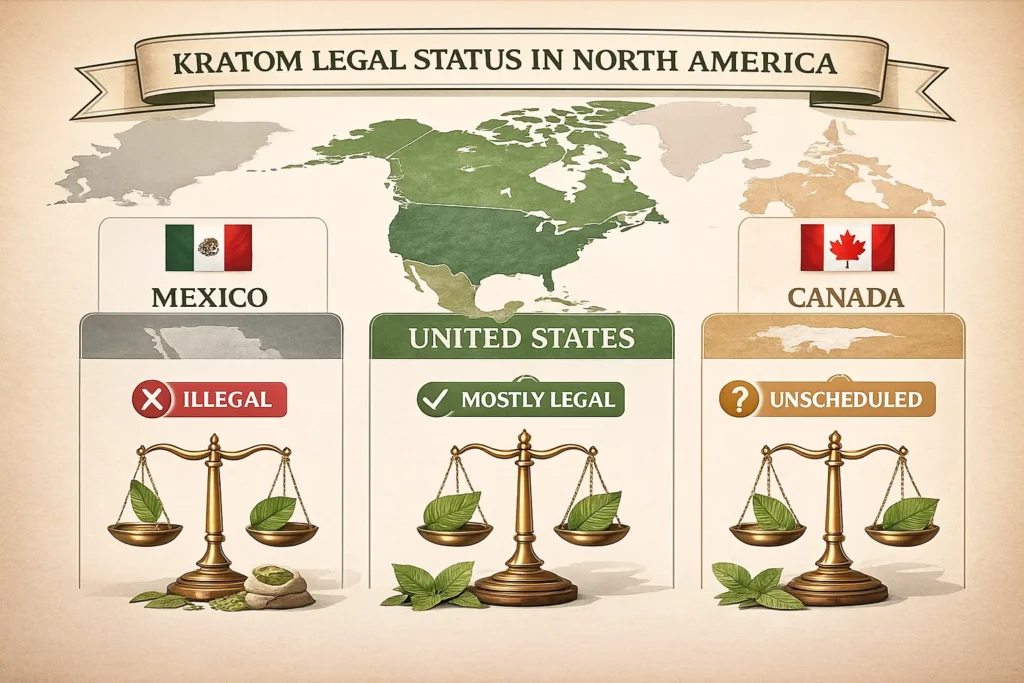
| Country | Legal Status | Regulatory Body | Enforcement Level |
|---|---|---|---|
| Mexico | Gray Area | COFEPRIS | Variable |
| United States | Legal (most states) | FDA/State | Moderate |
| Canada | Unscheduled | Health Canada | Low |
Latin American Context
Most Latin American countries have not specifically addressed kratom in their drug laws, creating similar gray areas throughout the region. However, Mexico’s proximity to major drug trafficking routes may influence more cautious enforcement approaches.
Medical and Scientific Perspectives in Mexico
Research Status
Mexican medical institutions have conducted limited research on kratom, with most scientific literature coming from international sources. The lack of domestic research contributes to regulatory uncertainty.
Medical Community Views
Mexican healthcare professionals generally remain unfamiliar with kratom’s therapeutic potential, as it’s not part of traditional medical education or practice. This knowledge gap affects policy discussions and regulatory decisions.
For those interested in understanding kratom’s effects and timeline, research on how long kratom takes to kick in provides valuable insights into the substance’s pharmacological properties.
Safe Alternatives and Recommendations
For Travelers
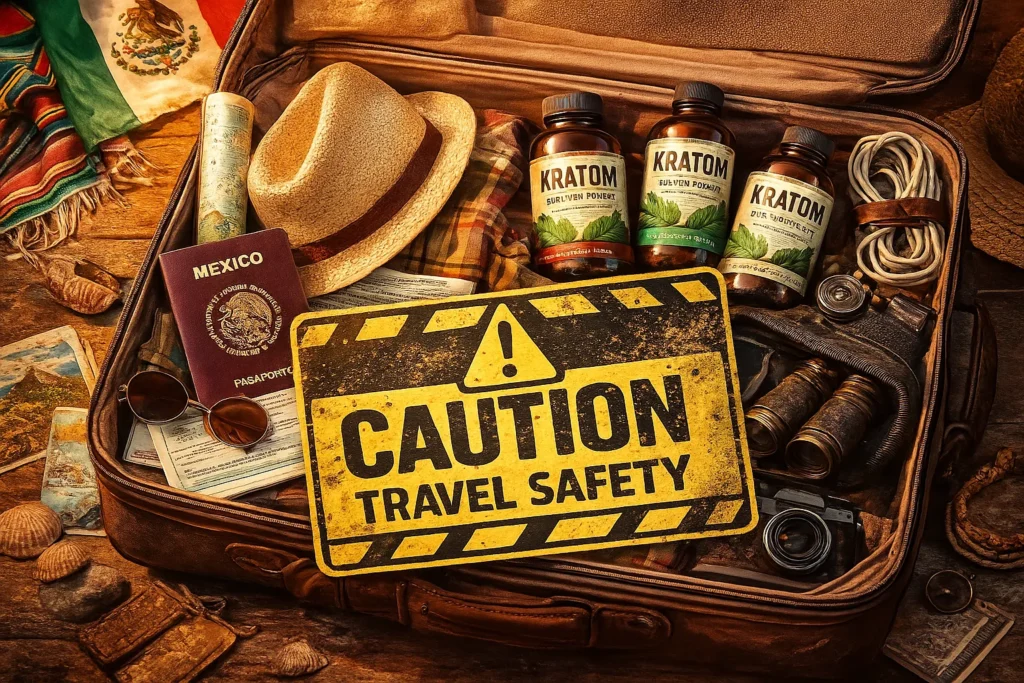
Before traveling to Mexico with kratom:
- Consult Mexican consulates for current guidance
- Research specific destination enforcement patterns
- Consider leaving kratom at home to avoid complications
- Explore legal alternatives available in Mexico
- Prepare documentation if travel is necessary
For Residents
Mexican residents interested in kratom should:
- Monitor regulatory developments from COFEPRIS
- Avoid large-scale purchases that suggest distribution
- Maintain low profiles regarding kratom use
- Stay informed about legal changes
Similar to other jurisdictions, understanding kratom’s legal status varies by location, making local research essential.
Legal Developments
Potential Regulatory Changes
Several factors could influence Mexico’s future kratom policies:
Regulatory drivers:
- International pressure from drug control treaties
- Scientific research on kratom’s safety and efficacy
- Public health concerns or incidents
- Economic considerations around regulation costs
- Regional harmonization with US and Canadian policies
Monitoring Legal Changes
Stay informed about kratom’s legal status through:
- COFEPRIS official announcements
- Mexican health ministry updates
- Legal news sources covering drug policy
- Embassy communications from your home country
Practical Guidance for Different Scenarios
Business Travelers
Frequent business travelers should establish clear protocols:
- Maintain consistent travel routines without kratom
- Research company policies on employee substance use
- Consider medical alternatives available in Mexico
- Document any medical needs for customs officials
Medical Tourists
Mexico’s medical tourism industry serves many international patients. Medical tourists using kratom should:
- Consult with Mexican physicians about alternatives
- Bring comprehensive medical records
- Coordinate with treatment facilities about substance policies
- Plan for potential withdrawal if discontinuing kratom
Long-term Residents
Expatriates and long-term residents face unique considerations:
- Establish relationships with local healthcare providers
- Understand residency implications of legal issues
- Build support networks for health and wellness
- Stay connected with expatriate communities for updates
Understanding how long kratom stays in the system becomes particularly important when crossing international borders or dealing with legal uncertainties.
Cultural and Social Context
Traditional Medicine in Mexico
Mexico has a rich tradition of herbal medicine and plant-based therapies. However, kratom is not part of traditional Mexican botanical practices, which may contribute to regulatory hesitation.
Traditional Mexican botanicals include:
- Damiana (Turnera diffusa)
- Passionflower (Passiflora incarnata)
- Mexican mint marigold (Tagetes lucida)
- Yerba buena (various mint species)
Public Perception
Mexican public opinion on kratom remains largely uninformed, as the substance has received minimal media coverage or public discussion. This lack of awareness can lead to:
- Misunderstanding by law enforcement
- Confusion among healthcare providers
- Arbitrary decision-making by officials
- Inconsistent enforcement across regions
Economic Implications
Market Considerations
The absence of clear kratom regulations in Mexico creates economic uncertainties for various stakeholders:
Affected parties include:
- International kratom vendors considering Mexican markets
- Mexican entrepreneurs interested in kratom businesses
- Tourism industry dealing with visitor questions
- Healthcare sector addressing patient inquiries
Border Trade Impact
US-Mexico border trade involves extensive screening of botanical products. Kratom’s ambiguous status complicates:
- Cross-border commerce
- Personal importation
- Customs processing times
- Trade relationship stability
For those seeking reliable kratom sources in legal jurisdictions, finding quality kratom vendors becomes essential for maintaining consistent access.
🇲🇽 Mexico Kratom Risk Assessment
Evaluate your risk level for traveling with or possessing kratom in Mexico
International Legal Trends and Mexico’s Position
Global Kratom Regulation Patterns
International kratom policies show significant variation, influencing Mexico’s potential regulatory direction:
Permissive jurisdictions:
- United States (legal in most states)
- Canada (unscheduled substance)
- Germany (legal for personal use)
- Netherlands (available in smart shops)
Restrictive jurisdictions:
- Thailand (recently legalized after ban)
- Malaysia (strictly prohibited)
- Australia (scheduled substance)
- United Kingdom (psychoactive substances ban)
Regional Harmonization Pressures
North American integration through trade agreements may influence Mexico’s kratom policies. The USMCA (formerly NAFTA) includes provisions for regulatory cooperation that could affect substance policies.
Health System Integration Challenges
Medical Professional Education
Mexican healthcare providers receive limited training on kratom and other emerging botanicals. This knowledge gap affects:
- Patient counseling capabilities
- Drug interaction assessments
- Withdrawal management protocols
- Alternative therapy recommendations
For comprehensive information about kratom varieties and their effects, resources like Brown Borneo kratom benefits provide valuable educational content for healthcare professionals.
Public Health Infrastructure
Mexico’s public health system faces challenges in monitoring and regulating new psychoactive substances:
Infrastructure limitations include:
- Limited laboratory testing capabilities
- Insufficient surveillance systems
- Inadequate funding for regulatory oversight
- Competing priorities in drug policy
Legal Defense and Rights Protection
Know Your Rights
Foreign nationals and Mexican citizens have specific rights when detained for suspected drug violations:
Constitutional protections include:
- Right to legal representation
- Protection against arbitrary detention
- Access to consular services (for foreigners)
- Due process guarantees
Legal Resources
Recommended legal resources for kratom-related issues:
- Mexican Bar Association (Barra Mexicana)
- Human rights organizations
- Embassy legal services
- Specialized drug law attorneys
Economic Development and Kratom Markets
Potential Market Opportunities
Clear kratom regulations could create economic opportunities in Mexico:
Potential sectors include:
- Agricultural production in suitable climates
- Research and development facilities
- Manufacturing and processing
- Export market development
- Medical tourism integration
Investment Considerations
International investors interested in Mexican kratom markets should consider:
- Regulatory uncertainty risks
- Political climate changes
- Infrastructure requirements
- Market demand assessment
Social Justice and Enforcement Equity
Enforcement Disparities
Drug law enforcement in Mexico often reflects socioeconomic disparities:
Vulnerable populations include:
- Low-income individuals facing harsher penalties
- Indigenous communities with traditional plant use
- Foreign tourists without legal resources
- Border residents under increased scrutiny
Reform Advocacy
Drug policy reform advocates in Mexico work toward:
- Evidence-based substance policies
- Harm reduction approaches
- Criminal justice reform
- Indigenous rights protection
Kratom Legal Status in Mexico
Frequently Asked Questions
Conclusion:
Is kratom legal in Mexico? The answer remains frustratingly complex. While kratom isn’t explicitly banned under federal law, the absence of clear regulations creates significant risks for users, travelers, and businesses. Mexico’s regulatory gray area means that kratom’s legal status depends heavily on enforcement discretion, regional interpretation, and evolving policy directions.
The safest approach involves avoiding kratom entirely when traveling to or residing in Mexico. The potential consequences of legal complications far outweigh the benefits of kratom use in most circumstances. For those who depend on kratom for medical reasons, consulting with healthcare providers about legal alternatives becomes essential.
- Monitor official announcements from COFEPRIS and Mexican health authorities
- Consult legal professionals before making any kratom-related decisions involving Mexico
- Research alternative wellness approaches available in Mexico
- Stay connected with kratom community resources for updates on legal developments
- Consider jurisdictions with clearer kratom laws for travel and relocation decisions
Understanding where to find reliable kratom sources in legal jurisdictions becomes crucial for maintaining access while avoiding legal complications. Resources for finding kratom near you can help identify legitimate vendors in permissive areas.
The kratom community continues to advocate for science-based policies that recognize both the therapeutic potential and safety considerations of this traditional botanical. Mexico’s eventual regulatory approach will likely reflect broader international trends toward evidence-based substance policies rather than prohibition-focused strategies.
Daniel Brooks
Daniel Brooks is a U.S. based botanical writer with over six years of hands on experience in kratom focused content. He studies kratom strains, sourcing standards, dosage patterns, and consumer safety topics. He stays up to date with current news, regulatory changes, and market trends related to kratom and botanical products.
His work includes educational guides, strain breakdowns, and vendor reviews written for everyday users. He avoids promotional language and presents clear facts. Daniel helps readers understand both benefits and risks so they can make informed choices about responsible kratom use.