
Chronic pain sufferers in Indianapolis often hear about kratom’s potential benefits, but their first concern is not dosage or effects—it is whether they can legally purchase and use this botanical supplement. Like thousands of Indiana residents exploring natural alternatives for pain management, anxiety relief, and overall wellness, knowing is kratom legal in Indiana is essential before making any buying decisions.
- Kratom is currently legal in Indiana for adults 18 and older, with no state-level restrictions on purchase, possession, or consumption
- No licensing requirements exist for kratom vendors operating within Indiana, though quality standards vary significantly between suppliers
- Federal oversight remains uncertain, with ongoing DEA evaluations and potential future scheduling considerations
- Local ordinances may vary, making it essential to check city and county-specific regulations before purchasing
- Quality and safety standards are not federally mandated, emphasizing the importance of choosing reputable vendors
Current Legal Status: Is Kratom Legal in Indiana?
Yes, kratom is legal in Indiana as of 2023. The state has not enacted any legislation prohibiting the sale, possession, or consumption of kratom products for adults aged 18 and older. This places Indiana among the majority of U.S. states that maintain kratom’s legal status while the federal government continues evaluating its regulatory approach.
Indiana’s approach to kratom legality reflects a hands-off regulatory stance, neither explicitly endorsing nor restricting the botanical supplement. This means residents can legally:
- Purchase kratom products from online vendors and local retailers
- Possess kratom in any quantity for personal use
- Transport kratom within state boundaries
- Consume kratom products without legal consequences
However, this legal status comes with important caveats that every Indiana resident should understand before engaging with kratom products.
Understanding Federal vs. State Jurisdiction
While kratom remains legal at the Indiana state level, the federal landscape presents ongoing uncertainty. The Drug Enforcement Administration (DEA) has not scheduled kratom as a controlled substance, but the agency continues monitoring its safety profile and abuse potential.
The Food and Drug Administration (FDA) maintains a critical stance toward kratom, issuing warning letters to vendors making unsubstantiated health claims and expressing concerns about safety. However, these federal positions don’t currently translate to criminal liability for consumers in states where kratom remains legal.
Historical Context of Kratom Laws in Indiana
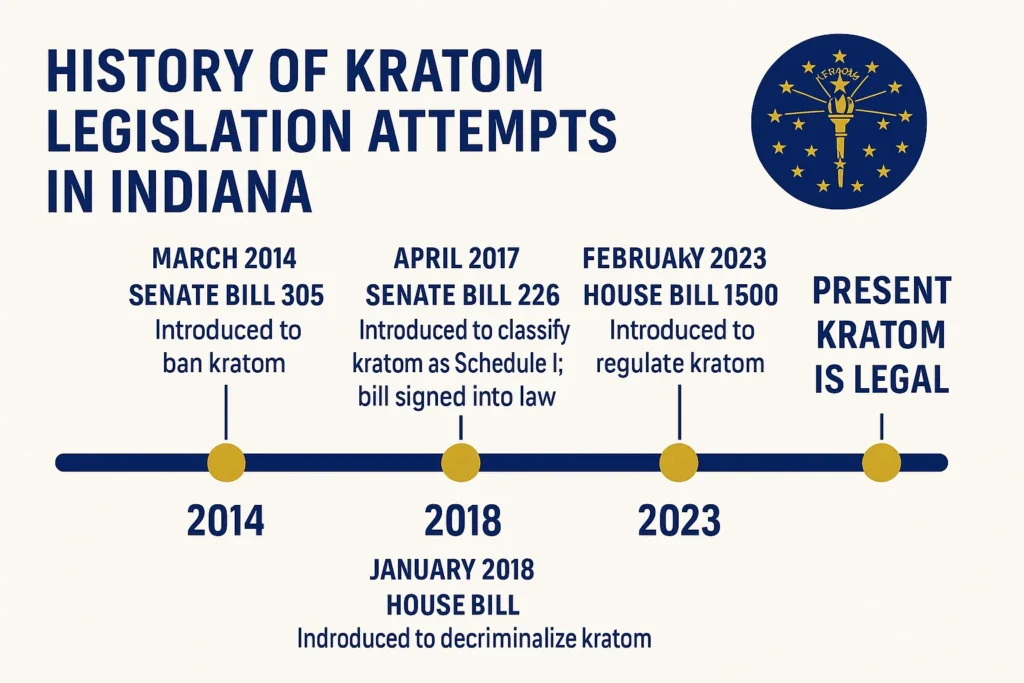
Indiana’s kratom legal status hasn’t always been secure. Understanding the historical context helps residents appreciate the current legal landscape and anticipate potential future changes.
Early Legislative Attempts
In 2014, Indiana lawmakers introduced legislation that would have classified kratom’s primary alkaloids—mitragynine and 7-hydroxymitragynine—as controlled substances. This bill gained initial support but ultimately failed to advance through the legislative process due to limited evidence supporting scheduling and advocacy efforts from kratom supporters.
The proposed legislation reflected broader national concerns about kratom’s safety profile, particularly regarding potential abuse and dependency issues. However, Indiana legislators ultimately decided against restriction, citing insufficient scientific evidence and the botanical’s traditional use in Southeast Asian cultures.
Advocacy and Public Input
Kratom advocacy groups played a crucial role in maintaining Indiana’s permissive stance. Organizations like the American Kratom Association (AKA) provided legislative testimony, scientific research, and consumer testimonials that highlighted kratom’s potential benefits while addressing safety concerns.
Public input sessions revealed significant support for kratom access among Indiana residents using the botanical for various wellness purposes. These testimonials influenced lawmakers’ decisions to maintain legal status while monitoring federal developments.
Federal Regulations and Their Impact
Understanding federal kratom regulations helps Indiana residents navigate the broader legal landscape affecting product availability, quality standards, and future legal status.
DEA Scheduling Considerations
The Drug Enforcement Administration has evaluated kratom for potential scheduling multiple times since 2016. Each review considers factors including:
- Abuse potential based on clinical studies and user reports
- Medical utility as demonstrated through scientific research
- Public safety concerns related to adverse events and interactions
- International control status in other countries
To date, these evaluations haven’t resulted in federal scheduling, but ongoing reviews mean Indiana residents should stay informed about potential future changes.
FDA Position and Safety Warnings
The Food and Drug Administration maintains an active oversight role regarding kratom products, focusing on:
Safety Monitoring: The FDA tracks adverse event reports associated with kratom use, including hospitalizations, drug interactions, and fatalities where kratom was present.
Quality Control: Federal agencies monitor kratom products for contamination, including heavy metals, bacteria, and adulterants that could pose health risks.
Marketing Claims: The FDA issues warning letters to companies making unsubstantiated health claims about kratom products, requiring evidence-based marketing approaches.
These federal activities don’t make kratom illegal in Indiana but influence product availability and vendor practices throughout the supply chain.
Local Ordinances and Municipal Laws
While kratom remains legal at the Indiana state level, local municipalities may enact ordinances affecting kratom sales and consumption within their jurisdictions. Understanding these local variations is essential for residents and visitors.
City-Level Regulations
Several Indiana cities have considered or enacted local kratom ordinances, typically focusing on:
Retail Licensing: Some municipalities require special licenses for businesses selling kratom products, similar to tobacco or alcohol retail permits.
Age Restrictions: Local ordinances may impose stricter age requirements than state law, potentially requiring customers to be 21 or older.
Zoning Restrictions: Cities might limit where kratom retailers can operate, similar to regulations affecting other controlled retail categories.
Public Consumption: Some areas restrict kratom consumption in public spaces, parks, or municipal buildings.
County-Level Considerations
Indiana counties generally follow state law regarding kratom legality, but some may impose additional restrictions through:
- Health department regulations affecting retail sales
- Business licensing requirements for kratom vendors
- Public safety ordinances addressing consumption in specific areas
Before purchasing or consuming kratom products, residents should verify local regulations in their specific municipality and county.
Indiana Kratom Legal Status Checker
Indiana Kratom Legal Status Checker
Check the legal status of kratom in your Indiana location
Age Restrictions and Purchase Requirements
Indiana’s kratom laws include specific age-related provisions that affect who can legally purchase and possess kratom products within the state.
Minimum Age Requirements
Adults 18 and older can legally purchase, possess, and consume kratom products in Indiana. This age restriction aligns with federal guidelines for botanical supplements and reflects the state’s approach to adult consumer choice regarding natural products.
The 18-year minimum age requirement applies to:
- Retail purchases at physical stores
- Online orders shipped to Indiana addresses
- Possession of kratom products in any form
- Consumption of kratom-containing products
Verification and Enforcement
Kratom retailers in Indiana are responsible for verifying customer ages before completing sales. This typically involves:
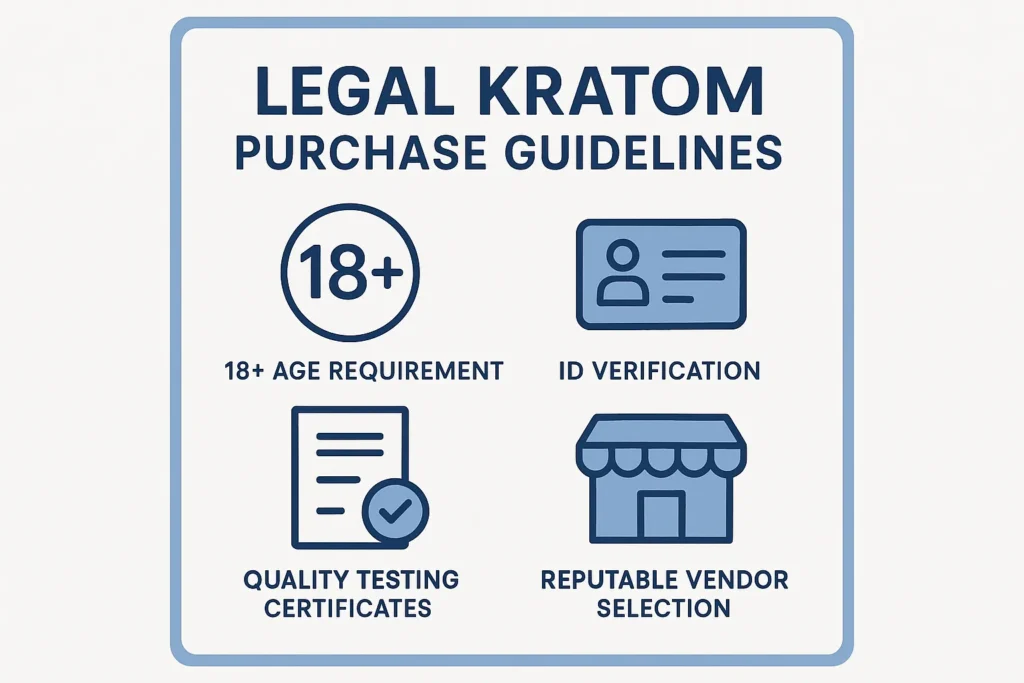
Photo ID Requirements: Most reputable vendors require government-issued photo identification for in-person purchases, similar to tobacco or alcohol sales procedures.
Online Age Verification: E-commerce platforms selling kratom often implement age verification systems requiring customers to confirm their birth date and agree to terms stating they meet minimum age requirements.
Parental Responsibility: Parents and guardians should be aware that providing kratom to minors could potentially result in legal complications, even though specific penalties aren’t clearly defined in current Indiana statutes.
Understanding these age restrictions helps ensure compliance with state law and promotes responsible kratom access within the legal framework.
Purchasing Kratom in Indiana: What You Need to Know
For Indiana residents ready to explore kratom products legally, understanding the purchasing landscape helps ensure safe, legal, and satisfactory transactions.
Legal Purchase Options
Online Vendors: The majority of kratom purchases in Indiana occur through online retailers, offering several advantages:
- Wider Selection: Online vendors typically offer more strains and product formats than local stores
- Competitive Pricing: E-commerce platforms often provide better pricing due to lower overhead costs
- Quality Information: Reputable online vendors provide detailed product information, lab testing results, and customer reviews
- Discreet Shipping: Many consumers prefer the privacy of home delivery
When choosing where to buy kratom online, Indiana residents should prioritize vendors with established reputations, third-party testing protocols, and transparent business practices.
Local Retail Stores: Some Indiana cities host physical stores selling kratom products, including:
- Smoke Shops: Many tobacco retailers have expanded to include kratom products
- Health Food Stores: Some natural supplement retailers carry kratom alongside other botanical products
- Specialty Kratom Stores: Dedicated kratom retailers offer expert guidance and premium product selections
Quality and Safety Considerations
Third-Party Testing: Reputable vendors provide certificates of analysis (COAs) demonstrating their products have been tested for:
- Alkaloid Content: Verifying mitragynine and 7-hydroxymitragynine levels
- Contaminant Screening: Testing for heavy metals, bacteria, pesticides, and adulterants
- Purity Verification: Confirming products contain only kratom without undisclosed additives
Vendor Reputation: Research potential vendors through:
- Customer Reviews: Reading experiences from verified purchasers
- Industry Recognition: Looking for vendors endorsed by advocacy organizations
- Business Transparency: Choosing companies that provide clear contact information, return policies, and product guarantees
Product Formats: Indiana residents can legally purchase various kratom formats, including:
- Powder: Traditional ground kratom leaf, offering versatility for making kratom tea or other preparations
- Capsules: Pre-measured doses providing convenience and consistency
- Extracts: Concentrated kratom products requiring careful dosing
- Enhanced Products: Kratom combined with other botanical ingredients
Comparing Indiana’s Laws to Neighboring States
Understanding how kratom legality in Indiana compares to surrounding states helps residents appreciate their current legal status and anticipate potential future changes.
Regional Legal Landscape
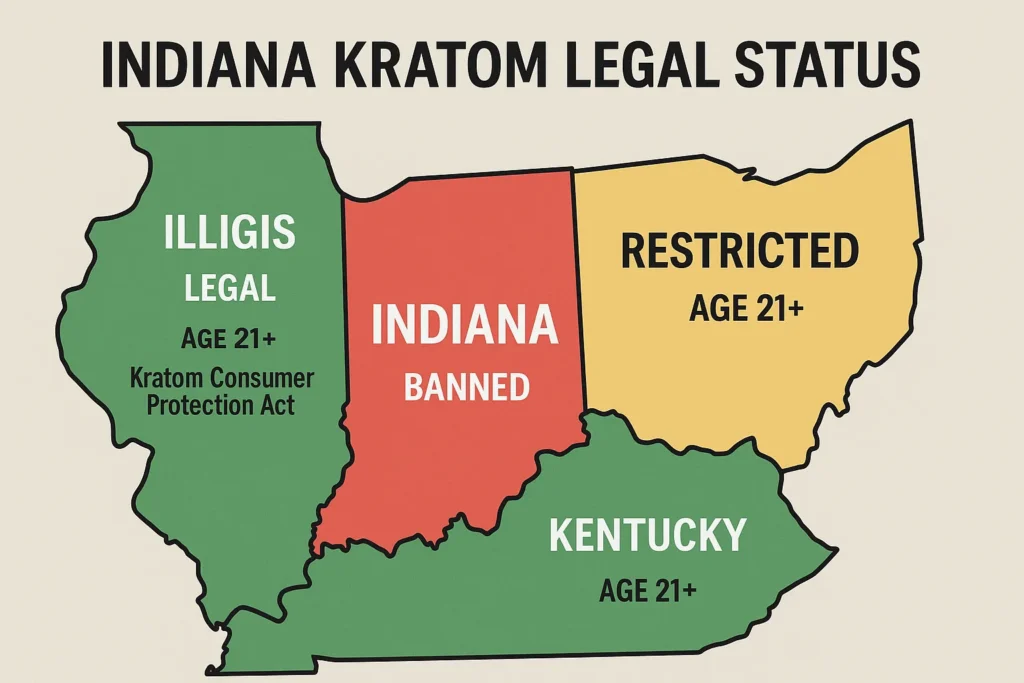
Illinois: Kratom remains legal for adults 18 and older, with similar regulations to Indiana. The state has not enacted specific kratom legislation but follows federal guidelines regarding botanical supplements.
Ohio: Kratom is legal for adults 21 and older, representing a more restrictive approach than Indiana’s 18-year minimum. Ohio’s higher age requirement reflects concerns about youth access and potential abuse.
Michigan: Kratom is legal statewide for adults 18 and older, though some local municipalities have enacted ordinances affecting sales and consumption within their jurisdictions.
Kentucky: Kratom is legal for adults 18 and older, with no state-level restrictions on sales or possession. The state has generally maintained a hands-off approach similar to Indiana.
Regulatory Trends
Age Restrictions: Most neighboring states maintain 18-year minimum age requirements, though Ohio’s 21-year threshold suggests potential future trends toward higher age limits.
Local Ordinances: Several states allow municipalities to enact more restrictive local laws, creating patchwork regulations that vary by city and county.
Quality Standards: Some states are considering legislation establishing quality and labeling standards for kratom products, potentially influencing future Indiana regulations.
This regional comparison demonstrates that kratom legality in Indiana aligns with broader Midwest trends while maintaining relatively permissive access compared to more restrictive states.
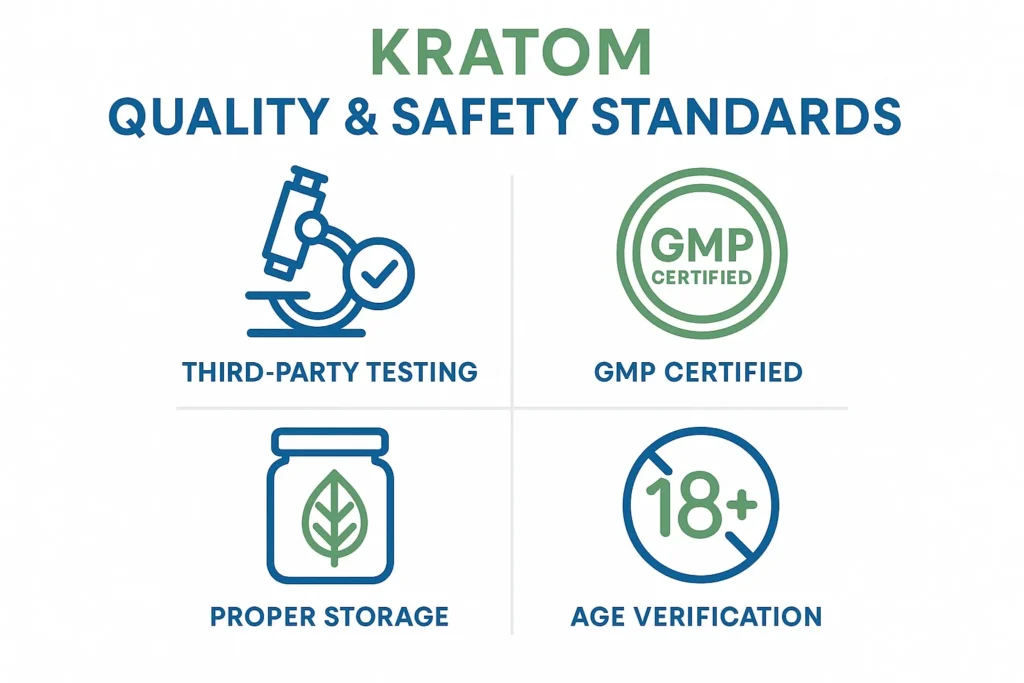
Quality and Safety Standards
Without federal quality mandates, Indiana kratom consumers must navigate varying product standards and safety protocols across different vendors and product lines.
Industry Best Practices
Good Manufacturing Practices (GMP): Leading kratom vendors voluntarily adopt GMP standards, ensuring:
- Facility Cleanliness: Maintaining sanitary processing and storage environments
- Quality Control: Implementing systematic testing and verification procedures
- Documentation: Maintaining detailed records of sourcing, processing, and testing
- Staff Training: Ensuring employees understand proper handling and safety protocols
Third-Party Verification: Reputable vendors invest in independent laboratory testing to verify:
Alkaloid Profiles: Confirming mitragynine and 7-hydroxymitragynine concentrations match product labels and consumer expectations.
Contaminant Screening: Testing for heavy metals (lead, mercury, cadmium), microbiological contaminants (E. coli, Salmonella), and pesticide residues that could pose health risks.
Purity Analysis: Verifying products contain only kratom without undisclosed adulterants, synthetic additives, or other botanical materials.
Potential Changes to Indiana Kratom Laws
While kratom is currently legal in Indiana, several factors could influence future legislative changes that residents should monitor.
Federal Influence Factors
DEA Scheduling Reviews: The Drug Enforcement Administration continues evaluating kratom’s potential for scheduling as a controlled substance. Factors influencing these reviews include:
- Scientific Research: Ongoing studies examining kratom’s pharmacology, safety profile, and abuse potential
- Public Health Data: Adverse event reports, emergency department visits, and fatality investigations involving kratom
- International Developments: Regulatory decisions in other countries that could influence U.S. policy
- Advocacy Efforts: Continued engagement from kratom supporters and opponents providing input to federal agencies
FDA Regulatory Actions: The Food and Drug Administration’s evolving position on kratom could impact state-level decisions through:
- Safety Warnings: FDA advisories about kratom risks might prompt state legislative responses
- Quality Standards: Federal quality requirements could influence state regulatory approaches
- Import Restrictions: FDA actions affecting kratom importation could impact product availability
Legal Consequences and Enforcement
Understanding the enforcement landscape around kratom legality in Indiana helps residents navigate potential legal issues and understand their rights.
Current Enforcement Approach
State-Level Enforcement: Since kratom remains legal in Indiana, state law enforcement agencies don’t actively pursue kratom-related cases involving legal possession and consumption by adults.
Federal Considerations: While kratom isn’t federally scheduled, certain federal laws could apply in specific circumstances:
- Interstate Commerce: Large-scale kratom trafficking could potentially involve federal agencies if it crosses state lines
- Mislabeling: FDA regulations regarding supplement labeling and health claims could affect vendors
- Import Violations: Customs and border protection issues could arise for kratom importers
Potential Legal Issues
Age Violations: Selling kratom to minors could result in legal consequences, though specific penalties aren’t clearly defined in current Indiana statutes.
Local Ordinance Violations: Residents violating city or county-specific kratom regulations could face municipal citations or fines.
Driving Under Influence: While kratom isn’t specifically included in Indiana’s DUI statutes, impaired driving due to any substance could potentially result in legal consequences.
Rights and Protections
Legal Possession: Adults 18 and older have clear legal rights to possess kratom for personal use within Indiana.
Privacy Protections: Legal kratom possession shouldn’t subject individuals to search or seizure under normal circumstances.
Consumer Rights: Kratom purchasers maintain typical consumer protections regarding product quality, accurate labeling, and fair business practices.
Understanding these legal frameworks helps Indiana residents make informed decisions about kratom use while protecting their legal rights and interests.
Best Practices for Legal Kratom Use in Indiana
Responsible kratom use within Indiana’s legal framework involves understanding both legal requirements and safety considerations that protect individual and community interests.
Legal Compliance Guidelines
Age Verification: Always carry valid identification when purchasing kratom products, as retailers are required to verify age compliance with state law.
Quantity Considerations: While Indiana doesn’t specify possession limits, maintaining reasonable personal-use quantities helps avoid potential legal complications.
Transportation: When traveling with kratom, especially across state lines, research destination laws to ensure continued legal compliance.
Documentation: Keep purchase receipts and product labels, which can help demonstrate legal acquisition if questions arise.
Safety and Responsibility
Dosage Awareness: Start with small amounts to assess individual tolerance and avoid potential adverse effects that could lead to emergency medical situations.
Drug Interactions: Consult healthcare providers about potential interactions between kratom and prescription medications, supplements, or other substances.
Driving and Operation: Avoid operating vehicles or machinery if kratom affects cognitive function or motor skills, as impairment could result in legal consequences regardless of kratom’s legal status.
Workplace Considerations: Understand employer policies regarding kratom use, as legal status doesn’t protect against workplace disciplinary actions.
Community Responsibility
Vendor Support: Choose reputable vendors who follow quality standards and ethical business practices, supporting the industry’s positive reputation.
Education: Share accurate information about kratom laws and safety with friends and family, helping prevent legal misunderstandings.
Advocacy: Consider participating in advocacy efforts that support continued legal access while promoting responsible use standards.
For those considering kratom use, understanding how to get off kratom safely is important information that demonstrates responsible approach to botanical supplements.
Kratom Legal FAQ – Indiana
Frequently Asked Questions About Kratom in Indiana
Yes, kratom is currently legal in Indiana for adults 18 and older. However, the legal status has changed over time, and it’s important to stay updated on current regulations.
Indiana initially banned kratom in 2014, making it a Schedule I controlled substance. However, this ban was later overturned through legislative efforts and advocacy.
The state eventually adopted the Kratom Consumer Protection Act (KCPA) framework, which regulates rather than prohibits kratom use.
Yes, kratom is only legal for adults aged 18 and older in Indiana. It is illegal to sell, distribute, or possess kratom if you are under 18 years of age.
Retailers are required to verify age before selling kratom products.
The KCPA is a regulatory framework that ensures kratom products meet safety standards. It includes provisions for:
• Product testing and labeling requirements
• Age restrictions (18+)
• Prohibition of adulterated products
• Licensing requirements for vendors
Kratom can be legally purchased from:
• Licensed smoke shops and head shops
• Specialty kratom stores
• Online vendors that comply with Indiana regulations
• Some convenience stores and gas stations
Always ensure the vendor is reputable and follows KCPA guidelines.
While kratom is legal at the state level, some cities or counties may have their own ordinances restricting or regulating kratom.
It’s recommended to check with local authorities or legal counsel if you’re unsure about specific local regulations in your area.
Under the KCPA framework, kratom products must:
• Be properly labeled with ingredients and alkaloid content
• Be free from harmful adulterants
• Meet specific purity standards
• Include appropriate warnings and usage information
Like all legislation, kratom laws can potentially change. It’s important to:
• Stay informed about proposed legislation
• Follow advocacy organizations
• Contact representatives if you support kratom access
• Check for updates regularly
The current trend in Indiana favors regulation over prohibition, but staying engaged with the political process is important.
Conclusion
Kratom is currently legal in Indiana for adults 18 and older, providing residents with legal access to this botanical supplement under state law. This legal status places Indiana among the majority of U.S. states that maintain kratom’s availability while federal agencies continue evaluating its regulatory status.
✅ Legal Status Confirmed: Kratom remains legal for adult purchase, possession, and consumption throughout Indiana
✅ Age Requirements: Minimum age of 18 years for all kratom-related activities
✅ Quality Responsibility: Consumers must research vendors carefully due to lack of mandatory quality standards
✅ Future Uncertainty: Federal developments and state legislative changes could affect future legal status
For Indiana residents interested in exploring kratom products legally, the current regulatory environment provides clear guidelines while emphasizing personal responsibility for safe and legal use. Staying informed about legal developments, choosing reputable vendors, and following safety guidelines ensures positive experiences within the existing legal framework.
Daniel Brooks
Daniel Brooks is a U.S. based botanical writer with over six years of hands on experience in kratom focused content. He studies kratom strains, sourcing standards, dosage patterns, and consumer safety topics. He stays up to date with current news, regulatory changes, and market trends related to kratom and botanical products.
His work includes educational guides, strain breakdowns, and vendor reviews written for everyday users. He avoids promotional language and presents clear facts. Daniel helps readers understand both benefits and risks so they can make informed choices about responsible kratom use.