
Measuring kratom powder with household spoons can lead to large dosing errors that affect both safety and results. How Many Grams Of Kratom In A Tablespoon is a common question because a tablespoon may look simple to use, but the real weight of kratom powder changes based on grind, moisture, and packing style. This makes accurate measurement important for responsible use.
- A level tablespoon of kratom powder typically contains 6-9 grams, with an average of 7.5 grams
- Powder density, grind consistency, and packing method significantly affect measurements
- Digital scales provide the most accurate dosing method for kratom consumption
- Improper measurement can lead to ineffective doses or unwanted side effects
- Understanding proper measurement techniques ensures consistent and safe kratom usage
Understanding Kratom Powder Density
Kratom powder density varies significantly between different sources, strains, and processing methods. The fineness of the grind plays a crucial role in determining how much kratom fits into a tablespoon measurement.
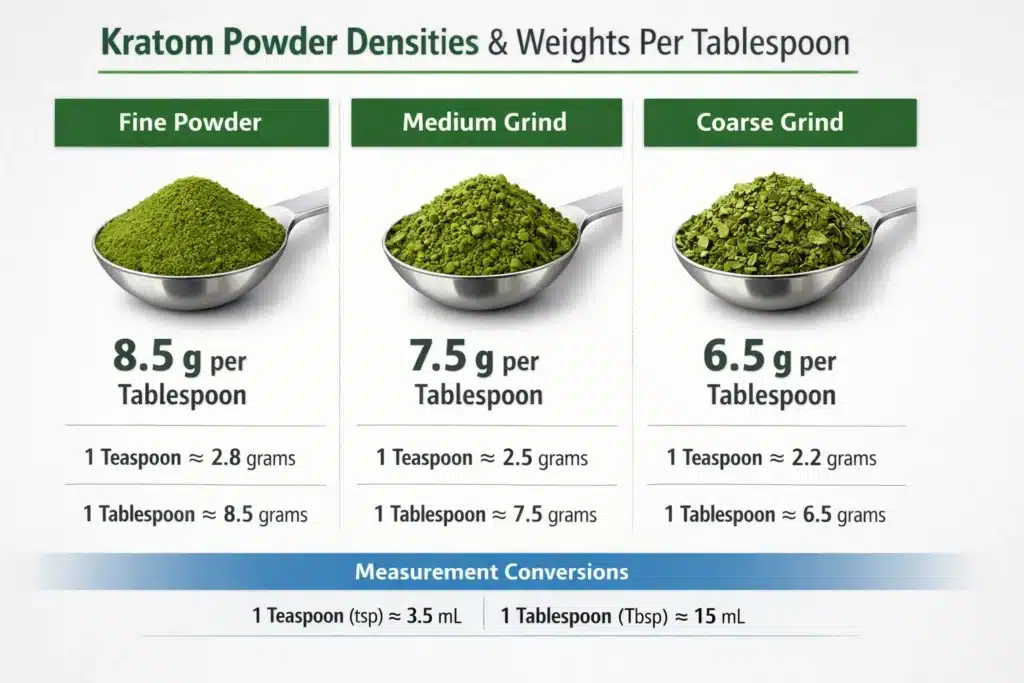
Fine powder tends to pack more densely, potentially containing 8-9 grams per tablespoon when leveled. Coarser grinds typically measure closer to 6-7 grams per tablespoon due to increased air space between particles.
The moisture content also affects density measurements. Kratom powder stored in humid conditions may clump together, creating inconsistent measurements. Conversely, very dry powder might be lighter and more prone to creating air pockets.
Factors Affecting Kratom Tablespoon Measurements
Grind Consistency
Different kratom vendors process kratom leaves using various grinding techniques. Some produce ultra-fine powder resembling flour, while others create slightly coarser textures. This variation directly impacts how many grams fit into a tablespoon measurement.
Packing Method
The way kratom powder settles in a tablespoon dramatically affects the final weight:
- Lightly spooned: 6-7 grams
- Level tablespoon: 7-8 grams
- Packed tablespoon: 8-10 grams
Spoon Size Variations
Not all tablespoons are created equal. Standard measuring spoons hold approximately 15 milliliters, but regular eating spoons can vary significantly in capacity. Using actual measuring spoons rather than kitchen cutlery provides more consistent results.
Environmental Factors
Humidity, temperature, and storage conditions affect powder characteristics. Kratom stored in airtight containers maintains consistent density better than powder exposed to varying environmental conditions.
Accurate Measurement Techniques
Digital Scale Method
The most reliable approach involves using a digital scale accurate to 0.1 grams. This method eliminates guesswork and provides consistent dosing every time.
Steps for scale measurement:
- Place empty container on scale
- Reset scale to zero (tare function)
- Add kratom powder gradually
- Record exact weight for future reference
Standardized Spoon Technique
When scales aren’t available, proper spoon technique improves measurement consistency:
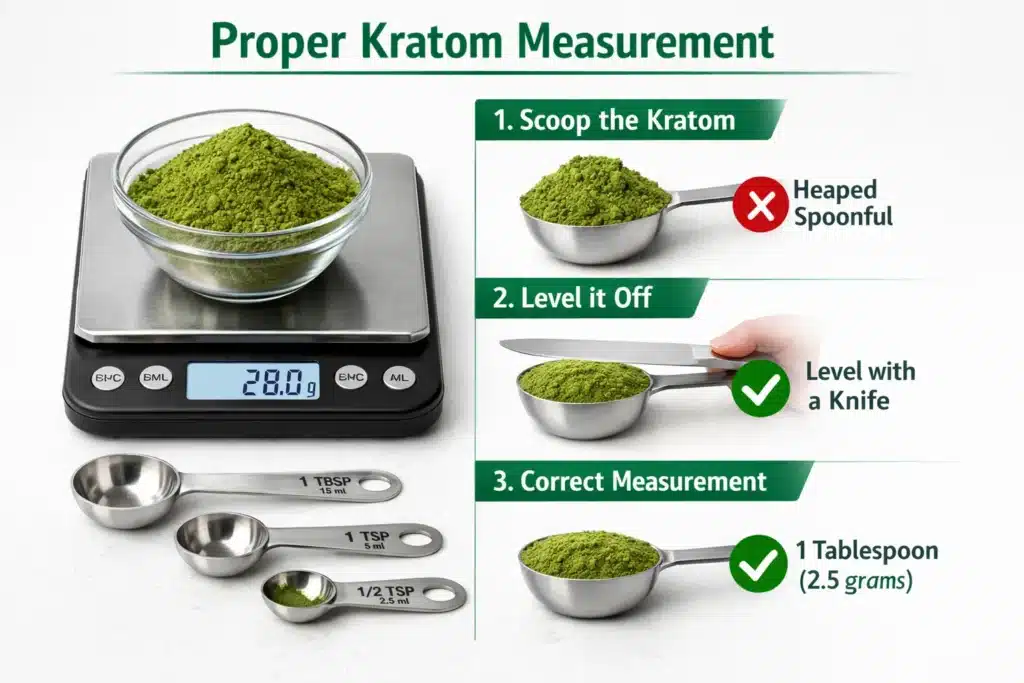
- Use official measuring spoons, not eating utensils
- Gently spoon kratom without packing
- Level off excess with a straight edge
- Avoid tapping or shaking the spoon
Volume-to-Weight Conversion Chart
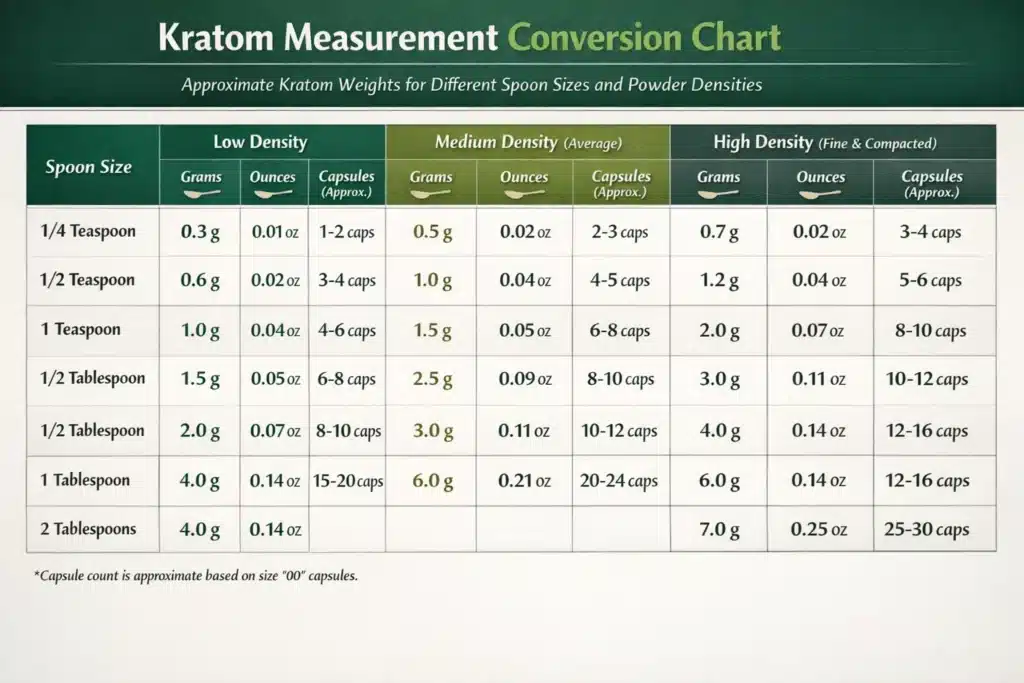
| Measurement | Approximate Weight Range |
|---|---|
| 1/4 teaspoon | 0.5-0.8 grams |
| 1/2 teaspoon | 1.0-1.5 grams |
| 1 teaspoon | 2.0-3.0 grams |
| 1 tablespoon | 6.0-9.0 grams |
| 2 tablespoons | 12.0-18.0 grams |
Common Measurement Mistakes
Using Regular Kitchen Spoons
Regular eating spoons vary widely in size and aren’t standardized for measurement purposes. A typical dinner spoon might hold anywhere from 10-20 milliliters, creating significant dosing inconsistencies.
Packing Powder Too Tightly
Pressing kratom powder into spoons increases the amount significantly. This practice can lead to unintentionally high doses, especially for users accustomed to lighter measurements.
Ignoring Powder Variations
Different kratom batches from the same vendor can have varying densities. Users should account for these differences rather than assuming all kratom measures identically.
Estimating Rather Than Measuring
Visual estimation proves highly unreliable for kratom dosing. What appears to be a consistent amount can vary by several grams depending on powder characteristics and lighting conditions.
Safety Considerations For Kratom Measurement
Accurate measurement directly impacts safety and effectiveness. Taking too little kratom may produce no noticeable effects, while excessive amounts can cause uncomfortable side effects including nausea, dizziness, or sedation.
Recommended starting approach:
- Begin with smaller measured amounts
- Track exact weights and effects
- Gradually adjust based on individual response
- Maintain consistent measurement methods
Dosage Guidelines by Experience Level
Beginners: Start with 2-3 grams (approximately 1/2 to 2/3 tablespoon)
Intermediate users: 3-5 grams (approximately 2/3 to 1 tablespoon)
Experienced users: 5-8 grams (approximately 1 to 1.5 tablespoons)
These ranges assume average powder density. Individual tolerance, body weight, and desired effects influence optimal dosing.
Tools For Precise Kratom Measurement
Digital Scales
Milligram scales (0.001g accuracy): Provide laboratory-level precision but may be unnecessary for most users.
Gram scales (0.1g accuracy): Offer excellent precision for kratom measurement while remaining affordable and practical.
Kitchen scales (1g accuracy): Provide adequate precision for larger doses but lack accuracy for smaller amounts.
Measuring Spoons
Stainless steel measuring spoons maintain their shape and provide consistent measurements over time. Plastic spoons may warp or wear, affecting accuracy.
Recommended features:
- Clear size markings
- Flat bottoms for easy leveling
- Long handles for deep containers
- Metric and imperial measurements
Measurement Accessories
Leveling tools: Straight-edged implements for consistent spoon measurements
Funnels: Reduce waste when transferring powder to scales
Storage containers: Maintain powder consistency between uses
Creating Consistent Measurement Routines
Developing standardized measurement practices improves dosing consistency and safety. Establish routines that work with available tools and personal preferences.
Daily Measurement Protocol
- Use the same measurement tool consistently
- Measure in consistent environmental conditions when possible
- Record measurements and effects for future reference
- Store kratom properly to maintain consistent density
- Replace measurement tools when they show wear
Batch Testing
When receiving new kratom, test the measurement-to-weight ratio before regular use. Different batches may require measurement adjustments to maintain consistent dosing.
Storage Impact On Measurement Accuracy
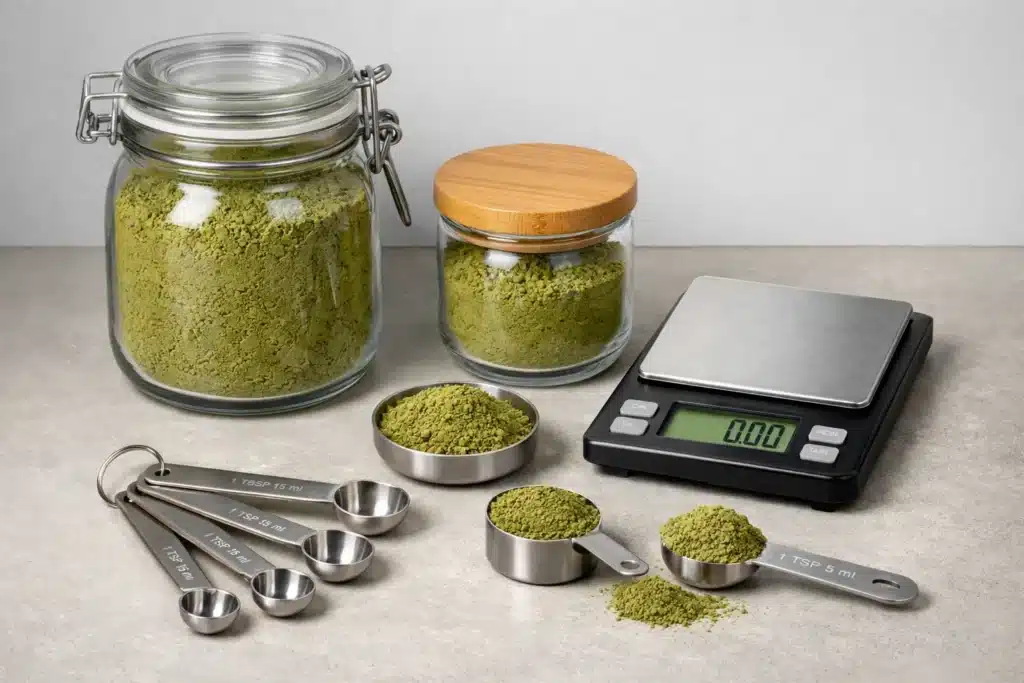
Proper storage maintains kratom powder characteristics that affect measurement consistency. Exposure to moisture, heat, or air can alter powder density and measuring accuracy.
Optimal storage conditions:
- Airtight containers
- Cool, dry locations
- Protection from direct sunlight
- Minimal air exposure during use
Container Selection
Glass jars: Provide excellent moisture protection and don’t absorb odors
Vacuum-sealed bags: Minimize air exposure but may compress powder
Plastic containers: Convenient but may allow moisture penetration over time
Alternative Measurement Methods
Pre-measured Portions
Some users prefer dividing kratom into pre-measured portions using a scale, then storing individual doses in small containers. This method ensures consistent dosing without repeated measuring.
Capsule Conversion
Understanding kratom capsule weights helps users transitioning between powder and capsule forms. Standard “00” capsules typically contain 0.5-0.7 grams of kratom powder.
Liquid Preparation
Some users prepare kratom tea or liquid solutions in measured batches. This approach allows for more precise dosing using liquid measurements rather than powder volume.
Kratom Measurement Calculator
Calculation Result:
| Measurement | Fine Powder | Medium Grind | Coarse Grind |
|---|---|---|---|
| 1/4 teaspoon | 0.7g | 0.6g | 0.5g |
| 1/2 teaspoon | 1.4g | 1.3g | 1.1g |
| 1 teaspoon | 2.8g | 2.5g | 2.2g |
| 1 tablespoon | 8.5g | 7.5g | 6.5g |
Professional Recommendations
Healthcare professionals and experienced kratom researchers consistently recommend weight-based measurement over volume-based approaches. This preference stems from the significant variability in powder density and the importance of consistent dosing.
Professional measurement standards:
- Always use digital scales when possible
- Document exact weights and effects
- Start with conservative measurements
- Adjust based on individual response
- Maintain consistent measurement protocols
Quality Control Considerations
Reputable kratom vendors often provide measurement guidelines specific to their products. These recommendations account for their particular grinding and processing methods, offering more accurate starting points than generic measurements.
Legal And Regulatory Considerations
Kratom legal status varies by location, and regulations may include specific requirements about labeling, measurement, or dosing information. Users should understand local laws and regulations before purchasing or using kratom products.
Some jurisdictions require specific labeling about measurement accuracy or dosing guidelines. Staying informed about regulatory changes helps ensure compliance with applicable laws.
Frequently Asked Questions – Kratom Dose
What does kratom dose mean?
Kratom dose refers to the amount of kratom leaf or powder a person uses at one time. It is usually measured in grams. People use the term to describe how much kratom they take to reach a certain level of effect, which can vary by strain, body size, and individual sensitivity.
How is kratom dose usually measured?
Most people measure kratom dose by weight rather than volume. A small digital scale gives more accuracy than a spoon or scoop. This matters because different kratom powders have different densities, so a teaspoon of one product can weigh more or less than another.
What is considered a low kratom dose?
- Often around 1 to 3 grams of powder.
- Used by people who want milder effects.
- Common for first time users.
- Less likely to cause unwanted reactions.
What is considered a moderate kratom dose?
- Usually between 3 and 6 grams.
- Many regular users fall in this range.
- Effects may feel stronger than a low dose.
- Sensitivity still varies by person.
What is considered a high kratom dose?
- Often above 6 grams.
- Effects can feel more intense.
- More likely to cause side effects.
- Not typically advised for beginners.
Does body weight affect kratom dose?
Body weight can influence how kratom feels, but it is not the only factor. Metabolism, tolerance, and overall sensitivity also play roles. A heavier person may not always need more kratom than a lighter person. Many people adjust their dose slowly to find what fits their own response.
Does kratom strain change the dose?
Different kratom strains and vein colors can feel stronger or weaker at the same dose. For example, one strain may feel more noticeable at three grams, while another might feel mild. Because of this, people often start with a lower amount when trying a new strain to see how it feels.
How often do people take kratom doses?
There is no single schedule that applies to everyone. Some people use kratom once a day, while others space doses several hours apart. Many users avoid taking doses too close together to prevent building tolerance. Personal goals and how the body reacts often shape the timing.
Can kratom dose change over time?
Yes, kratom dose can change as the body becomes more familiar with it. Some people find they need a higher amount to feel the same effect, while others lower their dose after learning what works. Taking breaks or rotating strains are common ways people manage these changes.
What factors influence the right kratom dose?
- Body chemistry and metabolism.
- Previous kratom use.
- Type and strength of the strain.
- Whether kratom is taken with food.
Is it better to start with a small kratom dose?
Many people choose to start with a small kratom dose to see how their body responds. A lower amount makes it easier to notice effects without feeling overwhelmed. If needed, the dose can be adjusted later. This approach helps reduce the chance of unpleasant reactions.
Can too much kratom be uncomfortable?
Using a larger kratom dose than your body prefers can lead to discomfort. Some people report nausea, dizziness, or feeling overly tired. These reactions usually depend on the amount taken and individual sensitivity. Staying within a personal comfort range is how many users avoid these issues.
Conclusion
Understanding how many grams of kratom fit in a tablespoon requires acknowledging the significant variability in powder characteristics and measurement techniques. While a tablespoon typically contains 6-9 grams of kratom powder, with an average of 7.5 grams, this range depends heavily on powder density, grind consistency, and measurement method.
For optimal safety and effectiveness, users should invest in a digital scale for precise measurement. When scales aren’t available, using standardized measuring spoons with proper technique provides more consistent results than estimating or using regular kitchen utensils.
- Purchase a digital scale accurate to 0.1 grams
- Test measurement-to-weight ratios for each new kratom batch
- Establish consistent measurement routines
- Document dosing and effects for future reference
- Store kratom properly to maintain consistent powder characteristics
Remember that individual tolerance, body weight, and desired effects influence optimal dosing. Start with conservative measurements and adjust gradually based on personal response while maintaining accurate measurement practices throughout the process.
Daniel Brooks
Daniel Brooks is a U.S. based botanical writer with over six years of hands on experience in kratom focused content. He studies kratom strains, sourcing standards, dosage patterns, and consumer safety topics. He stays up to date with current news, regulatory changes, and market trends related to kratom and botanical products.
His work includes educational guides, strain breakdowns, and vendor reviews written for everyday users. He avoids promotional language and presents clear facts. Daniel helps readers understand both benefits and risks so they can make informed choices about responsible kratom use.