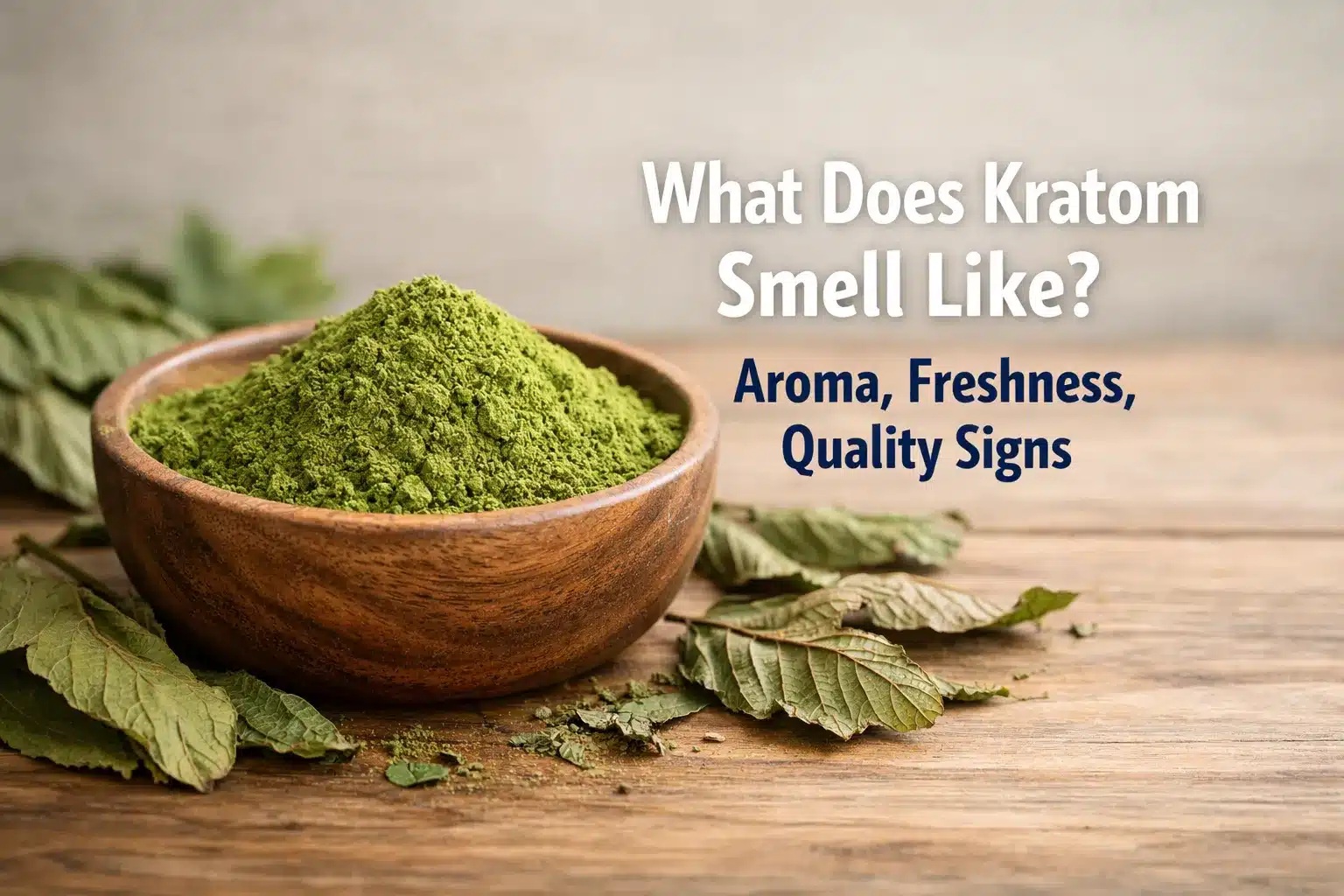
Ever opened a bag of kratom and wondered what that smell means? The aroma tells you everything. Fresh kratom has a distinct earthy scent. Degraded kratom smells wrong. Understanding what does kratom smell like helps you avoid bad batches and identify quality products worth your money.
- Fresh kratom smells earthy and herbaceous, similar to green tea, hay, or dried grass—this natural botanical scent indicates quality
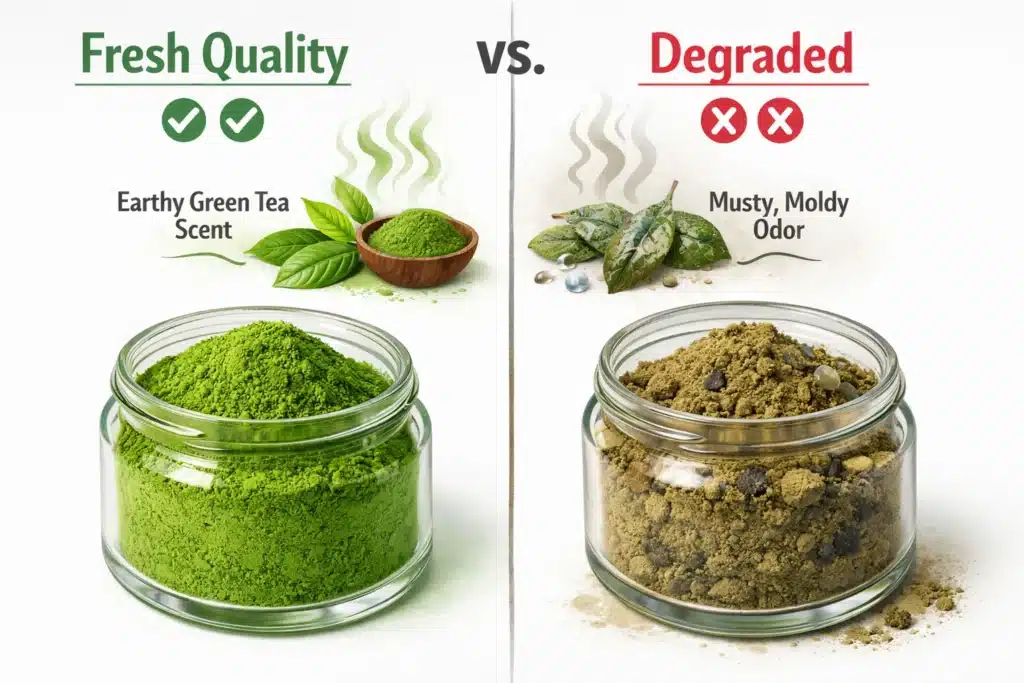
- Musty, moldy, or sour odors signal contamination and require immediate disposal of the product
- Different strains produce distinct aromas: red veins have deeper earthy notes, while green veins smell sharper and more pronounced
- Proper storage preserves aroma and potency; degraded smell means degraded alkaloid content
- Strong, consistent scent throughout the batch indicates freshness; weak or absent aroma suggests old or improperly stored kratom
What Does Kratom Smell Like When It’s Fresh?
Fresh kratom works. The smell proves it.
High-quality kratom has an earthy, herbaceous aroma.[1][3] Think dried grass. Think green tea leaves. Think forest floor after rain.
The scent is natural. It’s botanical. It’s not overwhelming.
The Base Aroma Profile
Fresh kratom smells like hay.[3] It has green, leafy notes. There’s a slight bitterness to the scent.
The smell comes from alkaloids. These organic compounds create the distinctive aroma. They also create the effects users seek.
Most users describe it as:
- Earthy and grassy
- Similar to green tea
- Mildly bitter
- Clean and natural
- Herbaceous with vegetable notes
The intensity matters. Strong aroma means fresh product. Weak smell suggests old kratom.
Powder vs. Capsules: Smell Differences
Kratom powder smells stronger than capsules.[3]
Powder is exposed to air. The aroma is immediate. You smell it when you open the bag.
Capsules contain the powder inside gelatin shells. The shell blocks most of the scent. You won’t notice much smell until you open the capsule.
Powder works better for quality testing. You can immediately assess freshness. Capsules hide the aroma.
If you’re checking quality, buy powder first. Test the smell. Then decide if capsules from that vendor are worth it.
Understanding what kratom tastes like also helps with quality assessment.
How Different Kratom Strains Smell
Quality varies by strain. The aroma changes too.
Different kratom strains produce distinct scents.[1][2] The vein color affects the smell profile.
Red Vein Kratom Aroma
Red vein strains smell deeper.[1]
The earthiness is more complex. There are subtle sweet notes. Some batches have fermentation hints.
Red kratom often smells richer. The aroma is less sharp than green varieties. It’s smoother and more rounded.
This deeper scent comes from the drying process. Red vein kratom undergoes longer fermentation. This changes the alkaloid profile and the smell.
Green Vein Kratom Aroma
Green vein kratom smells sharper.[1]
The earthiness is more pronounced. The grassy notes are stronger. There’s a fresher quality to the scent.
Green kratom smells more like fresh vegetation. Less fermentation means cleaner, brighter aromas.
Most users find green vein scents more noticeable. The aroma is more immediate and distinct.
White Vein Kratom Aroma
White vein strains fall between red and green.
The smell is earthy but lighter. There’s less depth than red strains. There’s less sharpness than green varieties.
White kratom has a balanced aroma profile. It’s clean and herbaceous without extreme characteristics.
Fermented Kratom Varieties
Fermented kratom smells different.[3]
The aroma is deeper and more pungent. There are slightly sour notes. The green smell diminishes.
Fermentation creates new aromatic compounds. The process changes the alkaloid structure. This affects both smell and effects.
Bentuangie and other fermented strains have distinctive scents. They smell earthier and less vegetal than standard varieties.
If you’re exploring specific strains, check out what Maeng Da kratom does for more insights.
What Does Kratom Smell Like: Freshness Indicators
Fresh kratom lasts longer. The smell proves freshness.
Strong, distinct aromas indicate quality.[1][3] Weak smells suggest degradation.
Signs of Fresh, High-Quality Kratom
Fresh kratom has consistent aroma throughout the batch.[1]
Open different parts of the bag. Smell samples from top and bottom. The scent should match.
Quality indicators include:
- ✅ Strong herbal scent (not overwhelming, but noticeable)
- ✅ Clean natural notes (no chemical smells)
- ✅ Appropriate strain characteristics (red, green, or white profiles)
- ✅ Consistent intensity (same smell throughout)
- ✅ No artificial odors (no perfume or chemical additives)
Fresh kratom smells alive. It has presence. The aroma fills the room when you open the container.
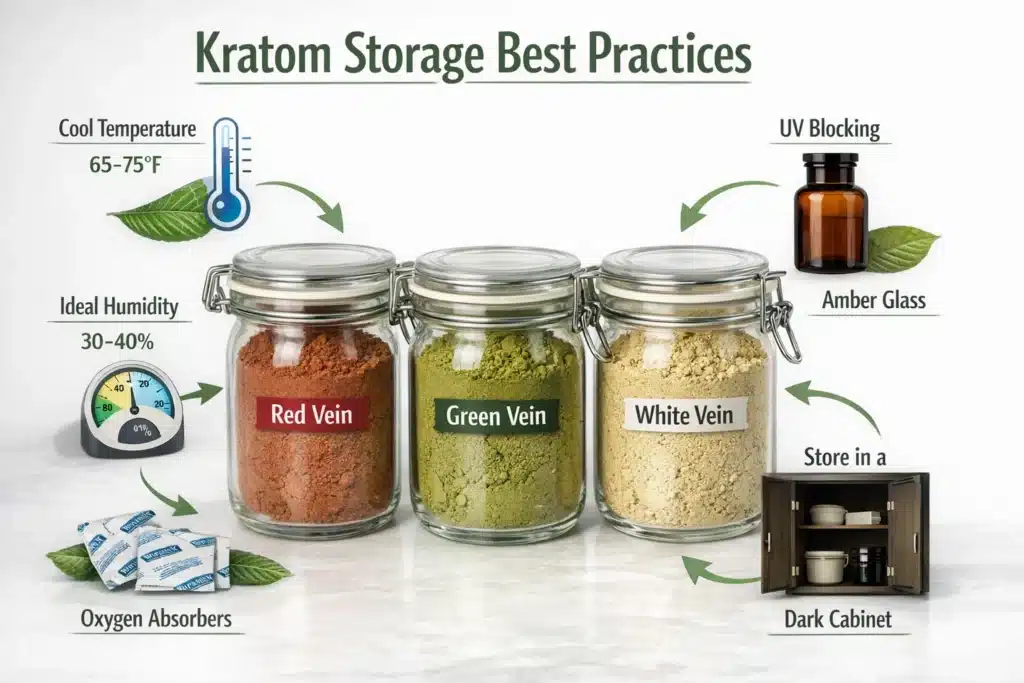
How Storage Affects Kratom Smell
Proper storage preserves aroma.[1][3]
Keep kratom in airtight containers. Store in cool, dark places. Avoid moisture and heat.
Bad storage kills the smell. Exposure to air degrades alkaloids. Light breaks down compounds. Heat accelerates deterioration.
Stored properly, kratom maintains its scent for months. Stored poorly, it loses aroma in weeks.
If your kratom smells weaker than when you bought it, storage is the problem. The alkaloid content has decreased too.
The Smell-to-Potency Connection
Aroma predicts potency.[1]
Strong smell means high alkaloid content. Weak smell means degraded alkaloids.
The connection is direct. The compounds that create the scent are related to the compounds that create effects.
If it doesn’t smell right, it won’t work right. Trust your nose.
Most users overlook this simple test. They focus on color or texture. Smell is more reliable.
🌿 Kratom Quality Assessment Tool
Check the boxes that describe your kratom’s aroma to assess quality
Warning Signs: What Bad Kratom Smells Like
Bad kratom doesn’t work. The smell warns you.
Compromised kratom has problematic odors.[2][3] These smells indicate contamination or degradation.
Musty or Moldy Smells
Musty, moldy odors are the biggest red flag.[3]
This smell means moisture contamination. Mold or bacteria is growing. The product is unsafe.
Dispose of moldy kratom immediately. Don’t try to salvage it. Don’t use it.
Mold contamination creates health risks. The smell is your warning system. Listen to it.
Sour or Fermented Odors (When They’re Bad)
Mild earthiness is normal. Sharp sourness is not.[3]
Rotten or unpleasantly acidic smells indicate spoilage. This happens when kratom gets wet during storage.
Moisture exposure creates bacterial growth. The kratom ferments in bad ways. The alkaloids degrade.
If the sour smell is sharp and unpleasant, skip it. The product is compromised.
Chemical or Artificial Smells
Kratom should smell natural.[1]
Chemical odors indicate contamination or additives. This isn’t normal. It’s not safe.
Possible causes include:
- ❌ Pesticide residue
- ❌ Processing chemicals
- ❌ Artificial additives
- ❌ Contamination during packaging
Quality vendors don’t sell kratom with chemical smells. If you detect artificial odors, find a better source.
No Smell at All
Scentless kratom is old kratom.[3]
Complete absence of aroma means complete degradation. The alkaloids have broken down. The product is worthless.
Fresh kratom always has some smell. Even mild varieties have detectable aromas.
No smell equals no potency. Don’t waste your money.
Understanding how much kratom costs helps you avoid cheap, degraded products.
Frequently Asked Questions
What does kratom smell like?
Kratom usually has an earthy and herbal smell. Many people compare it to dried leaves, green tea, or freshly cut grass. The scent can feel natural and plant based rather than sharp. Intensity varies depending on freshness, processing method, and how the kratom is stored.
Why does kratom smell earthy?
- It comes from dried tree leaves.
- Natural plant fibers release herbal notes.
- Chlorophyll contributes a green scent.
- Minimal processing preserves raw aromas.
Does kratom smell different by strain?
Yes, smell can vary slightly between strains, though differences are usually subtle. Green varieties may smell fresher or grass like. Red types often have a deeper, earthier scent. White types may smell lighter or drier. These differences depend more on drying and grinding than strain names.
Does fresh kratom smell stronger than old kratom?
- Fresh kratom often smells more vivid.
- Older kratom can lose aroma over time.
- Air exposure reduces natural scent compounds.
- Heat can dull herbal notes.
Why does kratom sometimes smell sour?
A sour or musty smell can appear if kratom absorbs moisture. Humidity may lead to changes in the plant material over time. This smell does not reflect the natural aroma of properly dried kratom. Storage conditions such as sealed containers and dry environments help prevent odor changes.
Does kratom extract smell different from powder?
- Extracts often smell more concentrated.
- Liquids can have a sharper herbal scent.
- Resins may smell heavier or darker.
How can storage affect kratom smell?
- Air exposure can fade the scent.
- Moisture can cause unpleasant odors.
- Heat may weaken herbal notes.
- Sealed containers help retain aroma.
Is it normal for kratom to have little or no smell?
Yes, some kratom has a very mild scent. Finely ground powder or older batches may smell faint. A light aroma does not automatically indicate poor quality. Natural variation in leaves, processing, and storage can all result in minimal smell without being unusual.
Conclusion: Trust Your Nose for Kratom Quality
What does kratom smell like? Fresh kratom smells earthy and herbaceous.
The aroma tells you everything about quality. Strong, clean scents indicate fresh, potent kratom. Weak, musty, or chemical smells warn of problems.
Use the smell test before every purchase. It takes seconds. It saves money. It protects you from contaminated or degraded products.
Different strains have different aromatic profiles. Red veins smell deeper. Green veins smell sharper. White veins fall between.
Store kratom properly to preserve aroma and potency. Use airtight containers. Keep in cool, dark places. Avoid moisture and heat.
References
[1] What Does Kratom Smell Like Explore – https://qkratom.com/what-does-kratom-smell-like-explore/
[2] Identifying Kratoms Aroma – https://goldenmonk.com/blog/identifying-kratoms-aroma/
[3] What Does Kratom Smell Like – https://jackbotanicals.com/guides/what-does-kratom-smell-like/
[4] Good Quality Kratom – https://korthalscollection.com/blogs/news/good-quality-kratom
[5] What Does Kratom Smell Like – https://professorwhytes.com/blogs/kratom/what-does-kratom-smell-like
[6] How To Spot A Fake Kratom Product – https://smokersdepotus.com/how-to-spot-a-fake-kratom-product/
[7] West Wyoming Odor Complaints Reveal Kratom Business Concerns To Be Addressed – https://fox56.com/news/local/west-wyoming-odor-complaints-reveal-kratom-business-concerns-to-be-addressed
[8] Best Kratom Extracts In 2026 Top Brands For Flavor Effects – https://plasticsurgerykey.com/best-kratom-extracts-in-2026-top-brands-for-flavor-effects/
[9] The Science Of Kratom Flavor Understanding Taste Profiles And Alkaloid Compounds – https://mitrascience.com/blogs/news/the-science-of-kratom-flavor-understanding-taste-profiles-and-alkaloid-compounds
[10] Top Tips To Identify High Quality Kratom And Avoid Contaminated Products Safely – https://delta8resellers.com/top-tips-to-identify-high-quality-kratom-and-avoid-contaminated-products-safely/
Daniel Brooks
Daniel Brooks is a U.S. based botanical writer with over six years of hands on experience in kratom focused content. He studies kratom strains, sourcing standards, dosage patterns, and consumer safety topics. He stays up to date with current news, regulatory changes, and market trends related to kratom and botanical products.
His work includes educational guides, strain breakdowns, and vendor reviews written for everyday users. He avoids promotional language and presents clear facts. Daniel helps readers understand both benefits and risks so they can make informed choices about responsible kratom use.
Ryan Mitchell
Ryan Mitchell reviews and approves all kratom and botanical content before it is published. He has worked in the botanical space since 2013 and has been closely involved in kratom education, sourcing standards, and product evaluation.
Ryan actively supports responsible kratom use and spends time engaging with user communities where botanicals are discussed in detail. He has guided tens of thousands of customers through product selection and usage questions over the years. He works directly with trusted growers and suppliers to verify quality. He also ensures third party lab testing is completed so products meet safety and purity expectations before reaching the public.