You’ve just taken kratom for the first time, and you’re sitting there wondering when you’ll start feeling its effects. Minutes tick by, and nothing seems to be happening. Should you take more? Are you doing something wrong? Understanding kratom’s onset time is crucial for both safety and effectiveness, yet it remains one of the most common questions among new and experienced users alike.
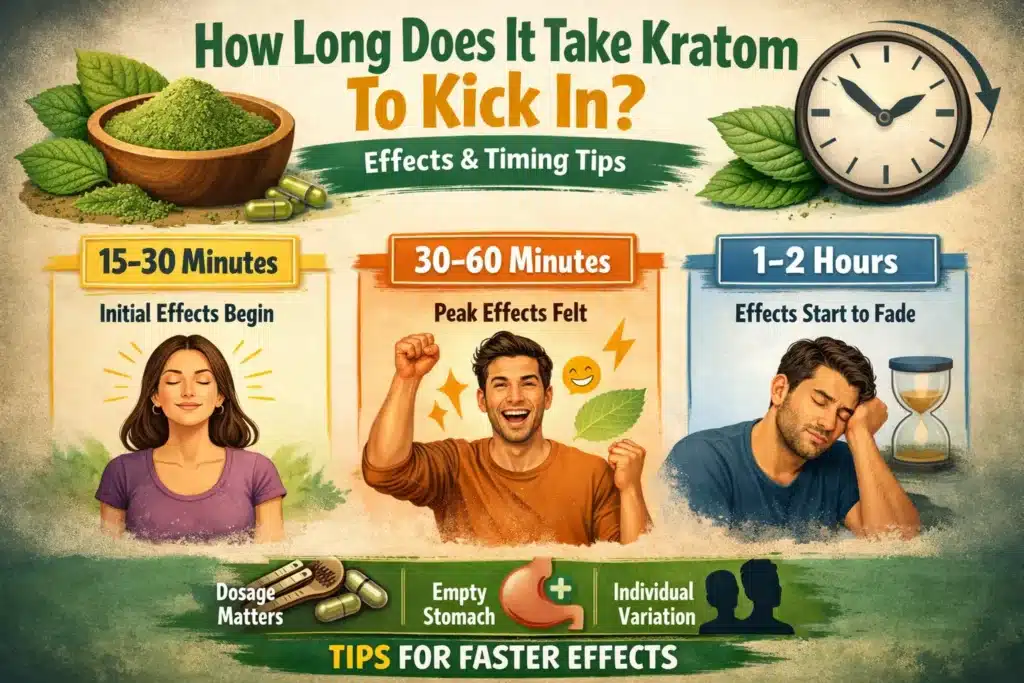
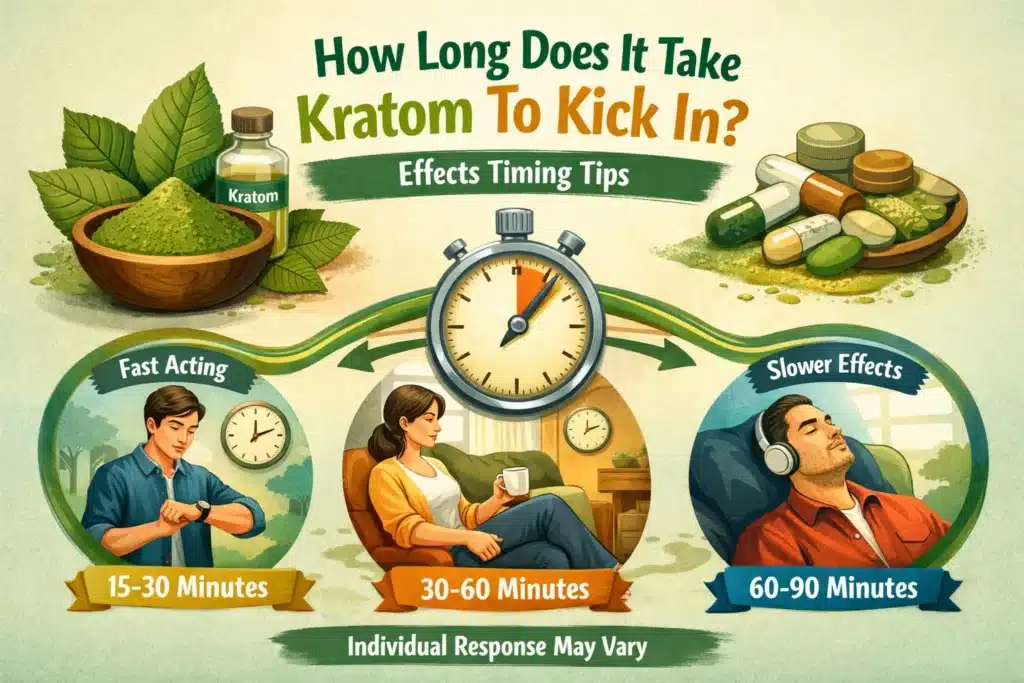
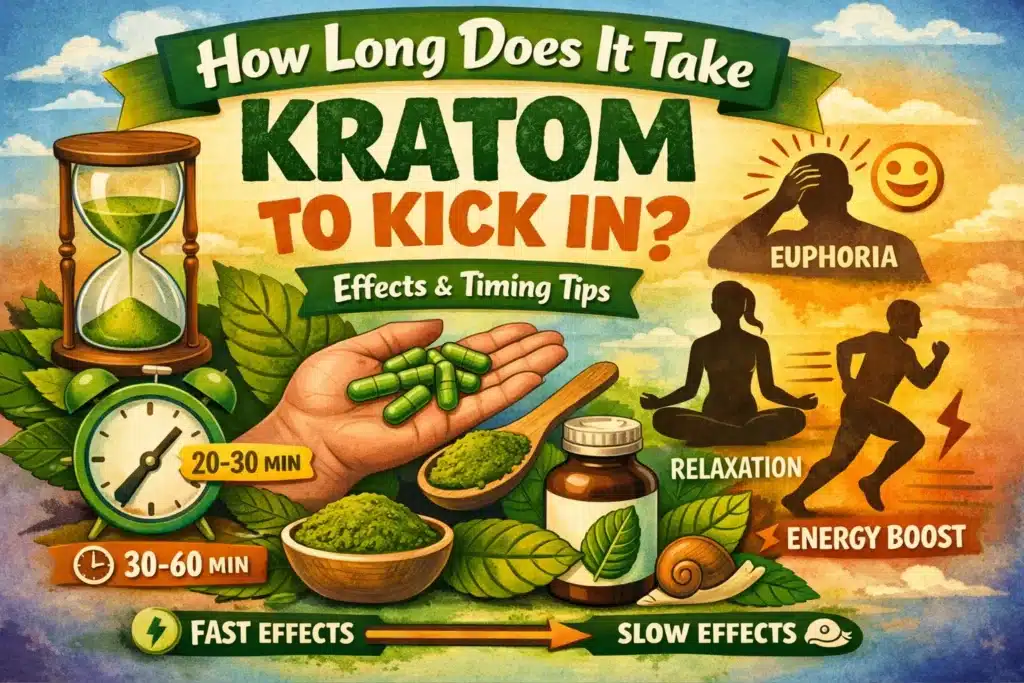
- Kratom typically takes 15-45 minutes to kick in, with peak effects occurring 1-3 hours after consumption
- Consumption method significantly impacts onset time, with tea and extracts working faster than powder
- Individual factors like body weight, metabolism, and food intake can delay or accelerate effects
- Empty stomach consumption generally leads to faster onset but may increase nausea risk
- Starting with lower doses and waiting at least 2 hours before redosing prevents overconsumption
Understanding Kratom’s Basic Timeline
When exploring how long does it take kratom to kick in, it’s essential to understand that kratom’s effects don’t follow a one-size-fits-all timeline. The herb’s active compounds, primarily mitragynine and 7-hydroxymitragynine, must be absorbed through your digestive system before entering your bloodstream and crossing the blood-brain barrier.
The typical kratom timeline looks like this:
Initial Onset: 15-45 minutes
Peak Effects: 1-3 hours
Duration: 4-6 hours total
Comedown: 1-2 hours
However, these timeframes can vary significantly based on multiple factors that we’ll explore throughout this article.
Factors That Influence Kratom Onset Time
Body Weight and Metabolism
Your metabolic rate plays a crucial role in determining how quickly kratom takes effect. Individuals with faster metabolisms typically experience quicker onset times, while those with slower metabolisms may need to wait longer. Body weight also matters – generally, larger individuals may require slightly more time for effects to manifest due to the larger volume of distribution.
Food Intake and Stomach Contents
One of the most significant factors affecting how long does it take kratom to kick in is whether you’ve eaten recently. Taking kratom on an empty stomach typically results in:
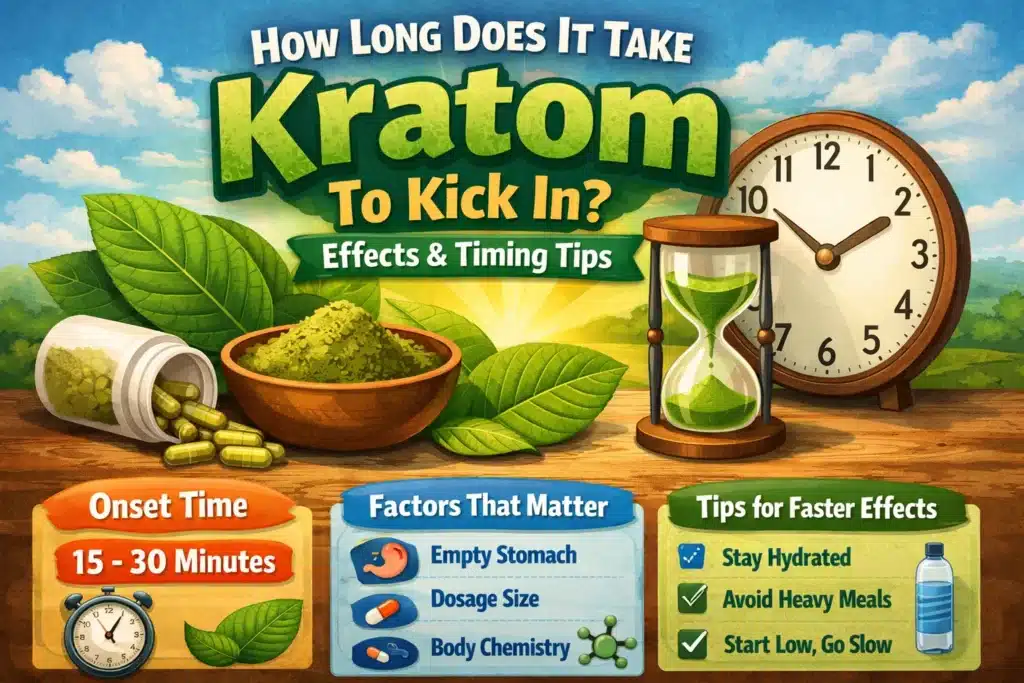
- Faster onset: 15-30 minutes
- Stronger effects
- Higher risk of nausea
Conversely, taking kratom after a meal may lead to:
- Delayed onset: 45-90 minutes
- Milder effects
- Reduced nausea risk
Individual Tolerance Levels
Regular kratom users often develop tolerance, which can affect both the intensity and timing of effects. New users typically experience faster and more pronounced effects, while experienced users might need to wait longer or require higher doses.
Strain and Quality Considerations
Different kratom strains can have varying onset times. Fast-acting strains like white vein kratom varieties tend to kick in more quickly than slower-acting red strains. The quality and freshness of your kratom also significantly impact effectiveness – fresh, high-quality kratom from reputable sources typically provides more consistent and predictable timing.
Consumption Methods and Their Impact on Timing
Kratom Powder (Toss and Wash)
The traditional “toss and wash” method involves placing kratom powder directly in your mouth and washing it down with liquid. This method typically results in:
Onset Time: 20-45 minutes
Advantages: Simple, no preparation required
Disadvantages: Unpleasant taste, potential for choking
Kratom Tea
Brewing kratom into tea can significantly affect absorption rates:
Onset Time: 15-30 minutes
Advantages: Faster absorption, easier on stomach
Disadvantages: Time-consuming preparation, potential potency loss
Kratom Capsules
Pre-made or homemade kratom capsules offer convenience but may delay effects:
Onset Time: 30-60 minutes
Advantages: No taste, precise dosing, convenient
Disadvantages: Slower onset due to capsule dissolution time
Kratom Extracts
Concentrated kratom extracts typically provide the fastest onset:
Onset Time: 10-25 minutes
Advantages: Rapid effects, smaller volume needed
Disadvantages: Higher cost, increased tolerance risk
Kratom Onset Time Calculator
Optimizing Your Kratom Experience for Faster Effects
Timing Your Doses Strategically
Understanding how long does it take kratom to kick in allows you to time your doses more effectively. For optimal results:
Morning doses: Take on an empty stomach for faster onset
Afternoon doses: Consider a light snack 30 minutes prior
Evening doses: Account for slower digestion later in the day
Enhancing Absorption
Several techniques can help improve kratom absorption and reduce onset time:
Stay hydrated: Proper hydration supports faster absorption
Choose citrus: Acidic juices like grapefruit may enhance effects
Consider potentiators: Natural compounds like turmeric may boost effectiveness
Avoid interference: Calcium-rich foods can inhibit absorption
Quality Matters
The source and quality of your kratom significantly impact both onset time and overall effectiveness. High-quality kratom powders from reputable vendors typically provide more consistent and predictable timing. Fresh kratom contains higher concentrations of active alkaloids, leading to faster and more reliable effects.
Common Timing Mistakes to Avoid
Redosing Too Quickly
One of the most frequent mistakes new users make is taking additional doses before the initial dose has had time to take full effect. Since kratom can take up to 45 minutes to kick in, patience is crucial. Wait at least 2 hours before considering additional doses.
Inconsistent Timing
Taking kratom at different times relative to meals can lead to unpredictable results. Establishing a consistent routine helps you better predict onset times and effects.
Ignoring Individual Factors
What works for others may not work for you. Factors like age, weight, metabolism, and health status all influence how quickly kratom takes effect. Keep a journal to track your personal response patterns.
Strain-Specific Timing Considerations
Fast-Acting Strains
White and green vein strains typically provide quicker onset times:
- White Maeng Da: 15-30 minutes
- Green Malay: 20-35 minutes
- White Borneo: 15-25 minutes
Moderate-Speed Strains
Balanced strains fall in the middle range:
- Green Bali: 25-40 minutes
- Red Thai: 30-45 minutes
Slower-Acting Strains
Red vein strains often take longer to manifest effects:
- Red Bali: 35-50 minutes
- Red Borneo: 40-55 minutes
Gold kratom varieties often provide a balanced onset time, typically falling between white and red strains.
Safety Considerations and Best Practices
Start Low and Go Slow
Regardless of how long does it take kratom to kick in, always begin with the lowest effective dose. This approach helps you:
- Avoid overwhelming effects
- Reduce side effect risk
- Maintain sensitivity to kratom’s benefits
- Establish your personal baseline
Monitor Your Response
Keep track of:
- Dose amount and timing
- Consumption method used
- Food intake before dosing
- Onset time experienced
- Duration and intensity of effects
Know When to Seek Help
If you have questions about kratom use or need personalized guidance, don’t hesitate to contact knowledgeable vendors who can provide additional information and support.
Troubleshooting Delayed Effects
When Kratom Takes Longer Than Expected
If you’re experiencing unusually long onset times, consider these factors:
Recent large meals: Heavy, fatty foods can significantly delay absorption
Medication interactions: Some medications may interfere with kratom metabolism
Tolerance buildup: Regular use can extend onset times
Product quality: Old or low-quality kratom may have reduced potency
Solutions for Faster Onset
To improve timing consistency:
- Maintain consistent eating schedules
- Stay properly hydrated
- Choose reliable sources for your kratom
- Consider switching consumption methods
- Take tolerance breaks when needed
Managing Expectations and Building Patience
Understanding that how long does it take kratom to kick in varies significantly between individuals helps set realistic expectations. New users often expect immediate effects similar to caffeine, but kratom works differently. Building patience and developing a consistent routine leads to better outcomes and safer usage patterns.
Creating Your Personal Protocol
Develop a personalized approach by:
- Testing different methods systematically
- Documenting your responses in detail
- Adjusting timing based on your schedule
- Maintaining consistent conditions when possible
For those interested in exploring different options, browsing the full kratom shop selection can help you find products that match your timing preferences and lifestyle needs.
Advanced Timing Strategies
Cycling Different Methods
Experienced users often rotate between consumption methods to optimize their experience:
Monday/Wednesday/Friday: Powder for quick onset
Tuesday/Thursday: Capsules for convenience
Weekends: Tea for a more gradual experience
Seasonal Considerations
Your body’s response to kratom may vary with seasons due to:
- Metabolism changes in different temperatures
- Hydration levels varying with weather
- Activity patterns shifting seasonally
- Sleep schedule modifications
The Role of Individual Biology
Genetic Factors
Individual genetic variations affect how quickly your body processes kratom’s active compounds. Some people naturally metabolize alkaloids faster, while others require more time. This genetic component explains why timing recommendations must be personalized.
Age and Metabolism
As we age, our metabolic processes generally slow down, which can affect kratom onset times. Younger users often experience faster effects, while older adults may need to wait longer for the same response.
Health Status Impact
Overall health significantly influences how long does it take kratom to kick in. Factors include:
- Digestive health
- Liver function
- Hydration status
- Stress levels
- Sleep quality
Building Your Knowledge Base
For additional information about kratom timing and effects, the frequently asked questions section provides valuable insights from experienced users and vendors. Creating an account with reputable vendors also gives you access to detailed product information and personalized recommendations.
Long-Term Timing Optimization
Developing Consistency
Over time, most users develop a reliable understanding of their personal timing patterns. This consistency comes from:
- Regular documentation of experiences
- Stable consumption routines
- Quality product sources
- Attention to influencing factors
Adjusting for Life Changes
Life circumstances that may require timing adjustments include:
- Schedule changes
- Dietary modifications
- New medications
- Stress level fluctuations
- Seasonal transitions
Frequently Asked Questions – How Long Does It Take Kratom To Kick In
How long does it take kratom to kick in?
Most people feel kratom effects within 15 to 45 minutes after taking it. The timing depends on factors like stomach contents, dose size, and how the kratom is consumed. Liquid forms and powders mixed in drinks tend to act faster than capsules or tablets.
Does kratom work faster on an empty stomach?
Kratom often starts working faster when taken on an empty stomach because it absorbs more quickly. Food in the stomach can slow digestion and delay effects. Many users notice quicker onset when they have not eaten for several hours before taking kratom.
How long does kratom take to work when taken in capsules?
Kratom capsules usually take longer to kick in because the capsule must dissolve first. Most people feel effects in about 30 to 60 minutes. This slower onset happens because the powder inside needs extra time to release and absorb into the body.
What factors affect how fast kratom kicks in?
- Body weight and metabolism
- Type and form of kratom used
- Whether the stomach is full or empty
- Amount taken in one dose
Does kratom tea kick in faster than powder?
Kratom tea often works faster than plain powder because it is already dissolved in liquid. This allows quicker absorption through the digestive system. Many people report feeling effects in about 10 to 30 minutes when drinking kratom tea.
How long does it take to feel peak effects from kratom?
- Initial effects often appear within 15 to 45 minutes
- Peak effects usually happen around 1 to 2 hours
- Timing varies based on form and dose
- Metabolism also plays a role
Does kratom take longer to kick in for beginners?
New users may feel kratom slightly slower or faster depending on sensitivity. Beginners often notice effects within the same 15 to 45 minute range, but the experience may feel more noticeable because the body is not yet familiar with kratom.
Can hydration affect how fast kratom works?
- Good hydration supports faster digestion
- Dryness can slow absorption
- Water helps move kratom through the system
- Dehydration may delay onset
How long does kratom take to work after eating?
After eating a full meal, kratom may take 45 to 90 minutes to start working. Food slows digestion, which delays absorption. A light snack may cause only a small delay, while heavy meals can push back the onset by a longer period.
Does the strain of kratom change how fast it kicks in?
- Different strains contain varying alkaloids
- Some feel stimulating sooner than others
- Processing method can affect speed
- Individual response also matters
How long should you wait before taking more kratom?
It is best to wait at least 60 to 90 minutes before taking more kratom. This gives enough time to feel the full effects of the first dose. Taking more too soon can lead to stronger effects than expected and reduce control over the experience.
Why does kratom sometimes feel slow to start?
- A full stomach delays digestion
- Low quality or stale kratom absorbs slower
- Slow metabolism can delay onset
- Capsules need extra time to dissolve
How long do kratom effects usually last after they start?
Once kratom kicks in, effects often last between 3 and 6 hours. The exact length depends on the dose, strain, and personal metabolism. Some people feel a gradual fade, while others notice a more defined ending to the effects.
Conclusion
Understanding how long does it take kratom to kick in is fundamental to safe and effective use. While the typical range of 15-45 minutes provides a general guideline, individual factors like consumption method, food intake, metabolism, and product quality significantly influence timing. The key to optimizing your kratom experience lies in patience, consistency, and careful attention to your body’s unique responses.
Remember that kratom affects everyone differently, and what works for others may not be ideal for you. Start with lower doses, maintain detailed records of your experiences, and always wait at least two hours before considering additional doses. By following these guidelines and working with reputable vendors who prioritize quality and customer education, you can develop a safe and effective kratom routine tailored to your specific needs.
Whether you’re new to kratom or looking to optimize your current routine, taking the time to understand timing factors will enhance both your safety and satisfaction. For ongoing support and high-quality products, consider building relationships with knowledgeable vendors who can provide guidance as your understanding and needs evolve.
Daniel Brooks
Daniel Brooks is a U.S. based botanical writer with over six years of hands on experience in kratom focused content. He studies kratom strains, sourcing standards, dosage patterns, and consumer safety topics. He stays up to date with current news, regulatory changes, and market trends related to kratom and botanical products.
His work includes educational guides, strain breakdowns, and vendor reviews written for everyday users. He avoids promotional language and presents clear facts. Daniel helps readers understand both benefits and risks so they can make informed choices about responsible kratom use.