
Kratom laws in the United States vary by state, especially when it comes to age limits. Many users ask, How Old Do You Have To Be To Buy Kratom In The United States. Some states allow adult access with few restrictions, while others enforce strict minimum age rules similar to tobacco laws. Knowing these rules helps you stay compliant and avoid legal issues when purchasing kratom.
- Federal law does not set a minimum age for kratom purchases, leaving regulation to individual states
- Most states require buyers to be 18 years old, though some have raised the limit to 21
- Six states have completely banned kratom, making age irrelevant in those jurisdictions
- Local municipalities may impose stricter rules than state laws, creating additional complexity
- Age verification is mandatory for online purchases in states where kratom is legal
Understanding Kratom’s Legal Status in America
The regulatory environment surrounding kratom in the United States operates without federal age restrictions. Unlike controlled substances or even tobacco products, kratom falls into a gray area where the Food and Drug Administration (FDA) has not established nationwide age limits. This regulatory gap has created a state-by-state approach to kratom legislation.
The Kratom Consumer Protection Act (KCPA) serves as a model framework that many states have adopted or modified. This legislation typically includes provisions for:
- Minimum age requirements (usually 18 or 21)
- Product labeling standards
- Purity testing requirements
- Registration of kratom vendors
Currently, the legal landscape continues evolving as more states consider comprehensive kratom legislation. Understanding where kratom is legal becomes crucial for consumers navigating this complex regulatory environment.
Federal vs. State Kratom Regulations
Federal Oversight
At the federal level, kratom exists in regulatory limbo. The Drug Enforcement Administration (DEA) has not scheduled kratom as a controlled substance, despite considering this action in 2016. The FDA maintains its position that kratom should not be sold for human consumption, but this stance doesn’t translate into specific age restrictions.
Key federal considerations include:
- Import regulations through U.S. Customs and Border Protection
- FDA advisories regarding kratom safety
- Interstate commerce implications for vendors
- Banking regulations affecting kratom businesses
State-Level Authority
States have exercised their authority to regulate kratom in various ways. The most common approaches include:
Complete Legalization: States with no specific kratom laws, treating it like other botanical supplements
Regulated Legalization: States that have passed comprehensive kratom legislation with age limits and quality standards
Partial Restrictions: States with specific municipal bans or limited access
Complete Prohibition: States where kratom is entirely illegal
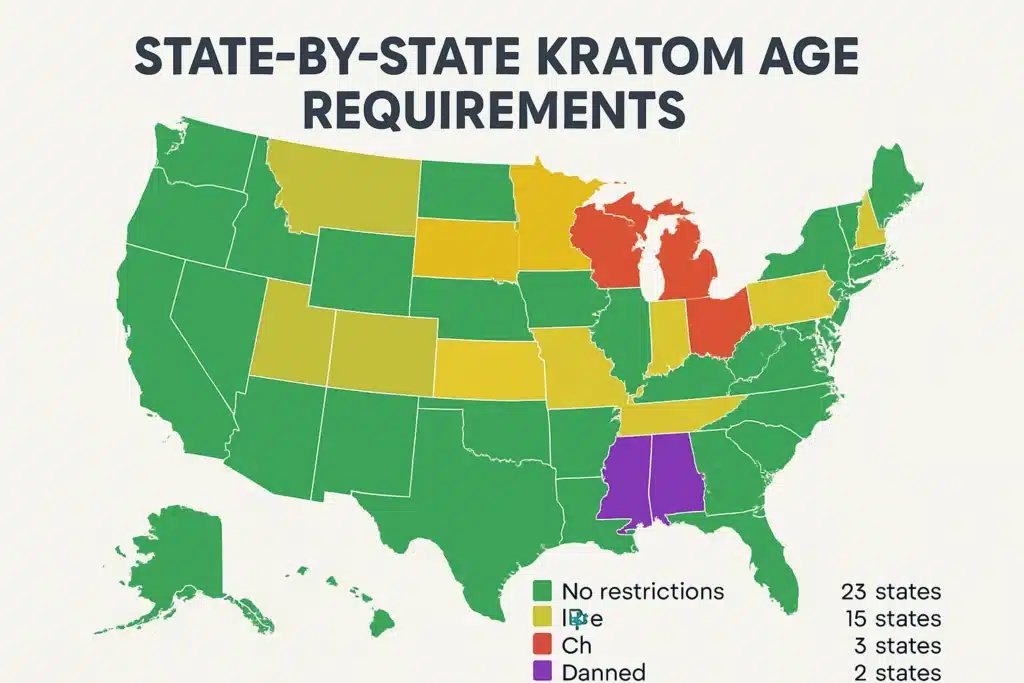
State-by-State Age Requirements
States Requiring 18+ Years
The majority of states that regulate kratom have established 18 years old as the minimum purchase age. These states include:
- Arizona: Kratom Consumer Protection Act requires 18+
- Georgia: State law mandates 18+ for purchase and possession
- Nevada: Comprehensive kratom legislation with 18+ requirement
- Oklahoma: State regulations require 18+ for legal purchase
- Utah: Kratom legislation includes 18+ age verification
States Requiring 21+ Years
Several states have adopted the more restrictive 21 years old minimum age:
- Colorado: Recent legislation raised the age to 21
- Illinois: State law requires 21+ for kratom purchases
- New Hampshire: Age requirement set at 21 years old
For detailed information about specific state requirements, including North Carolina’s current status, check our comprehensive guide on kratom legality in North Carolina.
States with Complete Bans
Six states have prohibited kratom entirely, making age requirements irrelevant:
- Alabama: Complete prohibition since 2016
- Arkansas: Kratom classified as controlled substance
- Indiana: State-wide ban on kratom sales and possession
- Rhode Island: Kratom prohibited under state law
- Vermont: Complete kratom prohibition
- Wisconsin: Kratom banned as controlled substance
Local Municipality Variations
Beyond state laws, local governments often implement their own kratom regulations. Cities and counties may establish:
- Stricter age requirements than state minimums
- Complete local bans within legal states
- Additional licensing requirements for vendors
- Zoning restrictions for kratom retailers
Notable Municipal Restrictions
California: While the state allows kratom, cities like San Diego have implemented local bans
Florida: Various counties have prohibited kratom despite state legality
Texas: Several municipalities maintain kratom bans within the otherwise legal state
Tennessee: Local ordinances in some areas restrict kratom access
Online Purchase Age Verification
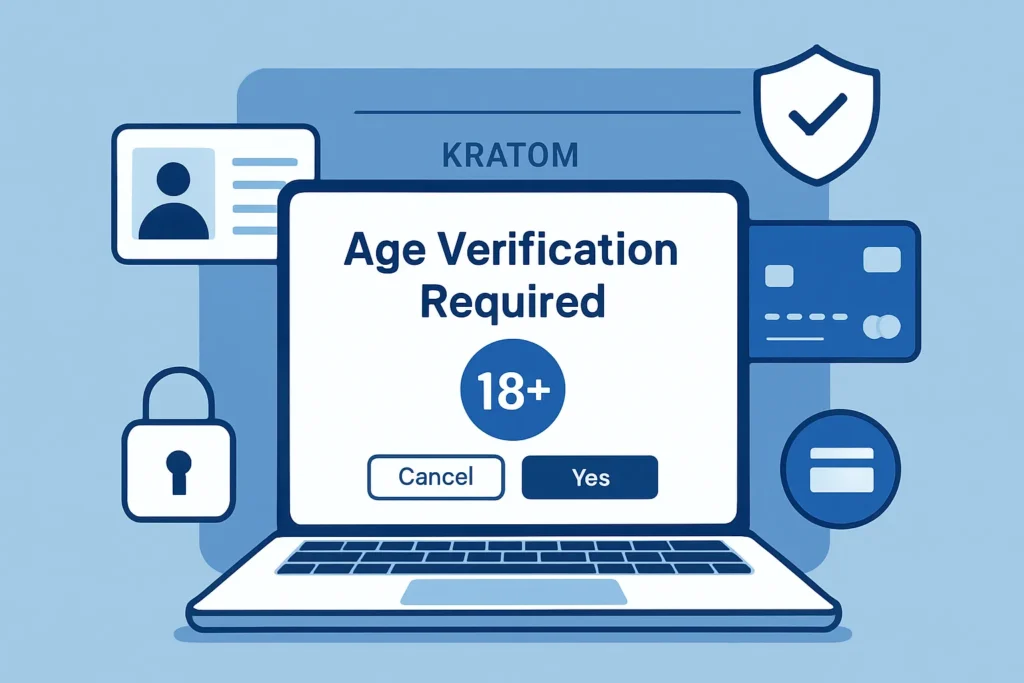
The digital marketplace for kratom has created unique challenges for age verification. Reputable online vendors implement multiple verification methods:
Standard Verification Processes
- Credit card verification: Confirming cardholder age through banking systems
- Government ID checks: Digital verification of driver’s licenses or state IDs
- Third-party verification services: Professional age verification platforms
- Address confirmation: Cross-referencing shipping addresses with age databases
Best Practices for Online Vendors
Responsible kratom vendors typically employ:
Multi-layer verification systems that combine several age-checking methods
Clear age warnings on website homepages and product pages
Shipping restrictions to areas where kratom is prohibited
Record keeping to demonstrate compliance with local laws
When considering where to buy kratom tea online, consumers should prioritize vendors who demonstrate robust age verification practices.
Interactive Kratom Age Requirements by State
Enforcement and Penalties
Understanding the consequences of violating kratom age restrictions helps underscore the importance of compliance. Penalties vary significantly based on jurisdiction and specific circumstances.
Common Penalties for Age Violations
For Minors:
- Confiscation of kratom products
- Fines ranging from $50 to $500
- Community service requirements
- Mandatory educational programs
For Vendors:
- Substantial fines ($1,000 to $10,000 per violation)
- License suspension or revocation
- Criminal charges in severe cases
- Civil liability for damages
Enforcement Mechanisms
Law enforcement agencies employ various methods to ensure compliance:
Compliance Checks: Undercover operations using underage individuals to test vendor age verification
Online Monitoring: Digital surveillance of kratom websites and social media marketing
Consumer Complaints: Investigation of reports regarding underage sales
Regular Inspections: Routine checks of physical retail locations
Age Verification Best Practices
For Consumers
Research Local Laws: Before purchasing kratom, verify both state and local regulations in your area
Prepare Valid ID: Always carry government-issued identification when purchasing kratom
Choose Reputable Vendors: Select retailers who demonstrate commitment to legal compliance
Understand Shipping Restrictions: Be aware that some vendors won’t ship to certain states or municipalities
For Vendors
Responsible kratom retailers implement comprehensive age verification systems:
Multi-Point Verification: Using multiple methods to confirm customer age
Staff Training: Educating employees about age verification requirements and legal obligations
Clear Signage: Posting visible age requirement notices in retail locations
Record Keeping: Maintaining detailed records of age verification procedures
Regular Updates: Staying current with changing state and local regulations
When researching vendors, consumers should look for those who follow these practices, such as those reviewed in our Blue River Wellness kratom reviews.
The Science Behind Age Restrictions
Age limitations for kratom aren’t arbitrary—they’re based on scientific understanding of adolescent brain development and substance interaction risks.
Adolescent Brain Development
Research shows that the human brain continues developing until approximately age 25, with the prefrontal cortex (responsible for decision-making and impulse control) being among the last areas to mature. This ongoing development creates several concerns:
Increased Vulnerability: Adolescent brains may be more susceptible to substance-related changes
Risk Assessment: Young people may struggle to accurately evaluate potential risks and benefits
Dependency Potential: Earlier exposure to psychoactive substances may increase dependency risk
Kratom-Specific Considerations
While research on kratom’s effects on developing brains remains limited, several factors influence age restriction policies:
Alkaloid Interactions: Kratom’s primary alkaloids (mitragynine and 7-hydroxymitragynine) interact with opioid receptors
Individual Variability: Young people may experience more unpredictable responses to kratom
Polydrug Use Risks: Adolescents may combine kratom with other substances, increasing potential dangers
Long-term Effects: Limited research exists on kratom’s long-term effects on developing brains
Parental Guidance and Education
Parents play a crucial role in educating young people about kratom and ensuring compliance with age restrictions.
Key Discussion Points
Legal Status: Explaining current laws and potential consequences of violations
Health Considerations: Discussing potential benefits and risks based on available research
Quality Concerns: Highlighting the importance of product testing and vendor reputation
Alternative Options: Exploring legal wellness alternatives for stress relief and mood support
Warning Signs for Parents
Parents should be aware of potential indicators that their child may be using kratom:
- Unusual packages or deliveries
- Changes in mood or behavior patterns
- Possession of unfamiliar plant materials
- Increased secrecy about online activities
- Unexplained financial transactions
Future Legislative Trends
The kratom regulatory landscape continues evolving, with several trends emerging across different states.
Standardization Efforts
Many states are moving toward standardized kratom legislation that includes:
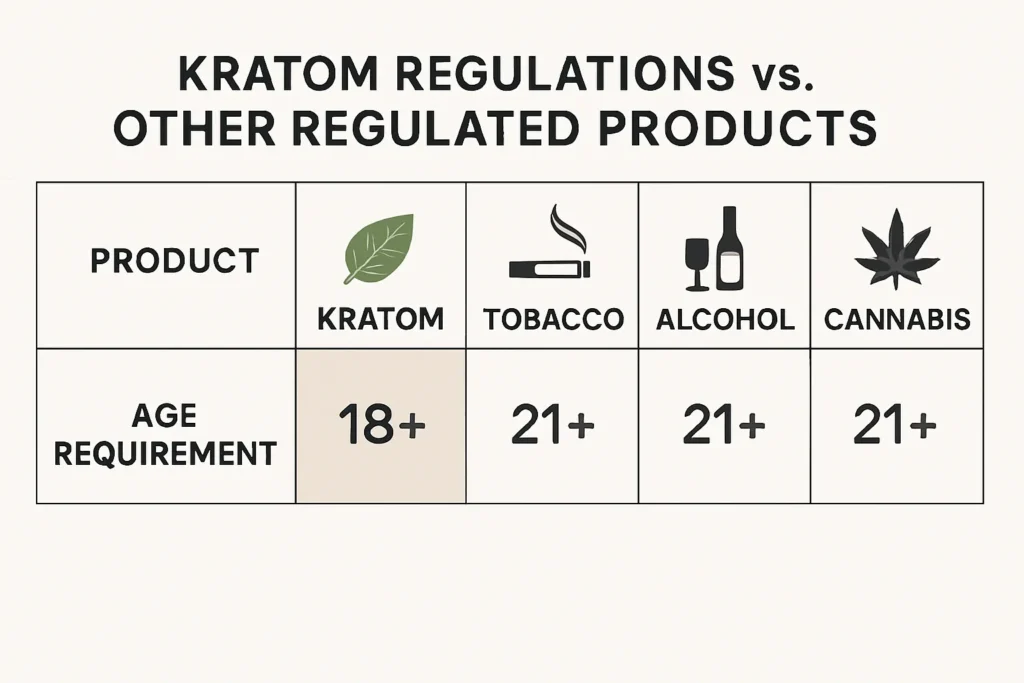
Uniform Age Requirements: Most new legislation establishes 21 as the minimum age
Quality Standards: Mandatory testing for contaminants and accurate labeling
Vendor Licensing: Registration requirements for kratom retailers
Consumer Education: Mandated information about proper use and potential risks
Federal Considerations
While federal kratom legislation hasn’t emerged, several factors may influence future policy:
FDA Actions: Continued agency statements about kratom safety
DEA Scheduling: Ongoing evaluation of kratom’s controlled substance status
Interstate Commerce: Challenges related to varying state laws
Research Funding: Federal support for kratom safety and efficacy studies
The complexity of kratom regulations makes staying informed essential. Resources like our comprehensive kratom blog provide ongoing updates about legislative changes and industry developments.
International Comparisons
Understanding how other countries regulate kratom provides context for U.S. age restrictions.
Global Approaches
Thailand: Recently legalized kratom with 18+ age requirement after decades of prohibition
Malaysia: Considering regulation rather than prohibition, with proposed age limits
European Union: Individual member states set their own kratom policies
Australia: Maintains kratom prohibition with no legal access
Canada: Allows kratom as a natural health product with age restrictions
Lessons from International Models
Other countries’ experiences offer insights for U.S. policy development:
Regulation vs. Prohibition: Countries with regulated markets tend to have better quality control
Age Verification Systems: Successful models often include robust age verification requirements
Public Health Approach: Treating kratom as a public health issue rather than purely criminal matter
Research Integration: Policies that incorporate ongoing research tend to be more effective
Quality and Safety Considerations for Age-Appropriate Use
Age restrictions often coincide with quality standards, reflecting the understanding that younger consumers may be more vulnerable to contaminated or adulterated products.
Quality Standards in Regulated States
States with age restrictions typically implement comprehensive quality requirements:
Contaminant Testing: Mandatory screening for heavy metals, pesticides, and pathogens
Alkaloid Verification: Confirmation of mitragynine and 7-hydroxymitragynine content
Labeling Requirements: Clear ingredient lists and potency information
Good Manufacturing Practices: Facility standards for kratom processing and packaging
Consumer Safety Education
Regardless of age, all kratom consumers should understand:
Dosage Guidelines: Starting with small amounts and gradually increasing if needed
Timing Considerations: Understanding how long it takes for kratom to kick in helps prevent overdosing
Strain Differences: Various kratom types may have different effects and potencies
Interaction Risks: Potential interactions with medications or other substances
Economic Impact of Age Restrictions
Age limitations significantly affect the kratom industry’s economic landscape and business operations.
Industry Adaptation
Kratom businesses have adapted to age restrictions through:
Enhanced Verification Systems: Investment in sophisticated age-checking technology
Staff Training Programs: Comprehensive education for retail employees
Legal Compliance Costs: Expenses related to maintaining regulatory compliance
Market Segmentation: Targeting marketing toward appropriate age demographics
Consumer Market Effects
Age restrictions influence kratom market dynamics:
Reduced Market Size: Excluding younger consumers limits potential customer base
Premium Pricing: Compliance costs may contribute to higher product prices
Quality Focus: Age-restricted markets often emphasize product quality and safety
Education Investment: Industry resources directed toward consumer education
Privacy Considerations
Advanced verification systems must balance security with privacy:
Data Protection: Ensuring customer information remains secure
Minimal Data Collection: Collecting only necessary information for age verification
Transparent Policies: Clear communication about data use and storage
Compliance Standards: Meeting both kratom regulations and privacy laws
Regional Variations and Local Ordinances
Beyond state-level regulations, local governments often implement additional kratom restrictions that affect age requirements.
Municipal Authority
Local governments exercise significant power over kratom regulation:
Zoning Restrictions: Limiting where kratom retailers can operate
Additional Age Requirements: Implementing stricter age limits than state law
Licensing Fees: Requiring local permits for kratom sales
Operating Hour Limits: Restricting when kratom can be sold
Enforcement Coordination
Effective kratom regulation requires coordination between multiple agencies:
State and Local Police: Enforcing age restriction violations
Health Departments: Monitoring product safety and quality
Business Licensing Offices: Overseeing vendor compliance
Consumer Protection Agencies: Investigating complaints and violations
Understanding these complex regulatory relationships helps consumers and vendors navigate the kratom landscape more effectively. Resources like our reviews of Blue Magic kratom vendor can help identify retailers who maintain compliance across multiple jurisdictions.
Medical Considerations and Professional Guidance

Age restrictions for kratom often reflect medical community concerns about substance use in developing populations.
Healthcare Provider Perspectives
Medical professionals generally support age restrictions for several reasons:
Developmental Concerns: Ongoing brain development in adolescents and young adults
Interaction Risks: Potential complications with other medications or treatments
Assessment Challenges: Difficulty evaluating kratom’s effects in younger patients
Long-term Monitoring: Limited data on kratom’s long-term effects across age groups
Professional Consultation
Regardless of age, individuals considering kratom use should consult healthcare providers, especially when:
- Taking prescription medications
- Managing chronic health conditions
- Experiencing mental health challenges
- Considering kratom for specific wellness goals
Educational Resources and Responsible Use
Age restrictions often accompany educational requirements designed to promote responsible kratom use.
Consumer Education Components
Comprehensive kratom education typically includes:
Legal Awareness: Understanding current laws and regulations
Safety Information: Proper dosage, timing, and interaction warnings
Quality Recognition: Identifying reputable vendors and quality products
Responsible Use Guidelines: Avoiding problematic use patterns
Industry Education Initiatives
Responsible kratom organizations promote education through:
Vendor Training Programs: Teaching retailers about legal compliance and customer safety
Consumer Resources: Providing accurate information about kratom effects and risks
Research Support: Funding scientific studies to better understand kratom
Policy Advocacy: Working toward sensible, science-based regulation
For those interested in specific kratom varieties, educational resources about products like Super Vietnam kratom and White Vietnam Extract kratom help consumers make informed decisions.
Compliance Strategies for Vendors
Kratom retailers must implement comprehensive compliance strategies to ensure adherence to age restrictions and other regulations.
Operational Best Practices
Staff Training: Regular education about age verification procedures and legal requirements
Documentation Systems: Maintaining detailed records of age verification efforts
Technology Integration: Using point-of-sale systems that prompt age verification
Legal Updates: Staying current with changing regulations across all operating jurisdictions
Quality Assurance: Implementing testing and quality control procedures
Risk Management
Effective compliance programs address multiple risk factors:
Legal Liability: Protecting against penalties for age restriction violations
Reputation Management: Maintaining positive relationships with regulators and communities
Financial Protection: Avoiding fines and business disruption
Insurance Considerations: Ensuring adequate coverage for kratom-related operations
Consumer Rights and Responsibilities
Understanding both rights and responsibilities helps kratom consumers navigate age restrictions effectively.
Consumer Rights
Legal kratom consumers have several important rights:
Product Quality: Expecting safe, accurately labeled products
Privacy Protection: Reasonable data protection during age verification
Fair Treatment: Non-discriminatory access within legal parameters
Information Access: Clear communication about products and regulations
Consumer Responsibilities
Kratom users also bear important responsibilities:
Legal Compliance: Following all applicable age restrictions and regulations
Honest Verification: Providing accurate age information during purchases
Responsible Use: Using kratom products safely and appropriately
Community Respect: Supporting reasonable regulation that protects public health
Legal Age To Buy Kratom In US – FaQs
What is the legal age to buy kratom in the United States?
There is no single federal age requirement for buying kratom in the United States. Age limits are set at the state or local level. In most places where kratom is legal, retailers commonly require buyers to be at least 18 or 21 years old.
Is kratom legal for people under 18?
Kratom legality for people under 18 depends on state and local laws. Many states and cities restrict kratom sales to minors. Even in areas without a specific law, most sellers voluntarily limit sales to adults to follow standard age restricted product practices.
Which states have an age restriction for buying kratom?
Several states and local governments have adopted age restrictions for kratom purchases. These rules vary by location and may change over time.
- Some states set the minimum age at 18
- Others require buyers to be 21
- Local city or county rules may differ from state law
- Retailers may enforce stricter age limits
Can states set their own kratom age laws?
Yes, states can create their own kratom regulations, including age limits. Since kratom is not regulated at the federal level for age, each state decides whether to allow sales, restrict age, or ban kratom entirely within its borders.
Does the Kratom Consumer Protection Act include age limits?
The Kratom Consumer Protection Act often includes age restrictions when adopted by a state. These provisions focus on product standards and consumer safety.
- Minimum purchase age is usually 18 or older
- Retail labeling and testing rules are required
- Sales to minors may be prohibited
Do online kratom stores verify age?
Most online kratom sellers include age verification steps during checkout. This may involve confirming age through a checkbox or reviewing identification if required by state law. Online stores usually follow the age laws of the buyer’s shipping location.
Can local cities or counties ban kratom sales to minors?
Yes, cities and counties can pass their own ordinances regulating kratom. These local rules may be stricter than state laws.
- Some cities ban kratom sales entirely
- Others restrict sales to adults only
- Local enforcement may vary by area
Is proof of age required to buy kratom in stores?
In many locations, retailers require proof of age to purchase kratom. This is similar to age checks for other regulated products. Store policies may apply even if local law does not specifically mandate age verification.
Does the legal age differ between buying kratom online and in person?
The legal age requirement does not change based on how kratom is purchased. Online and in store sales must follow the same state and local laws. Sellers may apply additional safeguards online to confirm compliance with age restrictions.
How can I check the legal kratom age in my state?
You can verify the legal kratom age by reviewing state statutes, local ordinances, or official government websites.
- Check state health or consumer protection sites
- Review city or county regulations
- Ask licensed retailers about local rules
Conclusion
Navigating kratom age requirements in the United States requires understanding a complex web of federal, state, and local regulations. While federal law doesn’t establish minimum age limits, most states have implemented restrictions ranging from 18 to 21 years old, with six states maintaining complete prohibitions.
The key takeaways for consumers include: researching local laws thoroughly, choosing reputable vendors who prioritize compliance, and understanding that age restrictions often coincide with quality standards and safety protections. For vendors, success depends on implementing robust age verification systems, maintaining current knowledge of regulatory changes, and prioritizing customer safety alongside legal compliance.
As the kratom industry continues maturing, age restrictions will likely become more standardized, with most jurisdictions settling on either 18 or 21 as minimum purchase ages. The trend toward comprehensive regulation—rather than outright prohibition—suggests that clear age limits will remain a cornerstone of responsible kratom policy.
Whether you’re a consumer seeking to understand your local requirements or a vendor working to maintain compliance, staying informed about evolving regulations remains essential. The complexity of current laws underscores the importance of consulting authoritative sources and legal professionals when questions arise about kratom age restrictions in your specific jurisdiction.
For those looking to learn more about kratom regulations, including whether you have to be 21 to buy kratom in your area, continuing education and awareness of legislative changes will ensure safe, legal access to this botanical product for appropriate age groups.