

Taking a kratom capsule for pain relief, only to face an unexpected drug test at work the next week. This scenario has become increasingly common as kratom use grows in popularity while workplace testing policies struggle to keep pace. Understanding how long does kratom stay in system isn’t just academic curiosity—it’s essential knowledge that could impact your career, legal status, and peace of mind.
Kratom (Mitragyna speciosa) has surged in popularity as an alternative wellness supplement, with millions of Americans using it for various purposes. However, the lack of standardized testing and conflicting information about detection windows has left many users in the dark about this crucial topic.
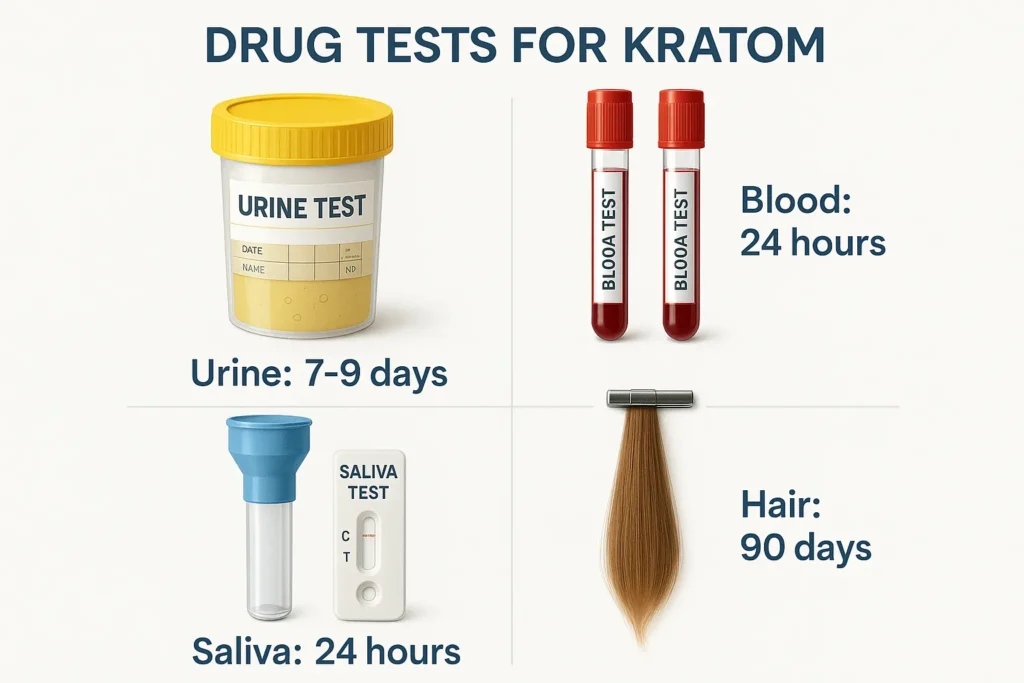
- Detection windows vary significantly by test type: urine (7-9 days), blood (24 hours), saliva (24 hours), hair (up to 90 days)
- Mitragynine half-life is approximately 3.85 hours, but complete elimination takes much longer
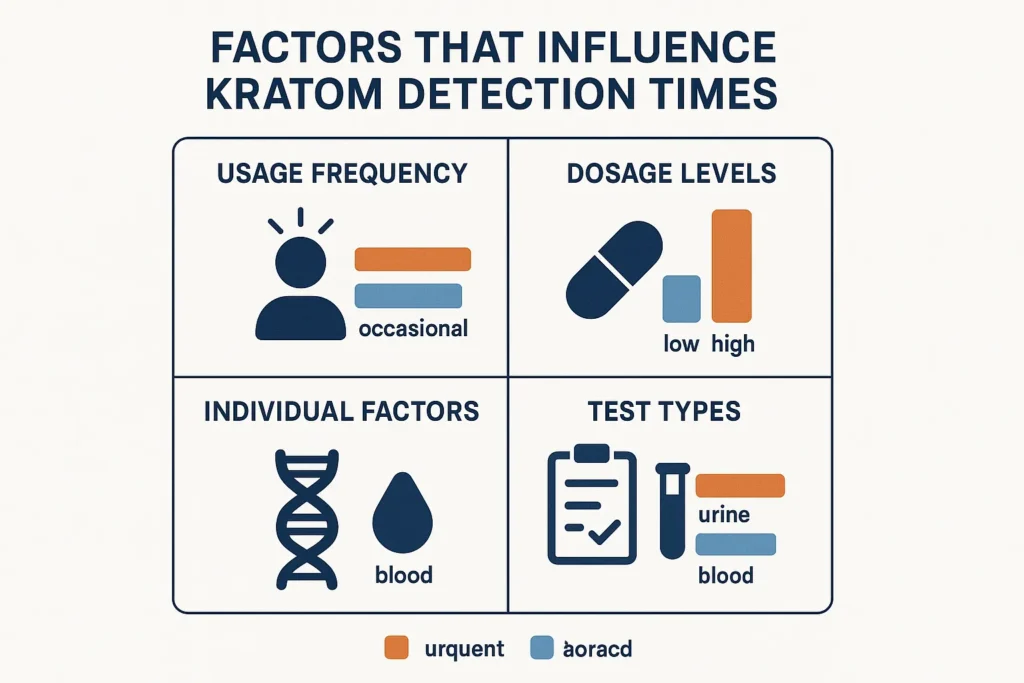
- Multiple factors influence detection including dosage, frequency of use, metabolism, body composition, and kratom quality
- Standard drug tests don’t typically screen for kratom, but specialized tests are becoming more available
- Complete system clearance generally occurs within 5-6 days for occasional users, but may take weeks for heavy users
Understanding Kratom Metabolism in the Human Body
What Happens When Kratom Enters Your System? 🧬
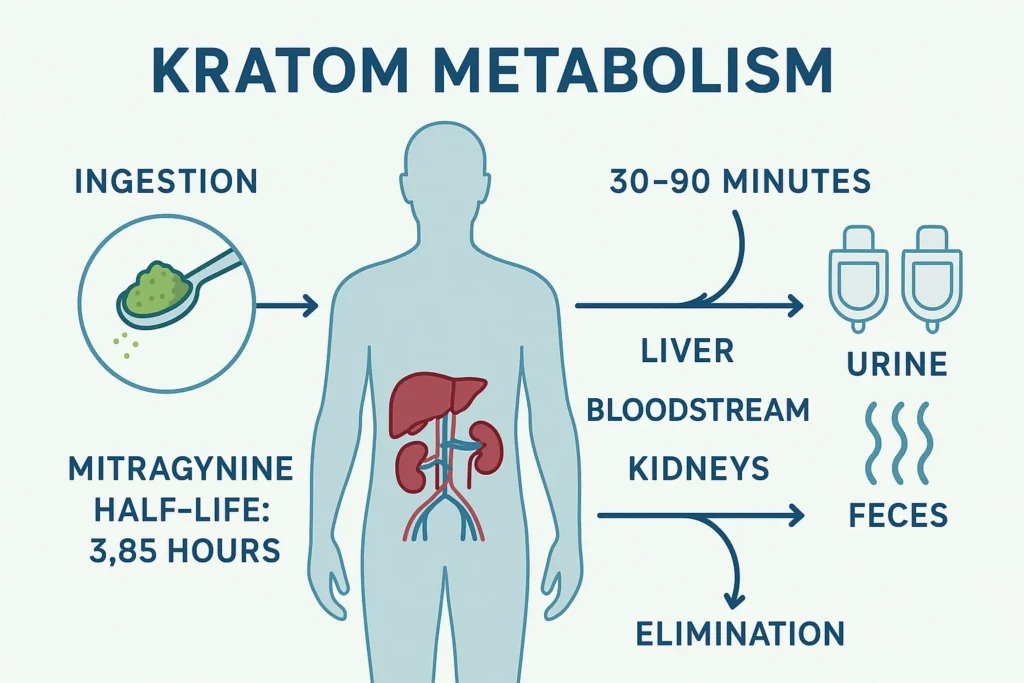
When kratom is consumed, its primary alkaloids—mitragynine and 7-hydroxymitragynine—are absorbed through the digestive system and enter the bloodstream. These compounds interact with opioid receptors in the brain, producing the effects users seek.
The liver plays a crucial role in kratom metabolism, breaking down these alkaloids through various enzymatic pathways. The cytochrome P450 enzyme system, particularly CYP3A4 and CYP2D6, is responsible for metabolizing kratom’s active compounds.
The Half-Life of Kratom Alkaloids
Research indicates that mitragynine has a half-life of approximately 3.85 hours. This means that every 3.85 hours, half of the mitragynine in your system is eliminated. However, complete elimination takes significantly longer—typically 5-6 half-lives, or roughly 19-23 hours for the majority of the compound to be cleared.
Important Note: Half-life refers to how long it takes for half of a substance to be eliminated from your body, not complete clearance.
How Long Does Kratom Stay In System: Detection Windows by Test Type
Urine Testing: The Most Common Method 🧪
Urine tests are the most frequently used method for kratom detection due to their cost-effectiveness and longer detection window. Here’s what you need to know:
- Occasional users: 2-5 days
- Regular users: 7-9 days
- Heavy users: Up to 14 days
Urine tests detect kratom metabolites rather than the alkaloids themselves. The primary metabolite tested is mitragynine glucuronide, which remains detectable long after the effects have worn off.
Blood Testing: Short Detection Window
Blood tests offer the shortest detection window but provide the most accurate picture of recent use:
- Detection window: 12-24 hours
- Peak concentration: 1-2 hours after consumption
- Complete clearance: 24-48 hours
Blood tests are typically reserved for situations requiring immediate detection, such as accident investigations or medical emergencies.
Saliva Testing: Quick and Non-Invasive
Saliva tests are gaining popularity due to their ease of administration:
- Detection window: 12-24 hours
- Peak detection: 1-4 hours after use
- Advantages: Non-invasive, difficult to tamper with
Hair Follicle Testing: The Longest Detection Window
Hair tests provide the longest detection window but are less commonly used for kratom:
- Detection window: Up to 90 days
- Growth rate factor: Hair grows approximately 0.5 inches per month
- Limitations: May not detect very recent use (within 7 days)
🧪 Kratom Detection Timeline Calculator
Estimated Detection Windows:
Factors That Influence How Long Kratom Stays In System
Individual Biological Factors 🧬
Age and Metabolism: Younger individuals typically metabolize kratom faster due to more efficient liver function and higher metabolic rates. As we age, liver enzymes become less efficient, potentially extending detection windows.
Body Weight and Composition: Higher body fat percentages can store kratom metabolites longer, as some alkaloids are lipophilic (fat-soluble). Individuals with more muscle mass and lower body fat typically clear kratom faster.
Liver and Kidney Function: These organs are primarily responsible for kratom metabolism and elimination. Any impairment can significantly extend detection times.
Usage Patterns and Dosage 📊
| Usage Pattern | Typical Detection Window (Urine) |
|---|---|
| Single use | 2-3 days |
| Weekly use | 3-5 days |
| Daily use | 7-9 days |
| Heavy daily use | 10-14 days |
Dosage Impact: Higher doses naturally take longer to clear from the system. The relationship isn't always linear—doubling the dose doesn't necessarily double the detection time, but it does extend it significantly.
Kratom Quality and Strain Variations
The alkaloid profile of different kratom strains can affect detection times. Some strains contain higher concentrations of mitragynine, while others have more 7-hydroxymitragynine. Quality kratom vendors often provide lab testing results that show these alkaloid concentrations.
Factors affecting kratom quality:
- Harvesting methods and leaf maturity
- Processing and drying techniques
- Storage conditions and age
- Adulteration or contamination
Hydration and pH Levels 💧
Hydration status significantly impacts elimination rates. Well-hydrated individuals typically clear kratom faster through increased urine production. However, excessive water consumption before testing may dilute samples and trigger retesting.
Urine pH also plays a role—more acidic urine (pH < 6) tends to eliminate alkaloids faster than alkaline urine.
Drug Testing for Kratom: What You Need to Know
Standard Drug Tests vs. Specialized Kratom Tests
Important distinction: Most standard 5-panel, 10-panel, or even 12-panel drug tests do not screen for kratom. These tests typically look for:
- Marijuana (THC)
- Cocaine
- Amphetamines
- Opiates
- PCP
However, specialized tests for kratom are becoming more available and are being adopted by some employers, particularly in safety-sensitive industries.
Who Tests for Kratom? 🏢
Industries most likely to test:
- Transportation and logistics
- Healthcare facilities
- Government positions
- Military and law enforcement
- Manufacturing and construction
Legal considerations: While kratom remains federally legal in most U.S. states, some states and localities have banned it. Understanding kratom legality in your area is crucial before use.
Detection Methods and Accuracy
Immunoassay screening: Initial tests that may produce false positives or negatives. These require confirmation testing.
Confirmatory testing: More sophisticated methods like LC-MS/MS (Liquid Chromatography-Mass Spectrometry) provide definitive results.
Natural Ways to Support Kratom Elimination
Hydration and Diet 🥗
Optimal hydration: Aim for 8-10 glasses of water daily to support kidney function and metabolite elimination.
Dietary support:
- Fiber-rich foods to support digestive elimination
- Antioxidant-rich fruits like berries and citrus
- Lean proteins to support liver function
- Avoiding processed foods that may burden the liver
Exercise and Metabolism Boosting 🏃♂️
Cardiovascular exercise increases blood flow and metabolic rate, potentially speeding elimination. However, avoid intense exercise immediately before testing, as it may temporarily increase metabolite concentration in urine.
Strength training can help improve overall metabolic health over time.
Sleep and Stress Management 😴
Quality sleep supports optimal liver function and hormone regulation. Aim for 7-9 hours of quality sleep.
Stress reduction through meditation, yoga, or other relaxation techniques can support overall metabolic health.
Timeline Expectations: What to Expect During Elimination
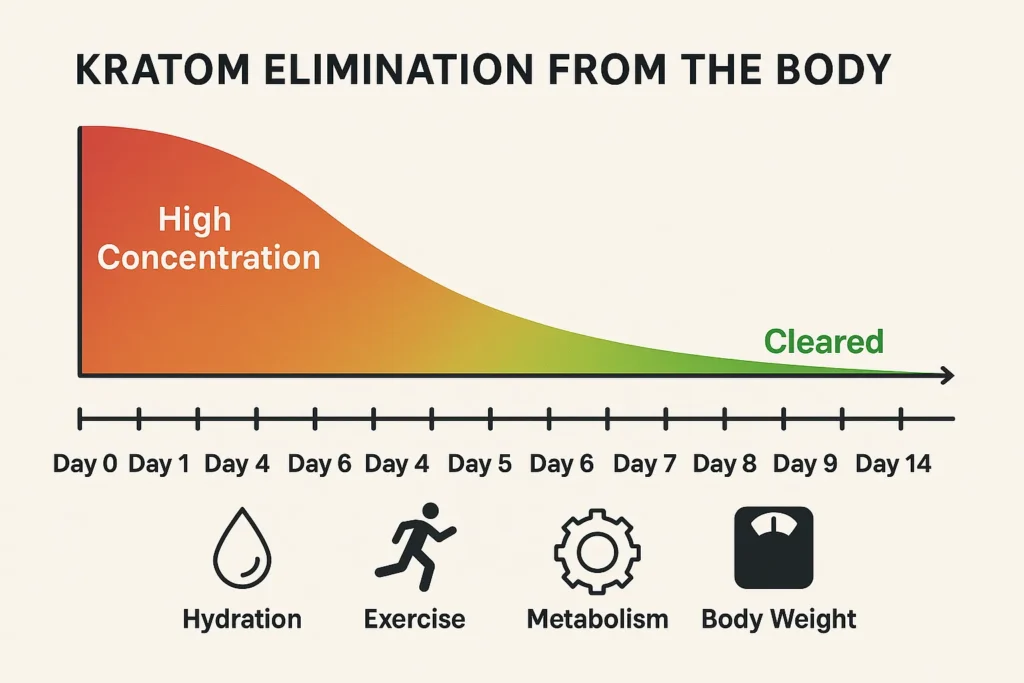
First 24 Hours: Peak Elimination ⏰
During the first day after last use:
- Blood levels drop rapidly
- Initial urine metabolites appear
- Physical effects typically subside within 6-8 hours
- Peak elimination occurs through liver metabolism
Days 2-3: Continued Clearance
- Most occasional users will test negative by day 3
- Urine metabolite levels continue to decline
- Individual variation becomes more apparent
Days 4-7: Extended Clearance
- Regular users may still test positive
- Metabolite levels drop below detection thresholds for most people
- Hair follicle accumulation continues during this period
Beyond Day 7: Heavy User Considerations
- Daily users may require 7-14 days for complete clearance
- Individual factors become increasingly important
- Professional guidance may be beneficial for accurate assessment
Common Myths and Misconceptions About Kratom Detection
Myth 1: "Kratom Clears in 24 Hours" ❌
Reality: While blood and saliva tests may be negative after 24 hours, urine tests can detect kratom for much longer, especially with regular use.
Myth 2: "Drinking Lots of Water Will Clear Kratom Faster" ❌
Reality: While proper hydration supports elimination, excessive water consumption doesn't significantly speed up the process and may cause dangerous electrolyte imbalances.
Myth 3: "All Kratom Strains Have the Same Detection Window" ❌
Reality: Different strains have varying alkaloid profiles. Yellow Borneo kratom, for example, may have different metabolic characteristics than other strains.
Myth 4: "Detox Products Can Eliminate Kratom Overnight" ❌
Reality: No legitimate product can eliminate kratom metabolites overnight. Be wary of products making such claims.
Legal and Workplace Considerations
Understanding Your Rights 📋
Employment policies: Review your employee handbook regarding drug testing policies. Some employers may have specific kratom policies even if it's legal in your state.
Medical disclosure: If you use kratom for medical purposes, understand your rights regarding medical disclosure and accommodation requests.
State-by-State Variations
Kratom legality varies by location. Some states like Indiana have specific regulations, so it's important to understand local kratom laws before use.
Professional Consequences
Consider potential professional consequences in licensed fields:
- Healthcare professionals may face licensing board scrutiny
- Transportation workers are subject to DOT regulations
- Government employees may have security clearance implications
When to Seek Professional Guidance
Medical Consultation Scenarios 🩺
Seek medical advice if:
- You have liver or kidney conditions
- You're taking medications that may interact
- You experience unusual symptoms
- You need guidance for medical use
Legal Consultation
Consider legal advice for:
- Employment-related testing concerns
- Criminal charges related to kratom possession
- Professional licensing issues
- Discrimination claims
Safe and Responsible Kratom Use
Dosage Guidelines 📏
Understanding proper kratom dosing is crucial for both effectiveness and minimizing detection risks:
Beginner doses: 1-2 grams
Moderate doses: 2-4 grams
Higher doses: 4-6 grams
Heavy doses: 6+ grams (not recommended)
Quality and Sourcing 🌿
Choose reputable vendors that provide:
- Lab testing results
- Clear alkaloid profiles
- Proper storage and handling
- Transparent business practices
Finding quality kratom locally or through reputable online vendors is essential for consistent effects and predictable metabolism.
Cost Considerations 💰
Understanding kratom pricing helps you budget for quality products while avoiding suspiciously cheap options that may be adulterated.
Kratom System Duration - Frequently Asked Questions
Kratom typically stays in your system for 24-48 hours for most users. However, this can vary significantly based on individual factors such as metabolism, body composition, dosage, and frequency of use.
The active alkaloids in kratom, primarily mitragynine and 7-hydroxymitragynine, have different elimination rates and can be detected for varying periods depending on the testing method used.
Several key factors influence kratom's duration in your system:
- Dosage: Higher doses take longer to eliminate
- Frequency of use: Regular users may have longer detection windows
- Body composition: Body fat percentage and overall health
- Metabolism rate: Individual metabolic differences
- Age: Older individuals typically process substances more slowly
- Hydration and diet: Can affect elimination speed
Detection windows vary by test type:
- Urine tests: 1-7 days (most common testing method)
- Blood tests: 1-3 days (shorter detection window)
- Saliva tests: 1-2 days (less commonly used)
- Hair tests: Up to 90 days (longest detection period)
Note that kratom is not typically included in standard drug screening panels and requires specific testing protocols.
Kratom typically does not show up on standard 5-panel or 10-panel drug tests used by most employers. These tests screen for substances like marijuana, cocaine, amphetamines, opiates, and PCP.
However, specialized kratom-specific tests do exist and may be used in certain situations, particularly in legal or medical contexts where kratom use is specifically being investigated.
While you cannot dramatically speed up elimination, these practices may help:
- Stay hydrated: Drink plenty of water to support kidney function
- Exercise regularly: Physical activity can boost metabolism
- Eat a healthy diet: Support liver function with nutritious foods
- Get adequate sleep: Allow your body to recover and process substances
- Avoid additional substances: Don't burden your system further
Remember that time is the most reliable factor in elimination - there are no proven methods to rapidly clear kratom from your system.
Some users may experience mild withdrawal symptoms, particularly those who use kratom regularly or in higher doses. These may include:
- Mild anxiety or irritability
- Sleep disturbances
- Fatigue or low energy
- Mild muscle aches
- Decreased appetite
Symptoms are typically mild to moderate and resolve within a few days. If you experience concerning symptoms, consult with a healthcare professional.
Conclusion
Understanding how long kratom stays in system is essential for anyone using this botanical supplement. The detection window varies significantly based on the testing method, with urine tests detecting kratom for 7-9 days in regular users, while blood and saliva tests typically clear within 24 hours. Hair tests can detect use for up to 90 days but are less commonly used.
Key factors influencing detection times include usage frequency, dosage, individual metabolism, body composition, and the quality of kratom consumed. While occasional users may clear kratom in 2-3 days, heavy daily users might require two weeks or more for complete elimination.
Most importantly, standard workplace drug tests don't typically screen for kratom, but specialized tests are becoming more available. Before using kratom, research your local laws, workplace policies, and consider consulting with healthcare professionals if you have underlying health conditions.
- Researching your local kratom laws and workplace policies
- Consulting with healthcare providers about potential interactions
- Choosing quality kratom from reputable sources if you decide to use it
- Understanding your individual risk factors for detection