
Millions of people worldwide have discovered kratom’s potential benefits, but what happens when it’s time to step away? Whether you’ve been using kratom for pain management, mood enhancement, or energy support, learning how to get off kratom safely is crucial. Discontinuing use can feel overwhelming without proper guidance, but the right approach can make the process smoother and more manageable.
- Gradual tapering is safer than stopping abruptly – Reducing your kratom dose slowly over several weeks minimizes withdrawal symptoms and increases success rates
- Withdrawal symptoms are typically mild to moderate – Most people experience manageable effects like fatigue, mood changes, and minor physical discomfort that resolve within 3-7 days
- Professional support enhances success – Healthcare providers can offer personalized guidance, monitor your progress, and address any complications
- Preparation and planning are essential – Having a clear timeline, support system, and coping strategies significantly improves your chances of successfully discontinuing kratom
- Individual experiences vary greatly – Your withdrawal process depends on factors like dosage, duration of use, strain types, and personal health factors
Understanding Kratom and Its Effects on the Body
Kratom (Mitragyna speciosa) contains over 40 alkaloids, with mitragynine and 7-hydroxymitragynine being the most prominent. These compounds interact with opioid receptors in the brain, producing effects that can range from stimulating to sedating depending on the dose and strain used.
How Kratom Affects Your System
When you consume kratom regularly, your body adapts to its presence by:
- Adjusting neurotransmitter production 🧠
- Modifying receptor sensitivity
- Developing tolerance over time
- Creating physical dependence patterns
The body’s adaptation process means that discontinuing kratom can temporarily disrupt your natural balance, leading to withdrawal symptoms as your system readjusts.
Common Reasons People Choose to Stop Kratom
Understanding your motivation for discontinuing kratom can help maintain focus during challenging moments:
Personal Health Goals
- Desire to return to baseline functioning
- Concerns about long-term effects
- Preparation for medical procedures
Lifestyle Changes
- Career requirements or drug testing
- Pregnancy planning or family considerations
- Financial reasons
Tolerance and Effectiveness Issues
- Diminishing benefits despite increased doses
- Side effects outweighing benefits
- Desire to reset tolerance levels
Recognizing Signs It’s Time to Consider Stopping
Several indicators might suggest it’s time to evaluate your kratom use and consider discontinuation:
Physical Warning Signs ⚠️
- Increased tolerance requiring higher doses for the same effects
- Digestive issues like constipation or nausea
- Sleep disturbances or changes in sleep patterns
- Appetite changes or weight fluctuations
- Frequent headaches or fatigue between doses
Behavioral and Emotional Indicators
- Preoccupation with kratom timing and availability
- Anxiety when running low on supply
- Mood swings related to dosing schedules
- Neglecting responsibilities to maintain kratom routine
- Social isolation or relationship strain
Financial Impact
- Spending increasing amounts on kratom products
- Prioritizing kratom purchases over essential expenses
- Stress related to maintaining kratom supply
For more information about safe kratom practices, visit our comprehensive kratom safety guide.
The Science Behind Kratom Withdrawal

Understanding the physiological process of kratom withdrawal helps set realistic expectations and prepare for the journey ahead.
Neurochemical Changes
When you stop using kratom, your brain must readjust its natural chemical balance:
Dopamine System Recovery
- Kratom affects dopamine pathways associated with motivation and pleasure
- Temporary reduction in natural dopamine production during withdrawal
- Gradual restoration of normal levels over 1-2 weeks
Opioid Receptor Adjustment
- Kratom’s alkaloids bind to mu-opioid receptors
- Receptor sensitivity normalizes during withdrawal period
- Process typically completes within 7-14 days
Timeline of Physical Recovery
| Phase | Duration | Primary Changes |
|---|---|---|
| Initial (0-24 hours) | First day | Kratom elimination begins |
| Acute (1-7 days) | Peak withdrawal | Most intense symptoms |
| Recovery (1-2 weeks) | Stabilization | Gradual improvement |
| Restoration (2-4 weeks) | Normalization | Return to baseline |
Proven Methods: How To Get Off Kratom Safely
Method 1: Gradual Tapering (Recommended) 📉
The tapering method involves slowly reducing your kratom dose over time, allowing your body to adjust gradually while minimizing withdrawal symptoms.
Creating Your Taper Schedule
Week 1-2: Initial Reduction (25% decrease)
- Reduce daily dose by one-quarter
- Maintain this level for 10-14 days
- Monitor symptoms and adjust if needed
Week 3-4: Moderate Reduction (50% of original)
- Cut dose to half of your starting amount
- Continue for another 1-2 weeks
- Focus on maintaining stable energy and mood
Week 5-6: Final Reduction (75% decrease)
- Reduce to 25% of original dose
- Prepare for complete discontinuation
- Implement additional support strategies
Week 7: Complete Discontinuation
- Stop all kratom use
- Utilize coping strategies learned during taper
- Monitor for any lingering symptoms
Tapering Success Tips
- Track your progress with a daily journal
- Measure doses carefully using a digital scale
- Stick to your schedule even if you feel good
- Prepare for temporary discomfort during reductions
- Celebrate small victories along the way
Method 2: Strain Switching Strategy
Some users find success by switching to milder kratom strains before complete discontinuation:
Step 1: Switch from high-potency to mild strains
Step 2: Reduce frequency while maintaining strain consistency
Step 3: Gradually decrease dosage of milder strain
Step 4: Complete discontinuation
Learn more about different kratom strains and their effects in our Red Borneo kratom guide.
Method 3: Cold Turkey Approach
Immediate cessation involves stopping all kratom use at once. While this method works for some people, it typically produces more intense withdrawal symptoms.
When Cold Turkey Might Be Appropriate
- Short-term usage (less than 3 months)
- Low daily doses (under 5 grams per day)
- Strong motivation and support system
- Time availability to manage symptoms
- Previous successful experience with substance discontinuation
Cold Turkey Preparation Checklist
✅ Clear your schedule for 3-7 days
✅ Inform your support network
✅ Stock up on comfort items (herbal teas, supplements)
✅ Prepare healthy meals in advance
✅ Remove all kratom from your environment
✅ Plan engaging activities for distraction
Managing Kratom Withdrawal Symptoms
Common Withdrawal Symptoms
Physical Symptoms (typically mild to moderate):
- Fatigue and low energy 😴
- Muscle aches and tension
- Runny nose and watery eyes
- Mild nausea or digestive upset
- Sleep difficulties
- Restless legs
- Temperature regulation issues
Emotional and Mental Symptoms:
- Anxiety or nervousness 😰
- Irritability or mood swings
- Depression or low mood
- Difficulty concentrating
- Cravings for kratom
- Motivation challenges
Natural Symptom Management Strategies
For Physical Discomfort
Hydration and Nutrition
- Drink plenty of water throughout the day
- Consume electrolyte-rich beverages
- Eat nutrient-dense, easily digestible foods
- Avoid caffeine and alcohol during withdrawal
Movement and Exercise
- Light walking or gentle stretching
- Yoga or meditation practices
- Swimming or low-impact activities
- Avoid intense workouts initially
Sleep Support
- Maintain consistent sleep schedule
- Create relaxing bedtime routine
- Use natural sleep aids like chamomile tea
- Keep bedroom cool and dark
For Emotional Symptoms
Stress Management Techniques
- Deep breathing exercises
- Progressive muscle relaxation
- Mindfulness meditation
- Journaling or creative expression
Social Support
- Connect with understanding friends or family
- Join online support communities
- Consider counseling or therapy
- Avoid isolation during difficult moments
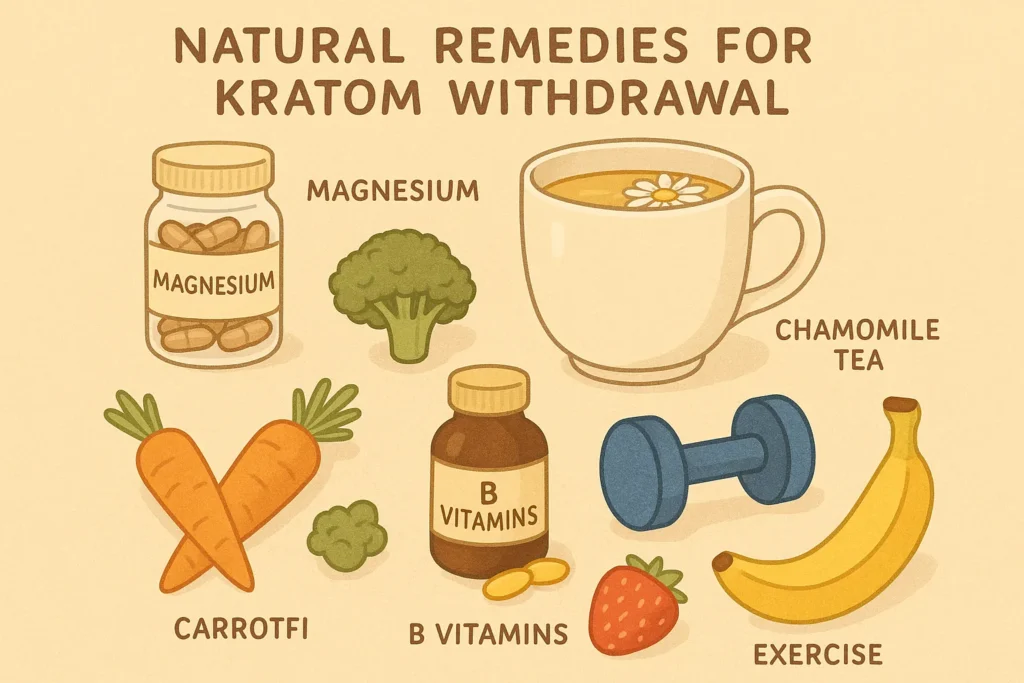
Helpful Supplements and Natural Remedies
For Energy and Mood:
- Vitamin B complex for energy metabolism
- Vitamin D3 for mood regulation
- Magnesium for muscle relaxation and sleep
- Omega-3 fatty acids for brain health
For Comfort and Relaxation:
- Valerian root for sleep support
- Passionflower for anxiety relief
- Turmeric for inflammation
- Ginger for digestive comfort
Important Note: Always consult with a healthcare provider before starting any new supplements, especially if you take medications or have health conditions.
Creating Your Personal Discontinuation Plan
Step 1: Assess Your Current Situation
Usage Assessment:
- Daily kratom dose amount
- Frequency of use throughout the day
- Types of strains typically used
- Duration of regular kratom use
- Reasons for original kratom use
Personal Factors:
- Work and family obligations
- Health status and medications
- Previous experience with substance discontinuation
- Available support systems
- Stress levels and coping skills
Step 2: Choose Your Method and Timeline
Based on your assessment, select the most appropriate discontinuation method:
Gradual Taper (recommended for most users):
- 4-8 week timeline
- Systematic dose reductions
- Built-in adjustment periods
Rapid Taper (for motivated users with mild dependence):
- 2-3 week timeline
- Faster dose reductions
- Requires strong commitment
Cold Turkey (for short-term or low-dose users):
- Immediate cessation
- 3-7 day acute phase
- Intensive symptom management
Step 3: Prepare Your Environment
Remove Temptations:
- Store or dispose of excess kratom
- Avoid kratom-related websites and forums temporarily
- Remove kratom preparation tools
Create Support Systems:
- Inform trusted friends or family members
- Identify professional resources if needed
- Prepare comfort items and distractions
Step 4: Implement Tracking and Accountability
Daily Tracking Elements:
- Kratom dose (during taper)
- Withdrawal symptoms (scale 1-10)
- Mood and energy levels
- Sleep quality
- Exercise and activities
- Challenges and victories
🌱 Kratom Discontinuation Progress Tracker
Professional Support and Medical Considerations
When to Seek Professional Help
Consider consulting a healthcare provider if you experience:
- Severe or prolonged withdrawal symptoms
- History of substance abuse or mental health conditions
- Taking medications that might interact
- Underlying health conditions
- Previous unsuccessful attempts to quit
Medical professionals who can help:
- Primary care physicians
- Addiction specialists
- Mental health counselors
- Naturopathic doctors
Medical Monitoring Benefits
Professional oversight provides:
- Personalized tapering schedules
- Symptom management strategies
- Safety monitoring
- Prescription support if needed
- Accountability and motivation
Potential Complications to Watch For
While kratom withdrawal is generally mild, some individuals may experience:
Physical Complications:
- Persistent nausea or vomiting
- Severe fatigue lasting more than 2 weeks
- Blood pressure changes
- Heart rhythm irregularities
Mental Health Concerns:
- Severe depression or anxiety
- Suicidal thoughts or ideation
- Panic attacks
- Cognitive difficulties lasting beyond 2 weeks
Emergency Warning: If you experience chest pain, severe depression, or thoughts of self-harm, seek immediate medical attention.
Building Long-Term Success Strategies
Developing Healthy Coping Mechanisms
Physical Wellness Practices:
- Regular exercise routine 🏃♀️
- Consistent sleep schedule
- Nutritious meal planning
- Stress reduction activities
Mental and Emotional Tools:
- Mindfulness meditation
- Cognitive behavioral techniques
- Journaling and self-reflection
- Creative outlets and hobbies
Social Connection:
- Rebuilding relationships
- Joining support groups
- Engaging in community activities
- Volunteering or helping others
Addressing Underlying Issues
Common underlying factors that may have contributed to kratom use:
- Chronic pain conditions
- Anxiety or depression
- Sleep disorders
- Work-related stress
- Relationship difficulties
Alternative approaches to explore:
- Physical therapy for pain management
- Counseling for mental health support
- Sleep hygiene improvements
- Stress management techniques
- Relationship counseling
Creating a Relapse Prevention Plan
Identify your triggers:
- Stressful situations or environments
- Emotional states (anxiety, depression, boredom)
- Social situations or peer pressure
- Physical discomfort or pain
- Availability and accessibility
Develop response strategies:
- Immediate actions for acute cravings
- Support contacts to reach out to
- Alternative activities to engage in
- Self-care practices to implement
- Professional resources to utilize
Lifestyle Modifications for Success
Environmental Changes:
- Remove kratom-related items from living spaces
- Avoid places where kratom was commonly used
- Create new routines and habits
- Establish kratom-free zones in your home
Routine Development:
- Morning routine without kratom
- Healthy meal timing and preparation
- Regular exercise schedule
- Evening wind-down activities
- Weekend activity planning
For comprehensive information about kratom laws and regulations that might support your decision, check our kratom legal guide.
Nutrition and Lifestyle Support During Withdrawal

Nutritional Strategies for Recovery
Brain-Supporting Nutrients:
- Protein-rich foods for neurotransmitter production
- Complex carbohydrates for stable energy
- Healthy fats for brain function
- Antioxidant-rich foods for cellular repair
Specific Nutrient Recommendations:
| Nutrient | Benefits | Food Sources |
|---|---|---|
| Vitamin B6 | Neurotransmitter synthesis | Chicken, fish, potatoes |
| Magnesium | Muscle relaxation, sleep | Leafy greens, nuts, seeds |
| Zinc | Immune function, mood | Oysters, beef, pumpkin seeds |
| Vitamin C | Stress response, immunity | Citrus fruits, berries |
| Omega-3s | Brain health, inflammation | Fish, walnuts, flax seeds |
Hydration and Detoxification
Hydration Guidelines:
- Drink at least 8-10 glasses of water daily
- Add electrolytes if experiencing sweating
- Limit caffeine and alcohol consumption
- Include herbal teas for additional benefits
Natural Detox Support:
- Lemon water in the morning for liver support
- Green tea for antioxidants and gentle caffeine
- Dandelion tea for kidney and liver function
- Ginger tea for digestive comfort
Exercise and Movement Therapy
Low-Impact Activities for Withdrawal:
- Walking in nature for mood enhancement
- Yoga for flexibility and stress relief
- Swimming for full-body, gentle exercise
- Tai Chi for balance and mindfulness
Exercise Benefits During Withdrawal:
- Natural endorphin production 🌟
- Improved sleep quality
- Stress and anxiety reduction
- Enhanced mood and energy
- Faster physical recovery
Sleep Optimization Strategies
Creating a Sleep-Friendly Environment:
- Keep bedroom temperature cool (65-68°F)
- Use blackout curtains or eye masks
- Minimize electronic devices before bed
- Consider white noise or earplugs
Natural Sleep Aids:
- Chamomile tea 30 minutes before bed
- Melatonin (consult healthcare provider first)
- Magnesium glycinate for muscle relaxation
- L-theanine for calm alertness
Alternative Therapies and Complementary Approaches
Mind-Body Practices
Meditation and Mindfulness:
- Guided meditation apps for beginners
- Breathing exercises for immediate stress relief
- Body scan meditation for physical awareness
- Walking meditation for active practice
Benefits of Regular Practice:
- Reduced anxiety and stress responses
- Improved emotional regulation
- Enhanced self-awareness
- Better sleep quality
- Increased pain tolerance
Acupuncture and Traditional Medicine
Acupuncture Benefits:
- Supports natural endorphin production
- Reduces withdrawal symptom intensity
- Improves sleep and energy levels
- Addresses underlying imbalances
Other Traditional Approaches:
- Massage therapy for muscle tension and stress
- Chiropractic care for physical alignment
- Herbal medicine for targeted symptom relief
- Aromatherapy for mood and relaxation support
Counseling and Therapeutic Support
Types of Beneficial Therapy:
- Cognitive Behavioral Therapy (CBT) for thought pattern changes
- Motivational Interviewing for sustained motivation
- Mindfulness-Based Stress Reduction for coping skills
- Group therapy for peer support and accountability
Online and Remote Options:
- Teletherapy sessions with licensed professionals
- Online support groups and forums
- Mobile apps for therapy and mental health
- Virtual reality meditation and relaxation programs
Success Stories and Motivation

Real-World Experiences
Sarah’s Gradual Taper Success:
“I used kratom for two years for chronic pain. The 6-week taper method worked perfectly for me. By reducing slowly, I barely noticed withdrawal symptoms and successfully transitioned to other pain management strategies.”
Mike’s Cold Turkey Journey:
“After 8 months of daily use, I decided to stop completely. The first three days were challenging, but having a strong support system and keeping busy with exercise made all the difference.”
Lisa’s Professional Support Story:
“Working with my doctor during the withdrawal process gave me confidence and peace of mind. Having professional monitoring helped me feel safe and supported throughout the journey.”
Common Success Factors
Successful individuals often share these characteristics:
- Clear motivation for discontinuing kratom
- Realistic expectations about the process
- Strong support systems from family, friends, or professionals
- Healthy coping strategies developed before quitting
- Patience and self-compassion during difficult moments
- Focus on long-term benefits rather than short-term discomfort
Celebrating Milestones
Important milestones to acknowledge:
- ✅ Day 1: Taking the first step
- ✅ Day 3: Completing the acute phase
- ✅ Week 1: Establishing new routines
- ✅ Month 1: Demonstrating sustained commitment
- ✅ Month 3: Building long-term habits
- ✅ Month 6: Achieving stable, kratom-free lifestyle
Long-Term Health Benefits of Discontinuing Kratom
Physical Health Improvements
Digestive System Recovery:
- Improved bowel regularity and comfort
- Better nutrient absorption
- Reduced nausea and stomach upset
- Enhanced appetite regulation
Sleep and Energy Restoration:
- More natural, restorative sleep cycles
- Stable energy levels throughout the day
- Improved morning alertness
- Better physical stamina and endurance
Cognitive Function Enhancement:
- Clearer thinking and mental clarity 🧠
- Improved memory and concentration
- Enhanced decision-making abilities
- Better emotional regulation
Frequently Asked Questions About Kratom Withdrawal
- Length of kratom use
- Daily dosage amount
- Individual metabolism
- Overall health status
- Physical: Muscle aches, runny nose, nausea, diarrhea, hot/cold flashes
- Mental: Anxiety, irritability, mood swings, depression
- Sleep-related: Insomnia, restless legs, vivid dreams
- Cognitive: Difficulty concentrating, brain fog
- Significantly reduced withdrawal symptom severity
- Higher success rates for long-term cessation
- Better ability to maintain daily responsibilities
- Lower risk of relapse
- Magnesium: Helps with muscle aches and sleep
- L-theanine: Reduces anxiety and promotes calm
- Vitamin D: Supports mood and energy
- B-complex vitamins: Helps with energy and neurological function
- Melatonin: Assists with sleep issues
- Ashwagandha: May help reduce stress and anxiety
- Severe dehydration from vomiting or diarrhea
- Thoughts of self-harm or suicide
- Severe depression that interferes with daily life
- Symptoms that worsen after the first week
- Any concerning physical symptoms
- Exercise: Light to moderate activity helps with mood and sleep
- Hydration: Drink plenty of water to help flush toxins
- Nutrition: Eat nutrient-dense foods to support healing
- Sleep hygiene: Maintain consistent sleep schedule
- Stress management: Practice meditation, deep breathing, or yoga
- Social support: Connect with supportive friends, family, or support groups
Psychological and Emotional Benefits
Mental Health Improvements:
- Reduced anxiety about kratom availability
- Greater emotional stability
- Improved self-confidence and self-efficacy
- Enhanced sense of personal control
Relationship Benefits:
- More authentic connections with others
- Reduced secrecy and hiding behaviors
- Better communication and presence
- Increased trust from family and friends
Conclusion
Successfully getting off kratom requires patience, planning, and the right approach for your individual situation. Whether you choose gradual tapering, rapid reduction, or complete cessation, the key lies in preparing thoroughly and maintaining realistic expectations throughout the process.
Remember that kratom withdrawal symptoms are typically mild to moderate and temporary, lasting only 3-7 days in most cases. The discomfort you may experience is a sign that your body is readjusting to its natural state, and each day brings you closer to complete recovery.
Your journey to kratom freedom starts with a single decision and continues with consistent daily choices. Focus on building healthy coping strategies, maintaining strong support systems, and addressing any underlying issues that may have contributed to your original kratom use.