
Kratom has emerged as one of the most debated botanical substances of our time. While millions of Americans use kratom daily for various wellness purposes, the question “Is kratom legal?” continues to create confusion among potential buyers navigating a complex web of federal, state, and local regulations.
The legal landscape surrounding kratom resembles a patchwork quilt—legal in some areas, banned in others, and regulated differently across jurisdictions. This complexity means that what’s perfectly legal to purchase and possess in one state could result in serious legal consequences just miles away across a state border.
- Federal Status: Kratom remains federally legal in the United States, though the DEA has considered scheduling it multiple times
- State Variations: Six states plus Washington D.C. have banned kratom, while others have implemented age restrictions or regulatory frameworks
- Local Laws Matter: Cities and counties can impose their own kratom restrictions even in states where it’s legal
- Quality Standards: The Kratom Consumer Protection Act (KCPA) provides important safety guidelines in states that have adopted it
- Due Diligence Required: Buyers must research current laws in their specific location before purchasing, as regulations change frequently
Understanding Kratom: The Basics Every Buyer Should Know
Kratom (Mitragyna speciosa) is a tropical evergreen tree native to Southeast Asia, particularly Thailand, Malaysia, Indonesia, and Papua New Guinea. For centuries, indigenous populations have used kratom leaves for their traditional wellness properties, typically chewing fresh leaves or brewing them into tea.
The active compounds in kratom, primarily mitragynine and 7-hydroxymitragynine, interact with the body’s opioid receptors, though kratom itself is not an opioid. This interaction is what gives kratom its distinctive effects, which can vary significantly based on the strain, dosage, and individual physiology.
Common Kratom Varieties and Their Effects
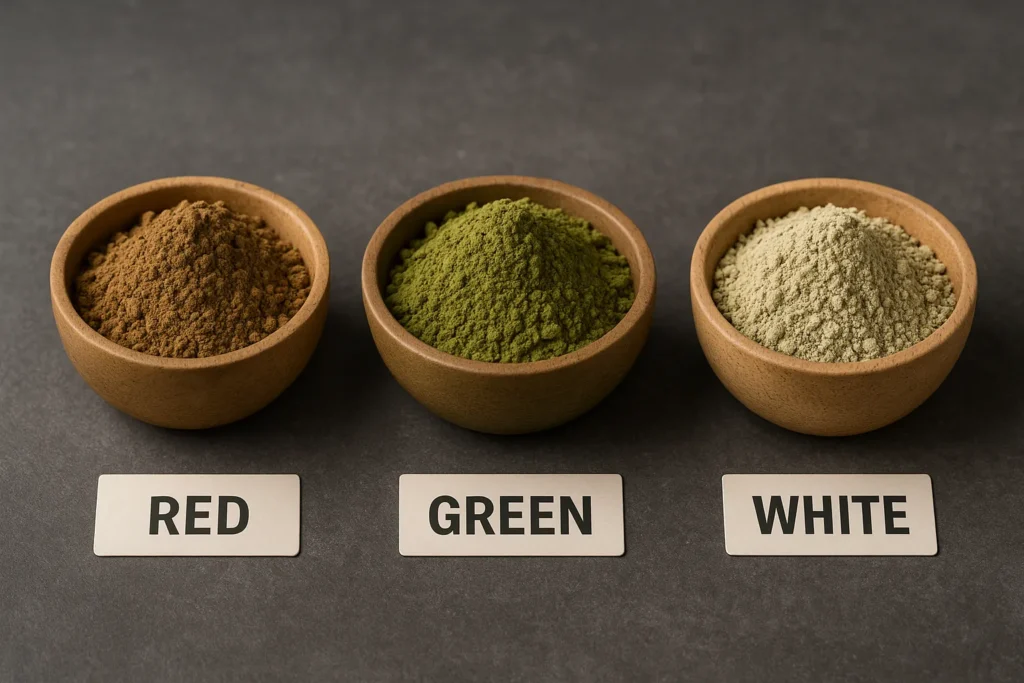
Kratom strains are typically categorized by the color of the leaf veins:
🔴 Red Vein Kratom
- Most popular variety among users
- Associated with relaxation and comfort
- Often chosen for evening use
- Red Borneo kratom is particularly well-regarded for its balanced effects
🟢 Green Vein Kratom
- Considered a middle ground between red and white varieties
- May support both energy and relaxation
- Popular for daytime use
⚪ White Vein Kratom
- Often associated with energy and focus
- Typically chosen for morning or daytime use
- May support productivity and alertness
Understanding these basic categories helps buyers make informed decisions about which kratom products might align with their wellness goals, though individual experiences can vary significantly.
Current Federal Kratom Legal Status
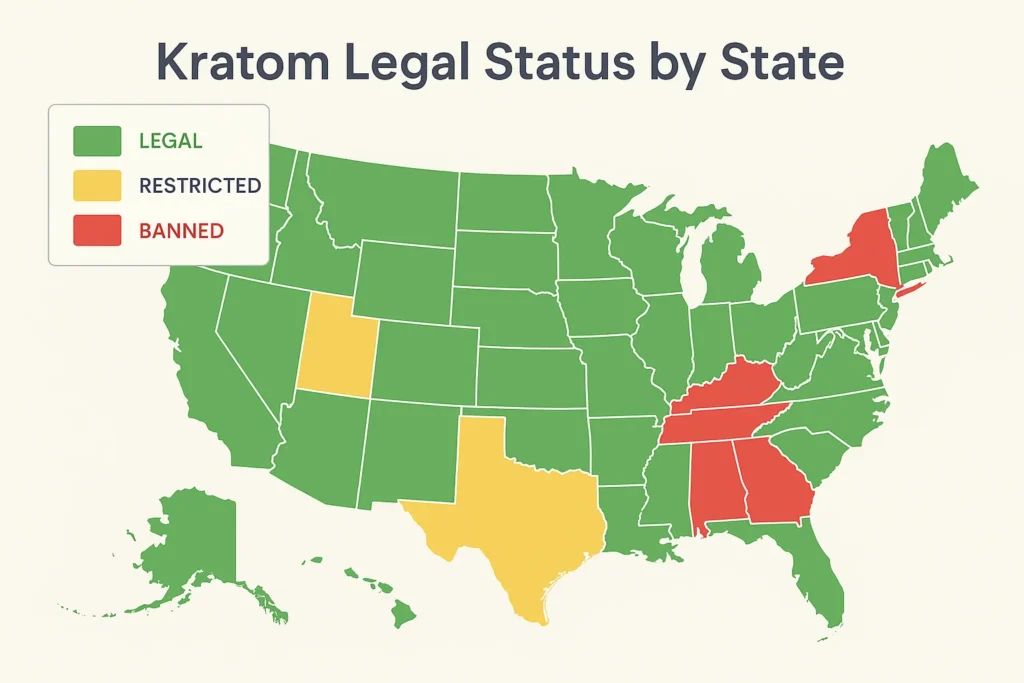
At the federal level, kratom remains legal throughout the United States. The Drug Enforcement Administration (DEA) has not classified kratom as a controlled substance, meaning it’s not subject to the same restrictions as substances listed in the Controlled Substances Act.
However, this status hasn’t been without controversy. The DEA has considered scheduling kratom multiple times:
Timeline of Federal Kratom Legal Developments
2016: The DEA announced an intent to place kratom in Schedule I, which would have made it illegal nationwide. Massive public outcry, including over 140,000 public comments, led to the withdrawal of this notice.
2017-2018: The DEA requested a scientific review from the Food and Drug Administration (FDA), which recommended scheduling kratom. However, no federal action was taken.
2019-Present: Kratom remains federally legal, though the FDA continues to issue warnings about kratom products and has taken enforcement actions against companies making unsubstantiated health claims.
FDA Position on Kratom
While kratom is federally legal, the FDA has not approved kratom for any medical use. The agency has consistently warned consumers about potential risks and has taken action against companies marketing kratom with medical claims.
Key FDA positions include:
- No approved medical uses: The FDA has not recognized any legitimate medical uses for kratom
- Safety concerns: The agency has cited concerns about addiction potential and adverse events
- Import alerts: The FDA has issued import alerts allowing detention of kratom shipments
- Warning letters: Companies making health claims about kratom regularly receive FDA warning letters
This federal regulatory environment creates a unique situation where kratom is legal to sell and possess but exists in a regulatory gray area regarding marketing and health claims.
Kratom Legal Status Checker
Check kratom legality in your state or city
State-by-State Kratom Legal Breakdown
The kratom legal landscape varies dramatically from state to state. Understanding these differences is crucial for buyers who want to ensure they’re complying with local laws.
States Where Kratom is Completely Banned
As of current regulations, six states plus Washington D.C. have completely banned kratom:
🚫 Prohibited States:
- Alabama: Complete ban since 2016
- Arkansas: Classified as controlled substance
- Indiana: Statewide prohibition
- Rhode Island: Complete ban
- Vermont: Prohibited statewide
- Wisconsin: Classified as controlled substance
- Washington D.C.: Complete prohibition
In these jurisdictions, possessing, selling, or distributing kratom can result in criminal charges. Penalties vary but may include fines, imprisonment, or both.
States with Age Restrictions and Regulations
Many states have implemented the Kratom Consumer Protection Act (KCPA), which regulates rather than bans kratom:
📋 KCPA States (18+ or 21+ requirements):
| State | Minimum Age | Additional Requirements |
|---|---|---|
| Arizona | 18+ | Labeling requirements |
| Florida | 21+ | Testing and purity standards |
| Georgia | 18+ | Registration requirements |
| Illinois | 18+ | Consumer protection measures |
| Nevada | 18+ | Quality control standards |
| New Hampshire | 18+ | Labeling requirements |
| North Carolina | 18+ | Consumer protection laws |
| Tennessee | 21+ | Strict labeling and testing |
| Utah | 18+ | Registration and testing |
| Virginia | 18+ | Consumer protection measures |
States Where Kratom Remains Fully Legal
The majority of states still allow kratom without specific age restrictions or regulatory frameworks, though this can change. For example, kratom is legal in Texas without statewide restrictions, making it one of the more kratom-friendly states.
✅ Fully Legal States (partial list):
- Alaska
- Arizona
- Delaware
- Hawaii
- Iowa
- Kansas
- Kentucky
- Louisiana
- Maine
- Maryland
- Massachusetts
- Michigan
- Minnesota
- Mississippi
- Missouri
- Montana
- Nebraska
- New Jersey
- New Mexico
- New York
- North Dakota
- Ohio
- Oklahoma
- Oregon
- Pennsylvania
- South Carolina
- South Dakota
- Texas
- Washington
- West Virginia
- Wyoming
Local Laws and Municipal Regulations
Even in states where kratom is legal, local governments can impose their own restrictions. Cities, counties, and municipalities have the authority to create ordinances that may be more restrictive than state law.
Examples of Local Kratom Restrictions
🏙️ City-Level Bans:
- Sarasota County, Florida: Banned despite state legality
- Jerseyville, Illinois: Local prohibition
- Various California municipalities: Some cities have imposed local bans
📍 County Restrictions:
- Some counties in legal states have imposed their own age restrictions
- Others require special licensing for kratom retailers
- Certain areas have zoning restrictions on kratom sales
Why Local Laws Matter
Local restrictions can create legal pitfalls for buyers who assume state legality means universal access. Consider these scenarios:
- Traveling: Kratom legal in your home state might be banned in a city you’re visiting
- Online purchases: Shipping kratom to a location with local bans could create legal issues
- Moving: Relocating within the same state might mean different kratom laws
💡 Pro Tip: Always verify local ordinances before purchasing or possessing kratom, even in states where it’s generally legal.
The Kratom Consumer Protection Act (KCPA) Explained
The Kratom Consumer Protection Act represents the most comprehensive approach to kratom regulation in the United States. Rather than banning kratom outright, the KCPA creates a regulatory framework that prioritizes consumer safety while maintaining legal access.
Key Provisions of the KCPA
🔍 Quality Standards:
- Mandatory testing for contaminants
- Prohibition of synthetic additives
- Purity requirements for kratom products
- Proper labeling with alkaloid content
👥 Age Restrictions:
- Minimum age requirements (typically 18 or 21)
- ID verification for purchases
- Restrictions on sales to minors
🏪 Vendor Requirements:
- Registration with state authorities
- Good Manufacturing Practice (GMP) compliance
- Record-keeping requirements
- Regular inspections
⚠️ Consumer Protections:
- Clear labeling requirements
- Warning statements about potential risks
- Prohibition of medical claims
- Right to product information
States That Have Adopted the KCPA
The KCPA has gained momentum as a middle-ground approach to kratom regulation. States that have implemented versions of the KCPA include:
- Arizona
- Florida
- Georgia
- Illinois
- Nevada
- New Hampshire
- North Carolina
- Tennessee
- Utah
- Virginia
Benefits of KCPA Regulation
For consumers, KCPA regulation offers several advantages:
✅ Safety Assurance: Products must meet quality standards and undergo testing
✅ Age Verification: Prevents access by minors
✅ Clear Information: Better labeling helps consumers make informed choices
✅ Legal Certainty: Provides clear framework for legal kratom use
Understanding how to take kratom safely becomes even more important in regulated markets where quality standards are enforced.
Understanding Kratom Effects and Safety Considerations
Before purchasing kratom, buyers should understand both the reported effects and potential safety considerations. This knowledge helps in making informed decisions and using kratom responsibly.
Reported Kratom Effects
Kratom effects can vary significantly based on several factors:
🌿 Strain-Dependent Effects:
- Red strains: Often associated with relaxation and comfort
- Green strains: May provide balanced energy and calm
- White strains: Typically linked to energy and focus
💊 Dose-Dependent Effects:
- Lower doses (1-3 grams): May provide energy and alertness
- Moderate doses (3-5 grams): Often associated with balanced effects
- Higher doses (5+ grams): May promote relaxation and sedation
Duration and Onset
Understanding kratom’s timeline helps users plan their experience:
- Onset: Typically 15-30 minutes when taken on empty stomach
- Peak effects: Usually 1-2 hours after consumption
- Duration: Effects generally last 3-6 hours
- Elimination: How long kratom stays in your system varies by individual factors
Safety Considerations for Buyers
⚠️ Important Safety Points:
Drug Interactions: Kratom may interact with certain medications. Consult healthcare providers before use.
Tolerance Development: Regular use may lead to tolerance, requiring higher doses for same effects.
Dependency Potential: Some users report withdrawal symptoms with discontinuation after regular use.
Quality Concerns: Unregulated products may contain contaminants or adulterants.
Choosing Quality Kratom Products
When kratom is legal in your area, selecting high-quality products becomes crucial:
🔍 What to Look For:
- Third-party testing: Lab results for contaminants and alkaloid content
- Proper labeling: Clear ingredient lists and origin information
- Reputable vendors: Companies with transparent practices and good reviews
- Fresh products: Kratom should be stored properly and not expired
Researching authentic kratom vendor reviews can help identify trustworthy suppliers in legal markets.
How to Research Kratom Laws in Your Area
Given the complex and changing nature of kratom legislation, buyers need reliable methods to research current laws in their specific location.
Official Government Sources
🏛️ Federal Level:
- DEA website: Check for current scheduling status
- FDA announcements: Review latest regulatory positions
- Congressional records: Track federal legislative activity
🏢 State Level:
- State legislature websites: Review current statutes and pending bills
- State health departments: Check for health-related kratom policies
- Attorney general offices: Look for enforcement guidance
🏘️ Local Level:
- City council websites: Review municipal ordinances
- County government sites: Check for county-specific regulations
- Local law enforcement: Contact for current enforcement policies
Legal Resources and Tools
📚 Helpful Resources:
- American Kratom Association (AKA): Provides state-by-state legal updates
- Legal databases: Westlaw, LexisNexis for comprehensive legal research
- State bar associations: May provide legal guidance resources
- Local attorneys: Consultation for complex legal questions
Staying Updated on Legal Changes
Kratom laws change frequently, making ongoing monitoring essential:
📱 Update Methods:
- Legal news alerts: Set up Google alerts for “kratom laws”
- Advocacy organizations: Follow AKA and similar groups
- Vendor communications: Reputable vendors often provide legal updates
- Social media: Follow relevant legal and advocacy accounts
Red Flags to Watch For
🚨 Warning Signs of Legal Changes:
- Legislative sessions with kratom bills
- Local news coverage of kratom issues
- Law enforcement announcements
- Health department warnings
- Changes in vendor shipping policies
What Buyers Should Know Before Purchasing

Making an informed kratom purchase requires understanding both legal and practical considerations that go beyond basic legality.
Pre-Purchase Legal Checklist
✅ Essential Steps:
- Verify Current Legal Status
- Check federal, state, and local laws
- Confirm age requirements in your area
- Review any recent legal changes
- Understand Local Restrictions
- Research municipal ordinances
- Check county-specific rules
- Verify shipping restrictions to your address
- Review Vendor Compliance
- Ensure vendor follows applicable regulations
- Verify they don’t ship to prohibited areas
- Check for proper licensing where required
Understanding Product Regulations
In regulated markets, kratom products must meet specific standards:
🏷️ Labeling Requirements:
- Ingredient lists and kratom content
- Origin and processing information
- Warning statements where required
- Batch numbers for tracking
🧪 Testing Standards:
- Heavy metals screening
- Microbial contamination testing
- Pesticide residue analysis
- Alkaloid content verification
Choosing the Right Kratom Strain
For legal buyers, understanding strain differences helps in making appropriate choices:
🎯 Popular Strains for Beginners:
- Red Borneo: Known for supporting focus and calm
- Green Malay: Balanced effects for daytime use
- White Maeng Da: Energy and alertness support
🌏 Regional Varieties:
Different kratom-growing regions produce distinct characteristics:
- Indonesian strains: Often well-balanced, like Super Indo kratom
- Thai varieties: Traditionally associated with energy
- Malaysian strains: Known for longer-lasting effects
Dosage and Safety Guidelines
📏 Starting Guidelines:
- New users: Begin with 1-2 grams
- Experienced users: Typically use 3-5 grams
- Maximum recommendations: Rarely exceed 8 grams per dose
⏰ Timing Considerations:
- Take on empty stomach for faster onset
- Wait at least 4-6 hours between doses
- Avoid daily use to prevent tolerance
Vendor Selection Criteria
🏪 Evaluating Kratom Vendors:
When kratom is legal in your area, choosing reputable vendors becomes crucial. Look for companies that:
- Provide comprehensive lab testing results
- Offer transparent sourcing information
- Follow applicable regulatory requirements
- Have positive customer reviews and ratings
- Provide clear return and refund policies
Some buyers research specific vendors like Austin Organic Village or Alaskan Green Clover to understand what quality vendors offer.
Tips for Responsible Kratom Use in Legal Areas
For buyers in areas where kratom is legal, responsible use practices help ensure positive experiences while supporting continued legal access.
Establishing Safe Use Practices
📋 Responsible Use Guidelines:
Start Low, Go Slow: Begin with minimal doses and gradually adjust based on individual response
Track Your Use: Keep a journal noting doses, timing, effects, and any concerns
Take Breaks: Regular tolerance breaks help prevent dependence and maintain effectiveness
Stay Hydrated: Kratom can be dehydrating, so maintain adequate fluid intake
Avoid Mixing: Don’t combine kratom with alcohol or other substances without professional guidance
Kratom Legal FAQ
Essential questions about kratom laws, effects, and safety
Building a Relationship with Healthcare Providers
🏥 Medical Considerations:
Open communication with healthcare providers becomes important for kratom users:
- Disclosure: Inform doctors about kratom use, especially before medical procedures
- Drug interactions: Discuss potential interactions with prescribed medications
- Monitoring: Regular health check-ups to monitor any changes
- Emergency information: Ensure emergency contacts know about kratom use
Supporting Continued Legal Access
🤝 Community Responsibility:
Responsible kratom users can help maintain legal access by:
Following Laws: Strictly adhering to all applicable regulations
Supporting Quality Vendors: Choosing businesses that follow best practices
Avoiding Public Impairment: Using kratom responsibly in private settings
Educating Others: Sharing accurate information about kratom when appropriate
Participating in Advocacy: Supporting evidence-based kratom policies
Recognizing Warning Signs
⚠️ When to Seek Help:
Users should be aware of potential warning signs that may indicate problematic use:
- Inability to reduce or stop kratom use
- Neglecting responsibilities due to kratom use
- Continued use despite negative consequences
- Experiencing withdrawal symptoms when stopping
- Needing increasingly larger doses for the same effects
Creating a Support Network
👥 Building Community:
Connecting with other responsible kratom users can provide:
- Information sharing about quality products
- Support during tolerance breaks
- Updates on legal developments
- Accountability for responsible use practices
Many users find value in online communities, local meetups, or educational events focused on kratom education and advocacy.
Conclusion
Understanding the kratom legal landscape requires navigating a complex web of federal, state, and local regulations that continue to evolve. While kratom remains federally legal, the patchwork of state and municipal laws creates a challenging environment for buyers seeking to make informed, compliant purchases.
The key takeaways for potential kratom buyers include the critical importance of researching current laws in their specific location, understanding that legal status can vary dramatically even within the same state, and recognizing that regulations change frequently. The emergence of the Kratom Consumer Protection Act in multiple states represents a promising middle-ground approach that prioritizes consumer safety while maintaining legal access.
For those in areas where kratom is legal, success depends on choosing quality products from reputable vendors, understanding proper dosing and safety guidelines, and maintaining responsible use practices that support continued legal access. The future of kratom legislation will likely depend on continued scientific research, industry self-regulation, and responsible advocacy efforts.