

Transforming the often bitter and chalky experience of consuming kratom powder into a smooth, pleasant tea that’s easier on your stomach and delivers more consistent effects. For many kratom enthusiasts, learning how to make kratom tea has revolutionized their daily routine, turning what was once an unpleasant necessity into an enjoyable ritual.
Making kratom tea isn’t just about masking the taste – it’s about optimizing bioavailability, reducing digestive discomfort, and creating a more controlled experience. Whether you’re new to kratom or looking to improve your current preparation method, mastering the art of kratom tea brewing can significantly enhance your overall experience with this botanical.
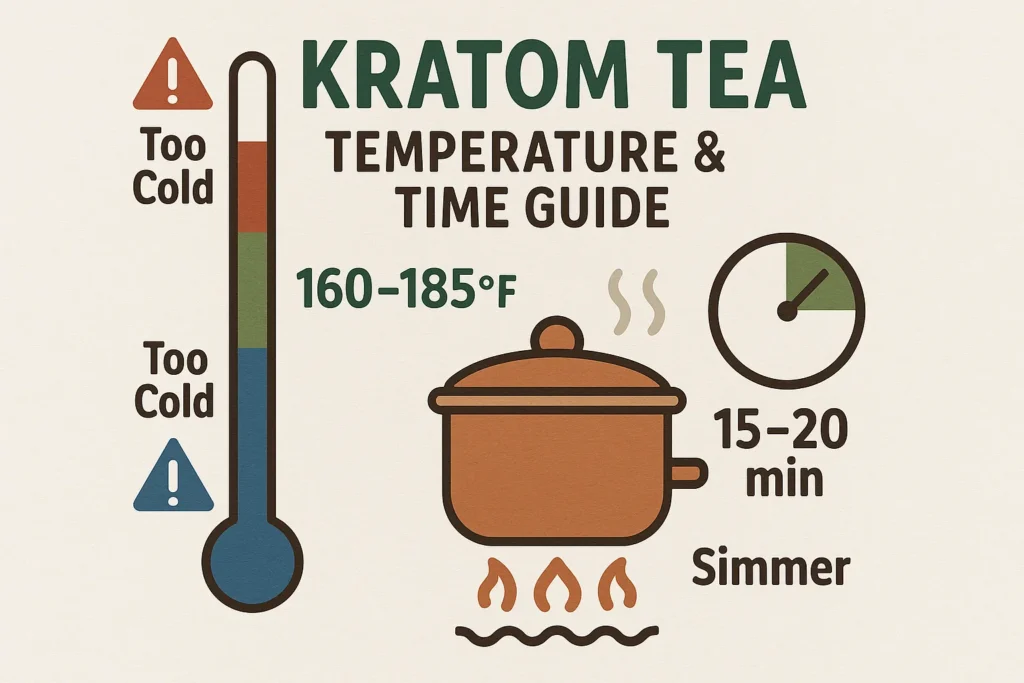
- Proper temperature control (160-185°F) preserves alkaloids while extracting maximum potency from kratom powder
- Adding acidic ingredients like lemon juice increases alkaloid extraction and improves bioavailability
- Straining the tea removes plant matter, reducing stomach irritation and creating a smoother experience
- Flavor enhancement techniques using honey, ginger, or herbal teas can completely mask kratom’s bitter taste
- Timing and preparation methods significantly impact both onset time and duration of effects
Understanding Kratom Tea Basics
What Makes Tea Different from Powder
When you consume kratom powder directly (known as the “toss and wash” method), your digestive system must break down all the plant matter to access the active alkaloids. This process can cause stomach discomfort, nausea, and inconsistent absorption rates.
Kratom tea offers several advantages:
- Faster onset of effects (15-30 minutes vs 30-60 minutes)
- Reduced digestive irritation
- More predictable dosing
- Better taste when properly prepared
- Easier to customize strength and flavor
The brewing process extracts the water-soluble alkaloids – primarily mitragynine and 7-hydroxymitragynine – while leaving behind the indigestible plant fiber. This extraction method creates a cleaner experience that’s gentler on your stomach.
The Science Behind Alkaloid Extraction
Kratom’s active compounds are alkaloids that respond differently to various extraction methods. Heat helps break down cell walls in the kratom leaves, releasing these alkaloids into the water. However, excessive heat can degrade these sensitive compounds, which is why temperature control is crucial when learning how to make kratom tea effectively.
Optimal extraction conditions include:
- Water temperature between 160-185°F (71-85°C)
- Brewing time of 15-20 minutes
- Slightly acidic environment (pH 4-6)
- Gentle agitation during steeping
Essential Equipment and Ingredients
Basic Equipment Needed
Before diving into how to make kratom tea, gather these essential tools:
Required Equipment:
- Medium saucepan or electric kettle
- Fine mesh strainer or cheesecloth
- Measuring spoons
- Thermometer (optional but recommended)
- Wooden spoon for stirring
Optional but Helpful:
- French press (excellent for steeping and straining)
- Tea infuser or tea balls
- Glass measuring cup
- Timer
Choosing Quality Kratom Powder
The quality of your kratom powder directly impacts your tea’s potency and taste. When selecting kratom for tea brewing, consider these factors:
Fresh, high-quality kratom should be:
- Fine, consistent powder texture
- Vibrant green color (for green strains)
- Fresh, earthy aroma
- Free from stems and debris
For reliable sources, consider researching authentic kratom vendors who provide lab-tested products. Quality vendors often provide detailed information about their sourcing and testing procedures.
Essential Ingredients for Better Taste
Acidic Enhancers (choose one):
- Fresh lemon juice (most popular)
- Lime juice
- Apple cider vinegar
- Grapefruit juice
Natural Sweeteners:
- Raw honey
- Agave nectar
- Stevia
- Maple syrup
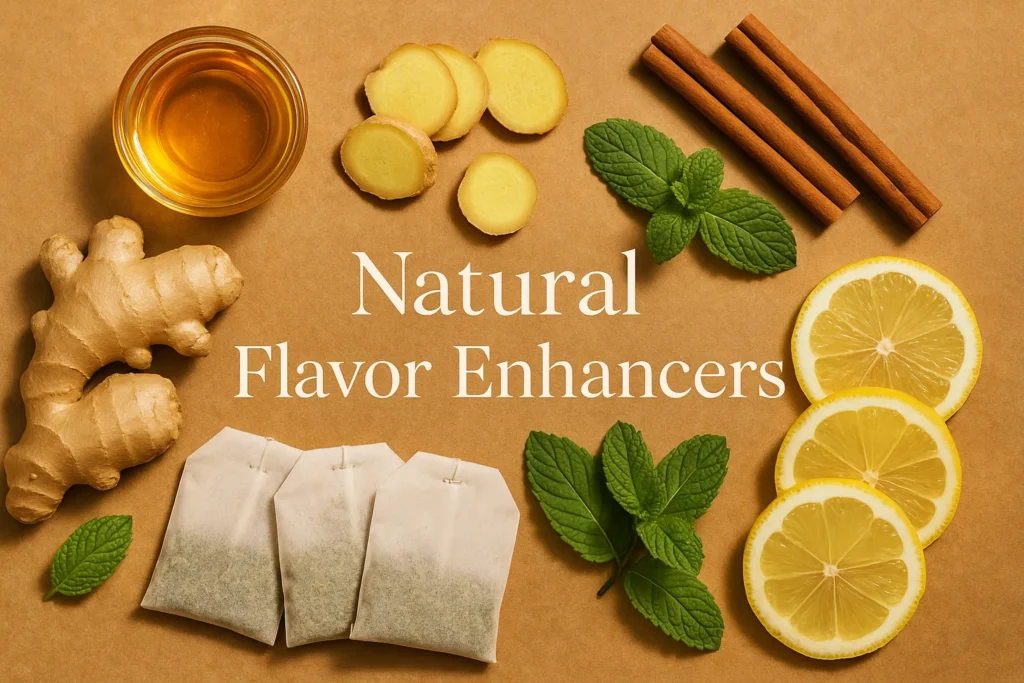
Flavor Enhancers:
- Fresh ginger
- Cinnamon sticks
- Mint leaves
- Herbal tea bags
Step-by-Step Guide: How To Make Kratom Tea
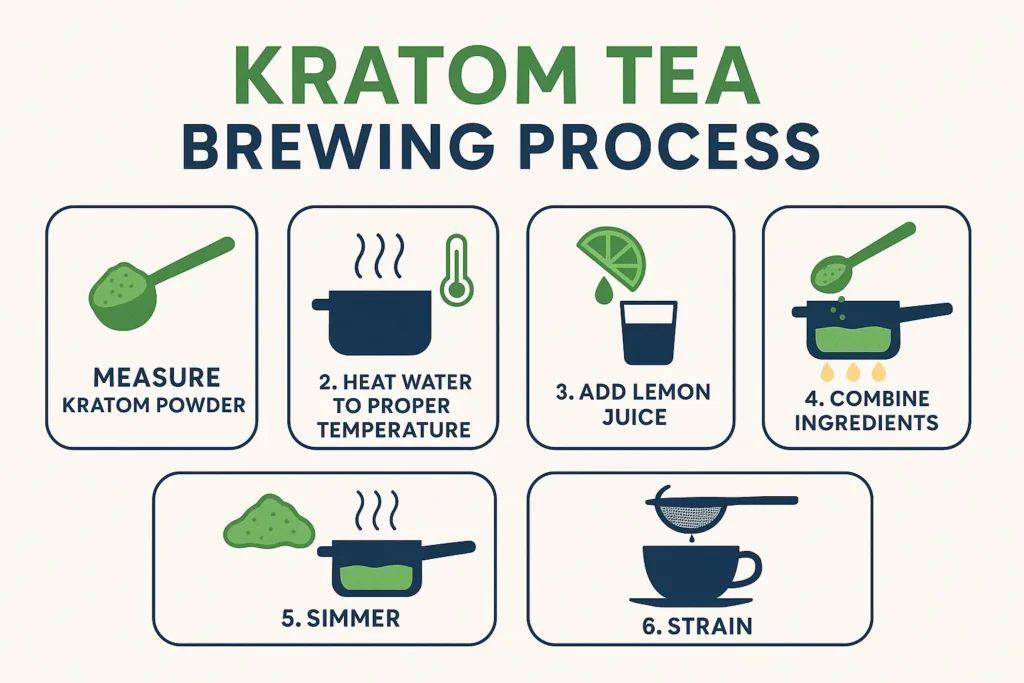
Method 1: Simple Stovetop Brewing
This basic method is perfect for beginners learning how to make kratom tea:
Step 1: Measure Your Kratom
Start with 2-4 grams of kratom powder, depending on your tolerance and desired effects. If you’re new to kratom, begin with 2 grams and adjust as needed.
Step 2: Prepare the Water
Add 2-3 cups of water to your saucepan. This extra water accounts for evaporation during brewing.
Step 3: Add Acid
Squeeze half a lemon (about 1 tablespoon) into the water. The citric acid helps extract alkaloids more effectively.
Step 4: Heat the Water
Bring water to a gentle simmer (small bubbles, not a rolling boil). If using a thermometer, aim for 175°F.
Step 5: Add Kratom Powder
Slowly add your measured kratom powder while stirring continuously to prevent clumping.
Step 6: Simmer and Stir
Maintain a gentle simmer for 15-20 minutes, stirring occasionally. The liquid should reduce slightly and take on a dark color.
Step 7: Strain
Pour the tea through a fine mesh strainer into your cup. Press the remaining plant matter to extract additional liquid.
Step 8: Enhance Flavor
Add honey, ginger, or other flavor enhancers while the tea is still warm.
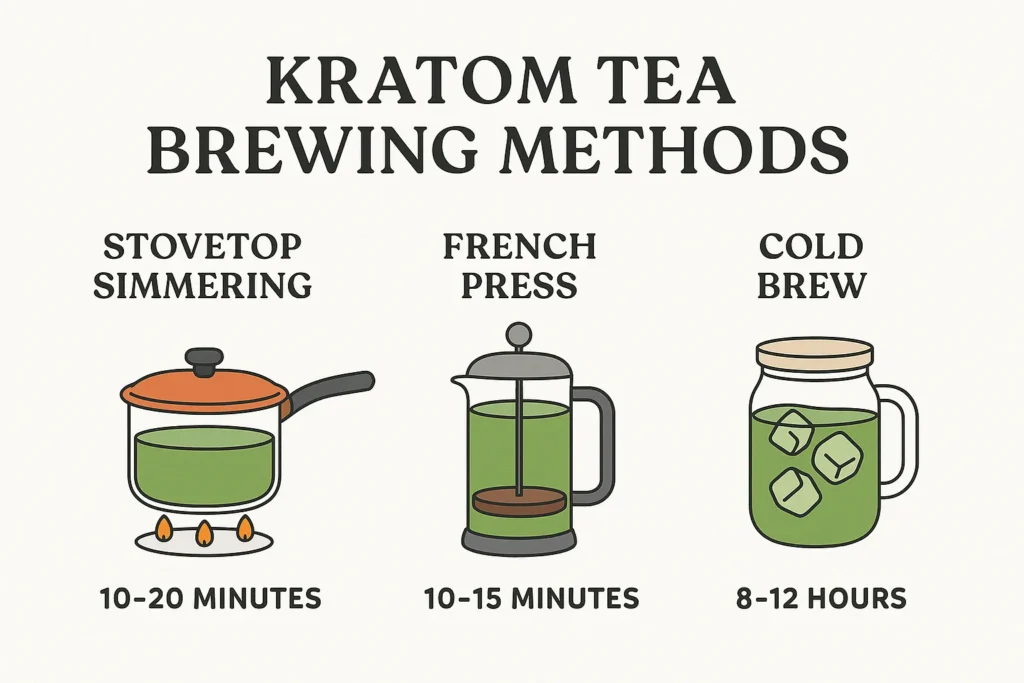
Method 2: French Press Technique
The French press method offers excellent control and easy straining:
Preparation:
- Heat water to 175°F in a separate kettle
- Add kratom powder and lemon juice to the French press
- Pour hot water over the kratom mixture
- Stir gently and let steep for 15 minutes
- Press the plunger down slowly
- Pour and enjoy
This method is particularly effective because the fine mesh of the French press removes most plant matter while allowing maximum extraction time.
Method 3: Cold Brew Kratom Tea
For those sensitive to heat or preferring a different flavor profile:
Process:
- Mix kratom powder with room temperature water and lemon juice
- Stir thoroughly and refrigerate for 4-8 hours
- Strain through fine mesh or cheesecloth
- Serve over ice or reheat gently if desired
Cold brewing creates a less bitter tea with a smoother taste, though the effects may be slightly milder than hot-brewed tea.
Advanced Brewing Techniques
Double Extraction Method
For maximum potency, some users employ a double extraction technique:
First Extraction:
- Brew kratom tea using the standard method
- Strain and set the liquid aside
- Keep the used plant matter
Second Extraction:
- Add fresh water to the used plant matter
- Brew for an additional 10-15 minutes
- Strain and combine with the first extraction
This method ensures you extract every available alkaloid, though the second brew will be weaker than the first.
pH Optimization Technique
Advanced brewers sometimes test and adjust their tea’s pH for optimal extraction:
Optimal pH Range: 4.0-6.0
Natural Acidifiers:
- Lemon juice (pH ~2.0)
- Apple cider vinegar (pH ~2.4)
- Grapefruit juice (pH ~3.3)
Start with small amounts of acidifier and test the pH if you have strips available. Most people find that the juice of half a lemon per cup provides the right balance.
Flavor Enhancement Strategies
Masking Kratom’s Natural Bitterness
Kratom’s naturally bitter taste can be overwhelming, but several strategies can dramatically improve flavor:
Immediate Flavor Fixes:
- Honey and Cinnamon: Classic combination that complements kratom’s earthy notes
- Ginger and Lemon: Adds warmth and masks bitterness effectively
- Mint and Lime: Creates a refreshing, tea-like experience
Blending with Herbal Teas
One of the most effective ways to improve kratom tea taste is blending it with complementary herbal teas:
Recommended Combinations:
- Chamomile + Kratom: Enhances relaxing effects
- Green Tea + Kratom: Provides additional energy and antioxidants
- Peppermint + Kratom: Excellent for digestive comfort
- Ginger Tea + Kratom: Reduces nausea and adds warming spice
Brewing Method for Blends:
- Brew your herbal tea separately using a tea bag
- Remove the tea bag and add kratom powder to the hot herbal tea
- Simmer gently for 10-15 minutes
- Strain and enjoy the enhanced flavor
Creating Kratom Tea Concentrates
For convenience, many users prepare concentrated kratom tea that can be diluted later:
Concentrate Recipe:
- Use 8-10 grams of kratom powder
- 2 cups of water
- Extra lemon juice
- Simmer for 30 minutes until reduced by half
- Strain and store in refrigerator
Usage: Mix 1-2 tablespoons of concentrate with hot water, juice, or herbal tea for quick preparation.
Dosage Guidelines and Safety
Understanding Kratom Tea Potency
Kratom tea can feel different from powder consumption due to faster absorption and potentially different alkaloid ratios. Many users report that tea effects are:
- More immediate (15-30 minute onset)
- Slightly shorter duration (3-5 hours vs 4-6 hours)
- Smoother comeup and comedown
Recommended Starting Doses
For Kratom Tea Beginners:
- New to Kratom: 1-2 grams
- Some Powder Experience: 2-3 grams
- Regular Users: 3-5 grams
Important Safety Notes:
- Start low and wait at least 45 minutes before considering additional doses
- Tea effects can feel stronger due to faster absorption
- Keep a dosage log to track your optimal amount
For comprehensive safety information, review guidelines on how to take kratom safely to ensure responsible use.
Strain Selection for Tea
Different kratom strains offer varying effects, and some work better for tea preparation:
Best Strains for Tea:
- Red Borneo: Excellent for evening relaxation tea
- Green Malay: Balanced effects, good for daily tea consumption
- White Thai: Energizing morning tea option
For detailed information about specific strains, explore resources about Red Borneo kratom effects to understand how different varieties might work in tea form.
Troubleshooting Common Issues
Problem: Bitter, Unpalatable Taste
Solutions:
- Increase honey or sweetener amount
- Add more citrus juice
- Blend with stronger-flavored herbal teas
- Try cold brewing for milder taste
- Use less kratom powder and brew longer
Problem: Weak Effects from Tea
Possible Causes and Solutions:
- Water too hot: Keep temperature under 185°F
- Insufficient brewing time: Extend to 20-25 minutes
- Poor quality kratom: Source from reputable vendors
- Not enough acid: Add more lemon juice
- Dosage too low: Gradually increase amount
Problem: Stomach Upset from Tea
Remediation Strategies:
- Ensure complete straining of plant matter
- Drink tea with food
- Add ginger to reduce nausea
- Try cold brewing method
- Reduce concentration and sip slowly
Problem: Inconsistent Effects
Consistency Improvements:
- Measure kratom and water precisely
- Use timer for consistent brewing duration
- Maintain consistent water temperature
- Use same kratom batch for comparison
- Keep detailed brewing notes
🍵 Kratom Tea Brewing Calculator
Your Personalized Tea Recipe:
Legal Considerations and Quality Sourcing
Understanding Kratom Legality
Before learning how to make kratom tea, ensure kratom is legal in your area. Kratom legality varies by location, and laws can change. For current information about specific regions, check resources like kratom legal status in Texas for location-specific guidance.
General Legal Considerations:
- Federal legal status in most U.S. states
- Some states and municipalities have restrictions
- International laws vary significantly
- Always verify current local regulations
Finding Quality Kratom Sources
Quality kratom makes a significant difference in tea preparation and effects. When researching vendors, look for:
Quality Indicators:
- Third-party lab testing for purity and alkaloid content
- Transparent sourcing information
- Good customer reviews and reputation
- Proper packaging and storage
- Reasonable pricing (extremely cheap often indicates poor quality)
For vendor comparisons, explore reviews of established suppliers like Austin Organic Village or Alaskan Green Clover to understand what quality vendors offer.
Health and Safety Considerations
When to Avoid Kratom Tea
Certain individuals should exercise extra caution or avoid kratom entirely:
Avoid kratom if you:
- Are pregnant or breastfeeding
- Take medications that interact with kratom
- Have liver or kidney conditions
- Are under 18 years of age
- Have a history of substance abuse
Potential Side Effects
While kratom tea is generally gentler than powder consumption, potential side effects include:
Common Side Effects:
- Nausea (especially on empty stomach)
- Dizziness
- Dry mouth
- Constipation
- Loss of appetite
Reducing Side Effects:
- Start with lower doses
- Drink tea with food
- Stay hydrated
- Use ginger to combat nausea
- Take breaks between usage days
Drug Testing Considerations
For those concerned about drug testing, understand that kratom can potentially show up on specialized tests. Learn more about how long kratom stays in your system to make informed decisions about timing and usage.
Advanced Tea Variations and Recipes
Kratom Chai Tea Recipe
This warming blend combines kratom with traditional chai spices:
Ingredients:
- 3 grams kratom powder
- 2 cups water
- 1 cinnamon stick
- 4 cardamom pods
- 3 whole cloves
- 1-inch fresh ginger, sliced
- 1 tablespoon honey
- 1/2 cup milk (optional)
Method:
- Simmer spices in water for 10 minutes
- Add kratom powder and lemon juice
- Simmer additional 15 minutes
- Strain thoroughly
- Add milk and honey to taste
Iced Kratom Green Tea
Perfect for warm weather:
Ingredients:
- 2-3 grams kratom powder
- 2 green tea bags
- 2 cups hot water
- 1 tablespoon lemon juice
- Ice cubes
- Mint leaves
- Honey to taste
Preparation:
- Brew green tea and kratom together
- Strain and cool to room temperature
- Serve over ice with mint and honey
Kratom Golden Milk
A soothing evening blend:
Ingredients:
- 2 grams red strain kratom
- 1 cup coconut milk
- 1 cup water
- 1 teaspoon turmeric
- 1/2 teaspoon ginger powder
- Pinch of black pepper
- Honey to taste
Method:
- Heat water and brew kratom tea
- Strain and add to warm coconut milk
- Whisk in spices and honey
- Serve warm before bedtime
Troubleshooting Specific Strain Types
Working with Red Strains
Red kratom strains like Red Borneo often have different characteristics that affect tea preparation:
Red Strain Considerations:
- May require slightly longer brewing time
- Often benefits from lower temperatures (160-170°F)
- Pairs well with warming spices like cinnamon
- Best consumed in evening due to relaxing effects
Green Strain Tea Optimization
Green strains offer balanced effects and often work well for daytime tea consumption:
Green Strain Tips:
- Standard brewing temperatures work well (175°F)
- Combines excellently with citrus flavors
- Good for morning or afternoon consumption
- Often more palatable than red strains
White Strain Preparation
White strains are typically more energizing and may require different preparation approaches:
White Strain Considerations:
- Use slightly cooler water (165-175°F)
- Shorter brewing time may preserve energizing alkaloids
- Pairs well with mint and citrus
- Best for morning consumption
Measuring and Consistency
Accurate Dosage Measurement
Consistency in kratom tea preparation requires accurate measurement:
Measurement Tools:
- Digital scale (most accurate)
- Measuring spoons (less precise but convenient)
- Pre-measured capsules (for reference)
Conversion Guidelines:
- 1 level teaspoon ≈ 2-2.5 grams
- 1 level tablespoon ≈ 6-7 grams
- Powder density varies by grind and strain
Keeping a Tea Journal
Track your kratom tea experiences to optimize preparation:
Journal Elements:
- Strain and amount used
- Brewing method and time
- Water temperature
- Additional ingredients
- Effects experienced
- Duration and intensity
- Any side effects
This record helps you refine your kratom tea preparation technique and find your optimal brewing parameters.
Environmental and Sustainability Considerations
Sustainable Kratom Sourcing
When selecting kratom for tea preparation, consider environmental impact:
Sustainable Practices:
- Choose vendors supporting fair trade
- Look for sustainably harvested kratom
- Support reforestation efforts in kratom-growing regions
- Avoid vendors with questionable sourcing practices
Eco-Friendly Tea Preparation
Minimize environmental impact during tea preparation:
Green Brewing Practices:
- Use reusable strainers instead of disposable filters
- Compost used kratom plant matter
- Choose glass storage containers over plastic
- Use energy-efficient heating methods
Kratom Tea FAQ
Red vein strains like Red Bali or Red Maeng Da are excellent for tea due to their smooth, relaxing effects and naturally milder taste. Green strains like Green Malay offer balanced effects, while white strains provide more energizing properties but can be more bitter.
For beginners, start with 1-2 grams per cup. Experienced users typically use 2-4 grams. The general guidelines are:
- Beginner: 1-2 grams
- Moderate: 2-3 grams
- Experienced: 3-4 grams
Always start low and gradually increase if needed. Effects can take 30-45 minutes to fully manifest.
The optimal temperature is between 185-200°F (85-93°C). This is just below boiling point. Boiling water can destroy some of the beneficial alkaloids, while water that’s too cool won’t extract them effectively.
Several natural ingredients can significantly improve the taste:
- Citrus: Lemon or lime juice (also helps extraction)
- Sweeteners: Honey, agave, or stevia
- Spices: Ginger, cinnamon, or turmeric
- Herbal teas: Mix with chamomile, peppermint, or green tea
Ginger is particularly effective at masking bitterness while adding digestive benefits.
Steep for 10-15 minutes for optimal alkaloid extraction. Longer steeping (up to 20 minutes) can increase potency but may also increase bitterness.
For the best results: simmer gently for 10-15 minutes, then strain through a fine mesh or coffee filter to remove plant matter.
Straining is recommended for several reasons:
- Better taste and smoother texture
- Easier on the stomach
- Reduces nausea risk
- More pleasant drinking experience
Use a fine mesh strainer, coffee filter, or cheesecloth. The liquid contains the extracted alkaloids, so you won’t lose potency by straining.
Kratom tea effects typically last 3-5 hours, with peak effects occurring 1-2 hours after consumption. The timeline is:
- Onset: 15-45 minutes
- Peak: 1-2 hours
- Duration: 3-5 hours total
Yes, kratom tea can be stored in the refrigerator for up to 5 days. Store in a sealed container to maintain potency and prevent contamination.
For best results: let it cool completely before refrigerating, and gently reheat or drink cold. You can also freeze it in ice cube trays for longer storage (up to 3 months).
Conclusion
Learning how to make kratom tea transforms the kratom experience from a potentially unpleasant necessity into an enjoyable, customizable ritual. The key elements for success include proper temperature control (160-185°F), adequate brewing time (15-20 minutes), and the strategic use of acidic ingredients like lemon juice to enhance alkaloid extraction.
The benefits of kratom tea extend beyond improved taste. The faster onset, reduced digestive discomfort, and smoother effects profile make tea preparation an excellent choice for both new and experienced kratom users. By removing indigestible plant matter through straining, tea consumption significantly reduces the stomach upset that often accompanies powder consumption.
Essential takeaways for successful kratom tea preparation:
🌿 Start with quality kratom from reputable vendors who provide lab-tested products
🔥 Control your temperature – keep water between 160-185°F to preserve alkaloids while maximizing extraction
🍋 Add citric acid through lemon juice or other citrus to improve bioavailability and extraction efficiency
⏰ Time your brewing – 15-20 minutes provides optimal extraction without over-processing
🍯 Enhance flavor with natural sweeteners, spices, and herbal tea blends to create an enjoyable experience