


Melts away physical tension and invites deep, full-body comfort.
Gently settles the mind and body into a peaceful, stress-free state.
Tunes out background distractions for deep, uninterrupted work.
Red Maeng Da Kratom Powder
Couldn't load pickup availability
Free Shipping on all order over $75
- AKA GMP Qualified – Certified by the American Kratom Association.
- Pure Leaf. Pure Strength.
- Lab tested (9+ tests) for microbiologics, heavy metals, and alkaloids
- Quality Control in microbiology labs
- Tested for purity and strength
- 30 days easy returns
- Same day shipping
- Need Help? 866-570-1245 or support@jackbotanicals.com


Trusted by 60k+ customers


Although Red Maeng Da has its roots in Thailand, the kratom powder we offer comes from red-veined leaves grown on farms in West Kalimantan, Indonesia.
Every batch is analyzed at approved independent laboratories. In addition to mitragynine content, samples are tested to verify alkaloid content and screen for contaminants including heavy metals and biological pathogens.
Where Our Red Maeng Da Is Grown and Dried
Region and Harvest
Traditional farms around the Hulu Kapuas river basin are the main source of our red-veined Maeng Da. The area has mineral-rich soil and plenty of rainfall.
Mature, full-sized leaves are hand-picked in the traditional way, typically in the early morning.
Drying and Grinding
Blending and specialized fermentation are both part of the process used to produce Red Maeng Da.
Leaves are kept in sacks in a humid environment with low light for 1-3 days, a fermentation process that alters the alkaloid profile. They are then dried indoors on racks for 3–5 days, followed by 1–2 days in direct sunlight.
Once completely desiccated, the leaves are milled into fine powder of between 100-149 microns and sifted to remove any clumps. Samples are third-party tested to ensure the powder is pure and free of contaminants. It is then placed in airtight, moisture-proof packaging for export.
The Taste and Aroma of Maeng Da
Fresh Maeng Da has a noticeably strong, distinctive aroma. It is sweet and reminiscent of hay, with subtle spice notes.
The flavor is quite complex. The powder leaves sour, slightly woody aftertaste that can remain on the palate after the initial earthy bitterness has passed.
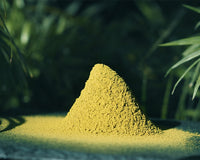
Our Red Maeng Da is ground into a soft consistency similar to that of powdered sugar. It can feel chalky on the tongue, and make the mouth feel dry, so it is advisable to have water or another drink to hand.
To mellow the taste, it can be brewed as tea, with flavors added. Capsules are a popular and convenient alternative that avoid the taste altogether.
|
Strain |
Vein Color |
Origin |
Harvest stage |
Drying method and time |
Blend ratio (if any) |
Color, smell, taste |
Sizes and Price per Gram |
|
Maeng Da |
Red |
Hulu Kapuas, West Kalimantan, Borneo, Indonesia |
Mature |
Fermentation (1-3 days) , Indoor drying |
N/a |
Greenish Gold color Sweetish scent. . Earthy aroma, bitter taste |
250 g ($0.156 per gram) 500 g ($0.098 per gram) 1 kg ($0.089 per gram) |
Red vs Green vs White Maeng Da
|
Harvest |
Drying |
Taste |
Link |
|
|
Red |
Picked from older trees. Fully mature leaves with red veins |
Fermented before indoor drying in low light for 3-5 days, then 1-2 days in direct sun |
Bitter and earthy, with a sour aftertaste |
https://jackbotanicals.com/products/red-maeng-da-kratom-powder |
|
Green |
Green-veined leaves, picked at a mid-life stage in the growing cycle |
Dried indoors for 24–72 hours, with controlled humidity and low light. Not fermented |
Intensely bitter, with an underlying grassy, herbal taste |
https://jackbotanicals.com/products/green-maeng-da-kratom-powder |
|
White |
White-veined leaves, picked early to mid-cycle |
Dried indoors for 24–72 hours in low light. Not fermented |
Slightly bitter and herbal, sometimes there’s an astringency |
https://jackbotanicals.com/products/white-maeng-da-kratom-powder |
The three vein colors differ due to the maturity of the leaf, and the processing methods used. Of the three, only our Red Maeng Da is fermented and finished in direct sunlight. These differences result in distinct powder colors, aromas, and flavor profiles across the three vein types.
Powder or Capsules?
Red Maeng Da powder is the most economical format, with savings that increase for larger sizes. Powder gives you the freedom to vary the serving size.
Store in the resealable pouch, securely closed, in a dry, dark cupboard to keep it in good condition.
Capsules are the easiest way to take kratom. With a pre-measured amount in each capsule, there is no weighing or scooping needed, and no waste. As the powder is encased in a shell, taste is not an issue, and they are easy to take with you when you travel or are at work.
Capsules cost a little more than loose powder, partly because of the extra processing involved. The shell needs to dissolve first, so there is a delay before the powder is released.
Frequently Asked Questions
What is the difference between Red Maeng Da and Red Bali?
Both are grown in the Hulu Kapuas region of West Kalimantan, Borneo. Red Maeng Da is fermented and dried for longer than Red Bali, and has a more bitter taste with a sour aftertaste.
What is the difference between Red Maeng Da and Plantation Red Maeng Da?
Red Maeng Da is sourced from traditional farms. The Plantation strain is cultivated in a more controlled setting, so there is less variation between batches.
Is the capsule version the same leaf?
Yes. Each capsule contains a pre-measured amount of pure kratom powder.
Where can I see the lab report for this batch?
You can see the latest lab results on our Lab Test page.
How do customers usually prepare the powder?
Most customers prefer to make tea with the powder, creating a blend with their favorite flavorings. Some also stir it into juices or smoothies, or mix with yogurts or cereals.
Red Maeng Da Kratom Powder
Customer reviews
Rating breakdown
Customer photos
Red Maeng Da Kratom Powder
From $39.00

